You find out about a commercial roof leak the worst possible way: a tenant email, a stained ceiling tile over a desk, or a bucket in the middle of the sales floor. Now you need a commercial roofing contractor who can find the real cause, fix it without shutting your business down, and give you a straight answer on whether the roof has more years in it.
That last part is where owners get nervous. Two bids for the same roof can be wildly different, and it’s hard to tell which one is padded and which one is cutting corners.
APC Roofing works on commercial roofs across Central Florida, the Daytona Beach area, the Kansas City metro and Springfield, Missouri. We’re GAF Certified, licensed and insured, and the inspection and estimate are free. Our goal is a proposal you can read and understand, not just a number at the bottom.
Commercial roofing services
We repair, re-roof and install new commercial roofs, including flat and low-slope systems:
- TPO and other single-ply membranes, the common white roofs on newer commercial buildings
- EPDM, the black rubber membrane found on many older buildings
- Built-up roofing (BUR), the layered asphalt-and-felt roofs often topped with gravel
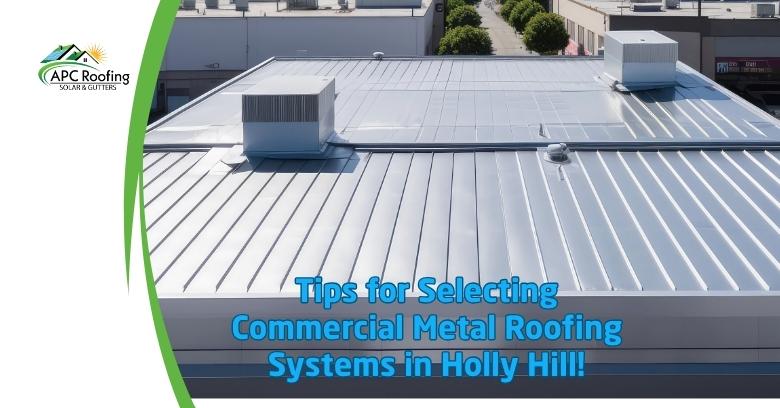
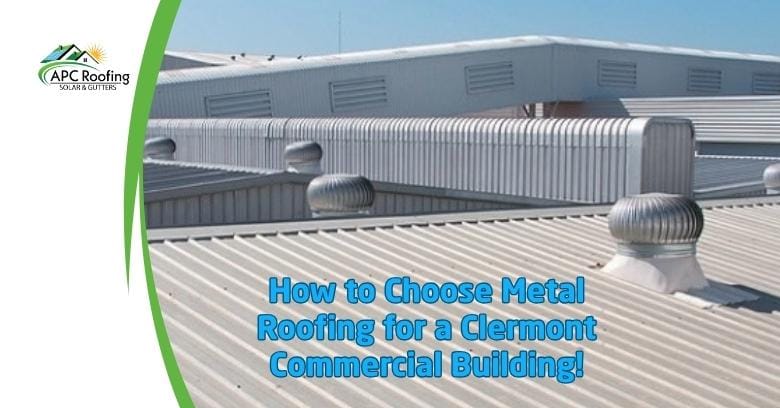
- Metal roofs for commercial and light-industrial buildings
Where commercial roofs really leak
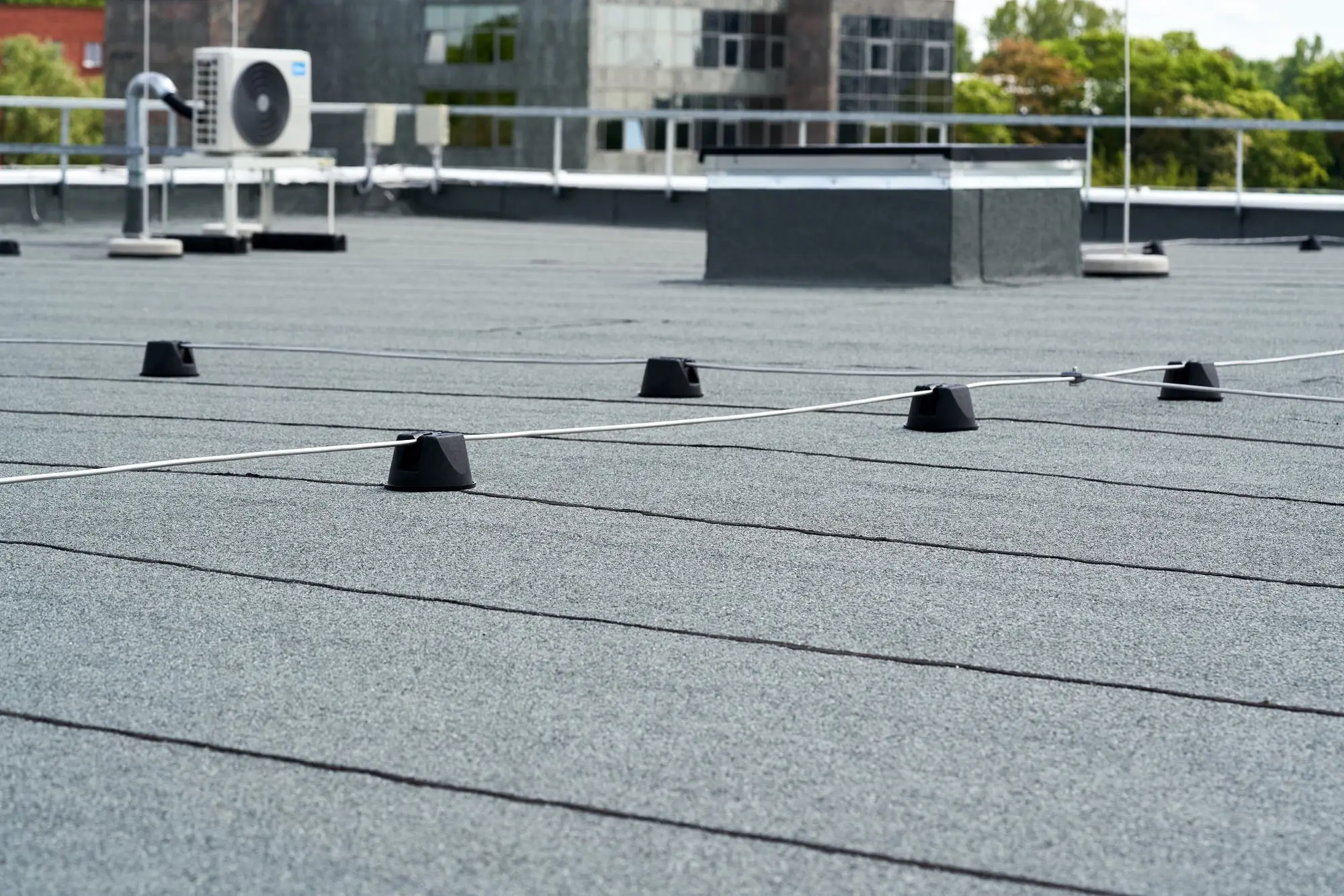
The open field of a commercial roof rarely fails on its own. Leaks start where something cuts through the membrane or sits on top of it: pipe boots, gas lines, conduit supports, drains, and above all the curbs under rooftop HVAC units, where metal, sealant and membrane all have to work together while the unit vibrates on top.
The other big cause is foot traffic. A commercial roof is the one part of the building other trades treat like a floor. HVAC techs, electricians and satellite installers walk the same path from the hatch to the equipment, and the small punctures they leave are hard to find and often right over occupied space. Walkway pads along those routes cost little and prevent a lot of leaks. If your building has rooftop units serviced on a schedule, ask any contractor what their proposal does about that path.
Equipment added after the roof went on is a common culprit too. A new penetration deserves a roofer’s attention before it’s cut, not after it leaks.
Repair, recover or tear off?
This is usually the biggest money question on a commercial job, and the answer depends on what’s inside the roof, not on what the surface looks like.
Codes generally allow one new roof (a “recover”) over an existing one. They don’t allow it when there are already two roofs on the building, when the existing roof is wet or deteriorated, or when the deck can’t carry the extra weight. Core cuts through the roof show what it’s actually made of, which isn’t always what the drawings say, and whether the insulation is holding water.
That matters because wet insulation doesn’t just sit there. It adds weight, loses most of its insulating value and can rust a steel deck from the top down where nobody sees it. Covering it with a new membrane locks the problem in.
A replacement is also the right time to fix drainage. Tapered insulation builds slope into a flat deck, so water runs to the drains instead of sitting in ponds for days after a storm.
Storms, hail and your building
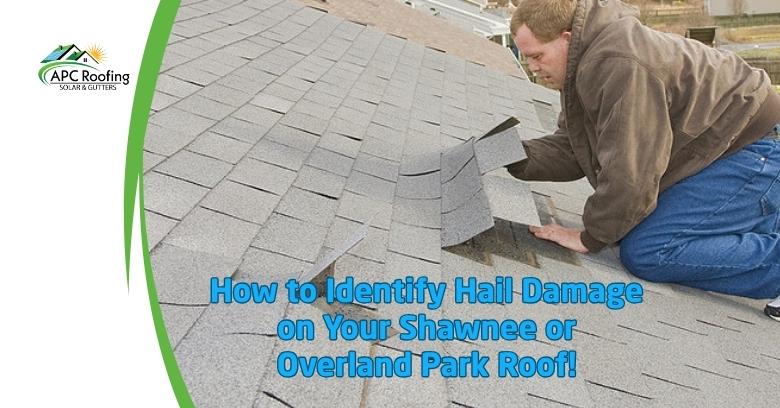
Hail is hard on commercial roofs in Missouri and Kansas, and the damage often hides. A membrane bruises rather than shatters, so a roof can look fine on top while the insulation underneath is cracked. Florida buildings deal more with wind, which lifts roof edges and corners first and works inward. After a significant storm, a close inspection with core cuts where damage is suspected gives you a clear record while it’s still fresh.
If you decide to file an insurance claim, you file it with your insurer and you’re responsible for your deductible. We document the damage, provide the estimate and can meet your adjuster on the roof.
Working around an open business
Logistics are half of a commercial roofing project. Where does the crane or hoist set up, and on which day? How much parking is lost, and for how long? How will noise and odor reach tenants and customers? Can the work be done in sections so nothing is left open overnight? What happens if rain shows up halfway through a section?
A good contractor raises those questions before you have to. We’ll talk them through with you before the job is scheduled.
What a commercial roofing contractor’s bid should answer
If you’re comparing proposals, make sure each one tells you:
- The membrane type and its thickness
- How it’s attached, including the heavier fastening needed at corners and edges
- The insulation type and its total R-value
- What happens to the existing roof, backed by core-cut findings
- How drainage will be improved, not just kept the same
- The edge metal and how the roof is finished at walls and curbs
- What the manufacturer warranty covers, what voids it and who inspects the work
Two bids that answer all of that can be compared honestly. A bid that answers none of it is only a number.
How it works
- Book your free inspection. Call 866-995-0704 or request a free estimate online.
- Get a clear, honest assessment and estimate. You’ll get photos, our findings and a written proposal that spells out the details above.
- The work gets done and the site gets cleaned up. We plan the schedule around your operations and clean up as each section is finished.
Commercial roofing near you
We work on commercial buildings in each of our markets. See commercial roofing in Orlando, commercial roofing in Daytona Beach, commercial roofing in Shawnee and the Kansas City area and commercial roofing in Springfield, MO.
Commercial roofing questions
Can you repair my roof instead of replacing it?
Often, yes. If the membrane is still flexible, the damage is limited and the insulation is dry, a repair is usually the better spend. We’ll tell you which situation you’re in and show you why.
Can the work happen while my business is open?
In most cases. It takes planning around access, parking, noise and weather, and we’ll work through that with you before we start.
Do you work on flat roofs on small buildings?
Yes. We work on low-slope roofs for small commercial buildings as well as larger ones.
Is the inspection really free?
Yes. The inspection and estimate are free, with no obligation.
Protect the building and the business inside it
A slow commercial roof leak costs more than roofing. It damages ceiling tile, insulation and inventory, and it can disrupt tenants long before anyone traces it to the source.
Call 866-995-0704 to book your free commercial roof inspection. You’ll have a dry building, a roof plan you understand and a bid with no surprises in it.