Something’s wrong with your roof. Maybe it’s a stain on the ceiling, a few shingles in the yard after a windy night or a contractor at the door saying you need a whole new roof. You don’t want to ignore it, and you don’t want to spend thousands more than you have to. Mostly you want someone to tell you straight what the roof actually needs.
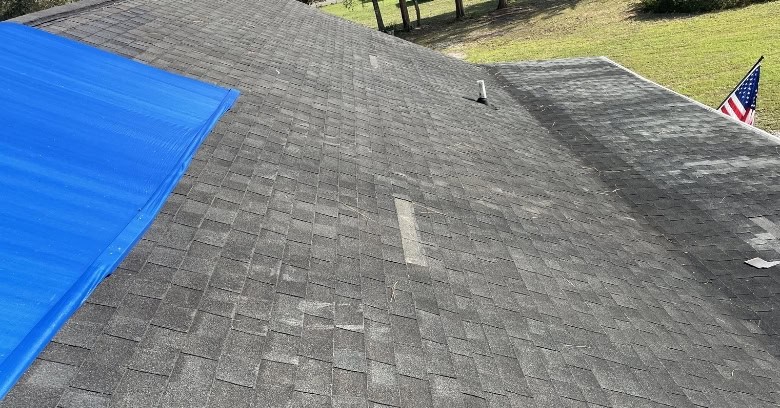
That’s the hardest part of roof repair. Fixing a roof isn’t the tricky bit. Deciding whether fixing this particular roof is the right use of your money is, and that decision should be based on what’s actually up there.
APC Roofing has repaired and replaced roofs since 2017 across Central Florida, the Daytona Beach area, the greater Kansas City area and Springfield, Missouri. We’re GAF Certified, licensed and insured, and the inspection is free. Call 866-995-0704 to have your roof looked at.
What roof repair usually covers
The list of common repairs is shorter than most people expect:
- Shingles or metal panels torn off or lifted by wind
- Cracked pipe boots and dried-out sealant
- Flashing pulled away at a wall or chimney
- Punctures from a fallen limb
- Hail damage concentrated on one or two slopes
- Split seams or blisters on a flat section
- Fasteners backed out of metal panels
- Valley or edge metal that’s worn or rusted through
Each of these has a right fix for the roof it’s on, whether that’s shingle, metal, tile or a flat roof. Each also has a quick fix that holds for a season and then fails again. The repairs that come back are usually the ones that treated a symptom, like a patch over a leak that was really caused by flashing installed wrong years ago.
Before you pay for a repair, someone should be able to explain why the problem happened, not just where it is. Sometimes that answer changes the job.
Repair or replace: four questions that settle it
How old is the roof? A roof in the last few years of its expected life rarely pays back a big repair. You’d be buying time on something with little time left.
How much of the roof is affected? Damage on one slope is usually a repair. The same damage on every slope usually points to replacement.
Is there a pattern? One problem can be bad luck. New problems showing up somewhere different every few months mean the roof is wearing out, not just damaged.
What are your plans? If you’re selling or refinancing soon, a buyer’s inspector and a lender will both weigh in, and a repaired roof doesn’t carry the same weight as a new one.
There’s a fifth check that’s simple math. Add up what you’ve spent on repairs over the last few years and set it next to the cost of a replacement. The numbers often make the decision for you. If replacement is where you land, our roof replacement page explains what to expect.
Two things to ask before the work is scheduled
The first is matching. Shingle lines get discontinued and colors fade in the sun, so a repaired patch can be sound but visible from the street. On tile and metal roofs, matching the profile matters even more than matching the color. Ask whether a match exists before the work starts, not after.
The second is timing. After a big storm, roofers across a whole region get busy at once. Ask when a crew can realistically get to you and what happens if the leak gets worse while you wait.
Storm damage looks different by region
Wind, hail and wind-driven rain cause most sudden roof damage, and the pattern depends on where you live. In Central Florida and the Daytona Beach area, damage often comes with tropical storms and hurricanes, plus the heavy afternoon storms of summer. In the Kansas City area and around Springfield, it tends to arrive with little warning: a hailstorm, a strong gust front, a limb through the roof.
Wherever you are, have the roof looked at after a significant storm, even if every ceiling is dry. Damage that hasn’t leaked yet is still damage, it’s easier to fix while it’s small, and it’s easier to document while the storm is recent. Our storm damage page covers what to look for.
If you decide to file an insurance claim, you file it yourself and pay your own deductible. APC can document the damage with photos, provide an estimate and work with your adjuster. Be wary of anyone who offers to waive or cover your deductible.
Leaks and emergencies
If water is already coming in, our roof leak repair page explains how leaks are traced to where they actually start, which is often not right above the stain. For sudden, serious damage, see emergency roof repair.
How it works with APC Roofing
- Book your free inspection. Call 866-995-0704 or request a free online estimate.
- Get a clear, honest assessment and estimate. You’ll see photos of what we found and hear whether a repair or a replacement makes more sense, and why.
- Get the roof fixed and the site cleaned up. The crew does the work and leaves your property clean.
If a larger repair or replacement is the right call, financing is available through Aqua Finance, Fortifi, Hearth and Home Run Finance.
Roof repair questions
How do I know if my roof can be repaired instead of replaced?
If the roof has useful life left, the damage is limited to one area and the cause can be explained, a repair usually makes sense. Widespread wear or problems that keep popping up in new places point toward replacement.
Should I get my roof checked after a storm if nothing is leaking?
Yes. Lifted shingles, cracked seals and hail bruising often don’t leak right away. Finding them early keeps the repair small and gives you a dated record of the damage.
Can you match my existing shingles or tiles?
Often, but not always. Discontinued products and sun-faded colors can make an exact match hard. Ask about matching during your inspection, before any work is scheduled.
Do you repair metal, tile and flat roofs too?
Yes. APC works on shingle, metal, tile and flat roofs, and the right repair method depends on the roof system.
Make the decision with the facts in front of you
Putting off a small repair rarely saves money. A lifted shingle or cracked boot can let water reach the deck and the ceiling below, and the repair grows from there.
Get the roof checked, see the photos and make the call with real information. Whichever way it goes, you’ll know your home is covered and you won’t be guessing every time the forecast turns. Call 866-995-0704 to book your free inspection, or start your estimate online.