Your roof has been patched more than once, the same stain keeps coming back, or a storm left you staring at missing shingles and wondering if this is the year. A roof replacement is a big expense, and the hardest part is often not knowing whether you truly need one or whether someone is just trying to sell you one.
That’s a reasonable worry. You want a straight answer from someone who will show you what they found, not a sales pitch.
APC Roofing has been replacing roofs since 2017 across Central Florida, the Daytona Beach area, the Kansas City metro and Springfield, Missouri. We’re GAF Certified, licensed and insured, and the inspection and estimate are free. Call 866-995-0704 to have us come out.
Signs it’s time for a roof replacement
Age alone doesn’t settle it. Patterns do. Here’s what tends to point toward replacement rather than another repair:
- Repairs that keep moving to a new spot each season
- Brittle, curling or cracked shingles across whole slopes, not just one corner
- Lots of granules washing into your gutters after rain
- Bare spots where the protective surface has worn away
- Daylight or damp wood visible from inside the attic
- Leaks that come back after being fixed
A sag along the ridge or between rafters is different. That points to the structure under the roof, and you should have it looked at soon.
One problem in one place is usually a repair. The same problem in five places is a roof telling you it’s done. A simple way to think it through: add up what you’ve spent on repairs over the last few years and set it beside the cost of a new roof. If you’re not sure, our roof repair page covers what can often be fixed instead.
Picking the right roof for your house and weather
A replacement is your chance to choose the roof that fits how you live and where you live.
Architectural shingles are the most common choice and suit most homes. Metal costs more up front and holds up well to wind and hail; our metal roofing page explains the options. Tile is common in Florida and lasts a long time when the underlayment beneath it is done right. Flat and low-slope systems cover porches, additions and some commercial buildings.
Weather plays a big part. In Central Florida and around Daytona Beach, you’re dealing with strong sun, heavy summer storms and hurricane-season wind, so wind ratings and how the roof is fastened at the edges matter a lot. In the Kansas City metro and Springfield, hail and freeze-thaw cycles do the most damage, which makes impact-rated shingles worth a look.
What happens on replacement day
Many residential projects are finished in a single day. Here’s roughly how it goes.
The old roof comes off. A typical house roof weighs several tons, and if someone roofed over the original, there are two layers to remove. Your property, landscaping and outdoor equipment should be protected during tear-off.
The deck gets checked. With the old roof off, the wood underneath is visible for the first time in years. Soft or damaged boards need to be replaced, because nothing new should be fastened into wood that won’t hold.
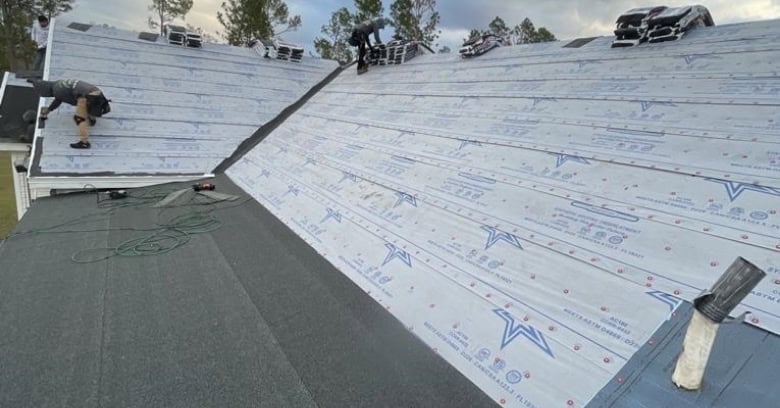
The new layers go on. Drip edge, underlayment, flashing at walls and chimneys, starter shingles, then the roof itself and the ridge. Our roof installation page walks through each layer.
Cleanup. Debris and nails get cleared, and the site is left clean.
What to get in writing before anyone starts
A good roof replacement proposal answers these questions up front:
- Decking. Nobody can know how much decking needs replacing until the old roof is off, but the rate for it can be agreed ahead of time. Ask for it in writing, and ask that any changes be photographed and approved by you.
- Flashing. Which flashings are being replaced and which are being reused. Old flashing under a new roof is a common cause of early leaks.
- Permits. Who pulls the permit and when the inspection happens. That inspection protects you.
- Gutters. Whether they’re staying or being replaced. The roof edge and gutters work together, so it’s worth deciding at the same time.
Storm damage and insurance
If a storm damaged your roof, you file your own claim with your insurance company and pay your own deductible. We document the damage with photos, provide a written estimate and work with your adjuster so the damage is clearly accounted for. Be wary of anyone who offers to waive or cover your deductible. Our insurance roof claims page explains how the process usually goes.
How it works with APC Roofing
- Book your free inspection. Call 866-995-0704 or request a free online estimate.
- Get a clear, honest assessment and estimate. You’ll see photos of your roof, hear whether it’s a repair or a replacement, and get a written estimate.
- Get your new roof and a clean site. Many residential roofs are installed in a single day, and the crew cleans up before leaving.
If you’d like to spread out the cost, financing is available through Aqua Finance, Fortifi, Hearth and Home Run Finance.
Roof replacement questions
How long does a roof replacement take?
Many residential projects are finished in one day. Larger or more complex roofs, tile roofs and metal roofs take longer, and your estimate will include a realistic timeline.
Do I have to be home during the replacement?
Not usually, though it helps to be reachable in case decking needs replacing. Expect noise and vibration inside, so take fragile things off the walls in rooms below the roof.
Can you put a new roof over my old one?
Sometimes, but a tear-off is usually the better choice. It lets the deck be checked and repaired, and many areas limit how many layers a roof can have.
Will my insurance pay for a new roof?
If the damage came from a covered event like wind or hail, your policy may cover part or all of the replacement minus your deductible. Your insurer decides that. We document the damage and work with your adjuster.
Do you offer financing?
Yes, through Aqua Finance, Fortifi, Hearth and Home Run Finance. Ask about it at your inspection.
Get a clear answer before you spend anything
Waiting on a roof that’s done rarely saves money. A slow leak can soak insulation and rot the deck for months before you see a stain, and by then the job is bigger.
Call 866-995-0704 to book your free inspection, or start your estimate online. You’ll know what your roof needs, what it’ll take and that you made the right call for your home. Trust matters.