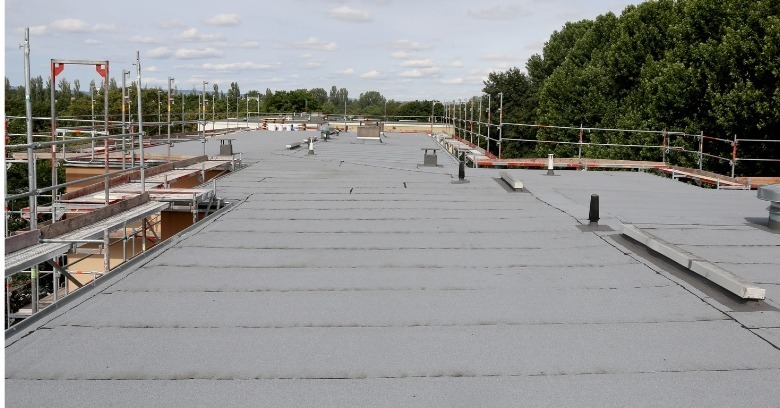
In the market for Commercial Roofing in Kansas City Missouri?
APC Roofing replaces and patches membranes on warehouses, shops and offices, with the flashings, outlets and trim included.
Dial 913-398-5020 and a roofer will come out and look everything over.
Buildings Where People Work – Some Background
Customers, goods and running machines fill the space beneath the covering, so a drip can shut down a shift instead of staining a tile. A big footprint is covered at a gentle grade, and runoff and uplift are engineered rather than guessed.
Mechanical units, vents and satellite dishes share the space overhead, and each duct, line or support passes through the waterproofing. How the building is used guides the specification, because a bakery and a document archive ask for different things.
Membrane Families: a Short Guide
Single-ply means one factory-made layer of TPO, PVC or EPDM, modified bitumen is rubberized asphalt sold by the roll, and built-up roofing alternates felt with hot tar. The laps on a thermoplastic sheet are fused by a welding machine, whereas a rubber splice depends on primer and tape.
A commercial kitchen pushes greasy vapor up through the exhaust fans, and oily buildup degrades asphalt and EPDM coverings, so PVC is often specified in the affected zone. A built-up roof topped with gravel is heavy and long-wearing, because the loose aggregate keeps ultraviolet light off the bitumen.
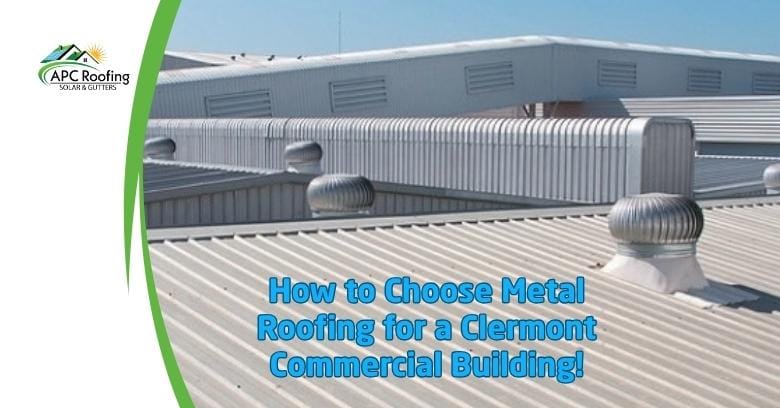
Metal Panels on Business Buildings – Details Worth Knowing
Exposed-fastener sheets are secured with screws through the flats, and the threads bite into the purlins beneath. The sealing washers age and harden on a hot, sunny surface, and fasteners loosen as the metal moves with temperature.
On standing seam, concealed clips hold each rib to the deck, and the pans slide freely along the length. Rust is often found at overlaps and cut edges, and a coating over steel that is still sound can slow the damage.
Decking on Big Buildings: Reading the Substrate
Attachment methods are limited by what the original builders put in, and the framing normally stays through every reroof. Steel with flutes holds screws securely, concrete calls for adhesive or drilled anchors, and plywood takes nails or plate fasteners.
Years of dampness can corrode metal decking in patches, and the failed section is removed and rebuilt. From inside, the underside is inspected wherever the ceiling allows, and small cuts from the upper side answer the rest.
Keeping a Membrane in Place – What Suits Where
Mechanically fastened sheets carry rows of plates and screws in the laps, adhered work is glued from edge to edge, and ballasted sheets lie free beneath river rock or concrete pavers. The kind of deck, the height and the wind at the site decide the pick, and a frame with no spare capacity rules out a heavy layout.
Gusts make a screwed membrane ripple between the fastener lines, whereas an adhered sheet stays still but needs a clean, dry substrate. On ballasted work an inspection drags, since rock or pavers have to be cleared before a lap can be read.
Uplift on a Big Building – a Matter of Engineering
Pull is greatest at the outside angles, because moving air curls and speeds up on spilling over the edge. The strip down each side carries a smaller share, and the open middle is loaded more gently.
More plates per square foot go in at corners and edges, and published wind tables fix the spacing for each height. An outer angle with too few anchors allows the sheet to lift, and trapped air balloons the free piece and rips further.
Foam Insulation: Beyond Energy Savings
Polyiso is set on the deck in one or more courses, and a thin, hard cover board is often added last. Insulation keeps utility bills in check, and tapered stock tilts the finished surface toward the drains.
Soaked foam gives up most of the thermal resistance, and the soggy material sags while rust spreads beneath. Nondestructive meters and cored samples show how far the problem reaches, and each sodden piece is removed instead of buried.
Outlets on a Big Building: The Path Down
Every interior sump is guarded by a strainer dome, so debris stays out of the leader below. A clogged grate slows the outflow to a trickle, and a wide pool gathers in the surrounding field.
A secondary outlet is set slightly above the everyday drain, and runoff spilling at the upper level points to a plug further down. Ponding piles extra weight onto joists sized for far less, and a puddle still there two days after a storm indicates a sag or a matted strainer.
Tracing a Leak – No Guesswork
A soggy tile shows the spot where moisture emerged below, and the break in the membrane can sit many yards away. Steel decking guides runoff down the corrugations, and gaps between insulation boards add more routes.
On the membrane, every lap, curb and outlet on the high side gets examined, and electronic leak detection can locate a pinhole. Patching straight above the damp tile usually lands in the wrong place, and moisture finds a way in at the next storm.
Cabinets and Condensate – Leak-Prone Spots
Each large machine stands on a raised curb, and flashing wraps the sides up to a sheet-metal cover. The corners are the fussiest detail up there, and a poorly sealed crease admits rain.
Swapping a machine for a newer model tends to add an adapter curb without flashing, so a new leak follows within a season. Condensate discharged straight onto the covering discolors and softens the surface, and the fix is carrying the flow to a drain.
Pipes, Vents and Conduit: Handling Each Type
Each round stack wears a prefabricated boot with a clamp, while awkward profiles are boxed in a pitch pocket and packed with filler. Aging compound contracts and opens hairline gaps, and adding fresh material is ordinary maintenance.
Electrical conduit and gas lines ride on blocks simply set in place, as a stand screwed into the deck punctures the waterproofing. Pads cut from spare roofing stock go under each base, and the cushion saves the sheet from abrasion as the piping moves.
Domes and Hatches: Where Attention Goes
Sunlight slowly turns acrylic bubbles dull and fragile, and the screwed-down rim is where cracks start. A shrunken gasket or a separated miter lets water through, and the covering gets accused of a fault in the glazing.
The hatch at the top of the ladder sees daily traffic on some buildings, and constant use loosens hinges and flattens the weatherstrip. Automatic smoke vents are built to burst open during a fire, so flashing and materials stay clear of the swing path.
Masonry Above the Roofline – Sealing the Junction
At the vertical face, the sheet climbs as base flashing, a termination bar holds the top margin, and a counterflashing strip sheds water outward. A coping cap spans the crest to push rain aside, yet a single open butt joint sends runoff downward.
Porous brick or block can pass water straight through to the interior, and the resulting mark resembles a roofing defect. An inspection covers the coping, the counterflashing and the wall as well as the membrane, and a gap in the mortar is repointed, never just caulked.
Fascia Metal at the Outer Edge – Wind at the Border
Along the eave, a long cleat grips the hemmed lip of the flange, and a stripping ply seals the sheet to the horizontal face. Codes want perimeter pieces that pass uplift testing for the site, and an undersized section flexes until the metal pulls away.
Gutters on a large building must swallow drainage from an enormous area, and the hangers, joints and leaders must be sized generously. Any trim that has bent or lifted needs fixing, and fastening down loose runs helps stop the membrane peeling away.
Other Trades Overhead: Protecting the Sheet
Equipment mechanics may be up top every few weeks on a busy building, and a path gets a little more scuffed each season. Screws left lying about are pushed into the membrane by work boots, and a falling wrench can split the sheet.
A line of walkway pads guides people to every unit, and the abuse lands on something made to take the wear. Contracts with service firms can spell out where crews may walk, and cut-offs and fasteners go down with the worker who carried up the parts.
A Regular Look Up Top: Small Jobs Kept Small
A commercial covering should get a professional walk-through twice annually, plus an extra check after a severe storm. Regular servicing clears the strainers of collected debris, a probe is drawn along each lap, and caulked joints are examined for cracking.
Ahead of the stormy months, outlets and perimeter metal get close attention, and a return after rough weather finds what shifted. Every minor fault is recorded with the exact spot, and trouble shows up long before water comes through.
Roof Records: Knowledge That Lasts
A scaled drawing shows where each unit, drain and hatch sits, and a written build-up traces each component from the deck to the membrane. Photos with dates accompany every repair entry, and core samples and scan readings are appended when available.
Countless older buildings reach new owners with no history attached, and each roofer who climbs up has to investigate afresh. A roof log stays with the site, so a later buyer or manager starts out informed.
Choosing the Scope: Reading the Evidence
A sound membrane with a handful of local faults simply gets patched, while a tired but dry surface can carry a silicone or acrylic layer. Waterlogged insulation across large areas points toward a new covering, as does brittleness at every lap, but the calendar alone is no verdict.
A silicone or acrylic coat demands a clean, mended substrate, while lingering dampness gets bottled up. Now and then the answer is replacing just the spoiled sections, as long as the remaining membrane has plenty of service ahead.
Reroofing Options – Guided by What Lies Beneath
A recover puts a fresh membrane over the current roof, and a cover board separates the surfaces. Building codes accept an overlay where only a single covering is in place, provided the insulation beneath is dry.
A full tear-off removes every layer, right down to bare metal or concrete, and damaged sections of deck are mended while exposed. New tapered insulation can correct ponding during the same project, and crickets between drains split the runoff.
Signs Worth Reporting – Before Leaks Spread
- Splashing from the upper overflow opening, which betrays a choked everyday outlet.
- A brown ring overhead that widens with each downpour, which confirms a path through the assembly.
- White salt deposits across the parapet face, which can signal water entering the masonry.
- Loose screws or gaps along the perimeter trim, which can expose the border to uplift.
- Ponding visible from a higher window days after rain, which hints at a low area in the structure or a slow drain.
- A hazy plastic dome over the warehouse floor, which can admit rain at the frame.
- Wet insulation hanging from an open ceiling, which often traces back to a lap or a curb.
- A gutter pulling away from the hangers, which can soak the wall and the ground below.
How APC Roofing Tackles Commercial Roofing in Kansas City Missouri: What Happens and When
We look first at the drains, scuppers and overflows, and the laps, curbs and edges follow in turn. A leak brings a moisture survey of the insulation, so nothing is proposed until the results are in.
A written report, photos and a sketch record what we found, and each item carries a location note. The conclusion is repair, restore or replace, and the why is explained in terms you can verify.
Commercial Roofing Around Kansas City Missouri – A Clear Picture First
Reach us at 913-398-5020 and we will schedule a time to come out.
Sharing the Building: Noise, Odor and Debris
Every screw driven into steel decking is heard indoors, and glue fumes can travel down through open intakes. The loud stages are planned with the building manager ahead of time, and vents close to the work can be blocked until curing ends.
Waste is sent to the ground through an enclosed chute, and tarps can go over whatever sits below. Water-based adhesives give off far less odor than solvent-based glue, and the gentler choice suits a building full of people.
Staged Work on a Big Surface: Planning the Steps
Old layers come off only in amounts that can be closed up by evening, and each opened area is made tight again as stripping advances. A temporary tie-in joins the finished work to the existing covering overnight, and the barrier is cut out as work continues.
The weather report limits the size of each tear-off, and a threatening sky scales the plan back. A sudden soaking ruins exposed insulation, and the contents beneath may get wet.
Regional Conditions – Market by Market
At the colder end of our territory, hail and snow load both count, which argues for tough cover boards and a structural check. Wherever we operate, ultraviolet light and heat age the sheet, and a pale surface sends much of the radiation back.
The coastal end of our territory demands fastening designed around hurricane gusts, and torrential rain makes backup outlets essential. Glues and primers carry a temperature floor, while welding thermoplastic seams works in chilly air but pauses for showers.
Safety for Everyone Who Goes Up: Rules on the Job
Short parapets and bare perimeters leave nothing between a worker and the ground, and anyone near the edge works inside warning lines or clipped to anchors. A skylight dome cannot carry a person's weight, so guards over each opening are standard practice.
Permanent anchors help everyone who services the units, and a gated ladder hatch adds another safeguard. Our findings name each missing screen or rail, since a fall from even a single story can cause serious injury.
For help with Commercial Roofing in Kansas City Missouri, reach APC Roofing at 913-398-5020. We will cover the surface on foot, from the outlets to the parapets, and a written report follows, with the next step up to you.
Verified

Verified