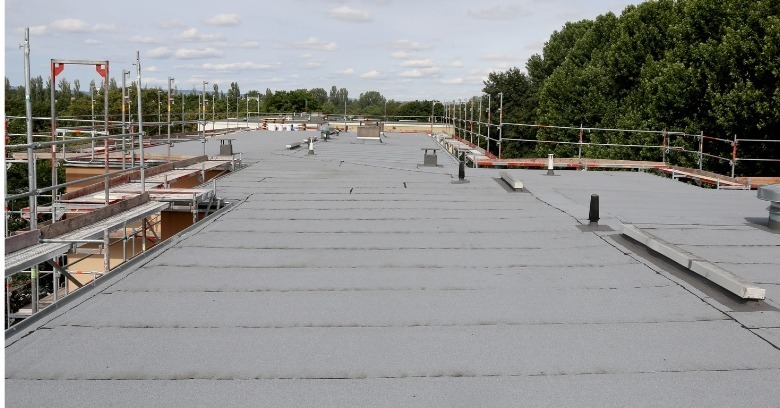
Searching for Commercial Roofing in Springfield Missouri?
APC Roofing builds and mends the wide, low coverings above places of work, taking in the edges, the outlets and every curb.
Call 913-398-5020 and a roofer will inspect the whole surface and report back.
Business Property: Setting the Scene
Staff, stock and machinery sit beneath the membrane, and seepage can empty an aisle or stall a packing station. A large building is usually topped by a broad, nearly level surface, so rain runoff and wind loads are set by design numbers.
Condensing units, exhaust stacks and antennas are spread across the top, and every pipe, duct or support must have a sealed opening. How the building is used guides the specification, and a freezer warehouse needs details an office never does.
The Principal Membranes: a Short Guide
One flexible layer of TPO, PVC or EPDM is what single-ply describes, modified bitumen comes as polymer-rich asphalt on a roll, and built-up roofing is felt sealed with hot tar several plies deep. Thermoplastic overlaps are heat-welded into a continuous piece, whereas rubber splices rely on primer and adhesive tape.
Cooking vents on a restaurant leave fat beside the fans, and EPDM and asphalt swell and weaken beneath oily residue, so PVC tends to be installed across the exposed zone. Built-up work finished with gravel carries real weight and holds up for decades, and the aggregate shields the bitumen from sunlight.
Metal on Shops and Plants: Upkeep Notes
Screws through the flats hold an exposed-fastener sheet in place, and the threads bite into the purlins beneath. The sealing washers age and harden on a hot, sunny surface, and daily expansion and contraction slowly back the fasteners out.
On standing seam, concealed clips hold each rib to the deck, so each pan can creep as the metal grows and shrinks. Red rust breaks out at laps and along cut edges, and a coating over steel that is still sound can slow the damage.
Decking on Big Buildings: Age and Condition
The way the layers are attached follows from the structure beneath, and the framing normally stays through every reroof. Ribbed steel accepts screws with no trouble, a concrete slab needs glue or anchors set in drilled holes, and wood or gypsum plank takes nails or purpose-made fasteners.
Water held against a metal deck for years can thin the sheet, and the failed section is removed and rebuilt. From inside, the underside is inspected wherever the ceiling allows, and cores drilled from above confirm the remainder.
Securing the Field – Pros and Cons
Some commercial sheets go down with plates and screws at the seams, adhered work is glued from edge to edge, and ballasted sheets are held down by rock or pavers. The deck, the building's height and the site's exposure steer the decision, and the framing's spare load capacity limits how much weight can go on top.
A mechanically fastened sheet billows between fastener rows in strong gusts, whereas glue keeps a sheet calm only over a dry, clean base. Inspecting a ballasted system takes time, since rock or pavers have to be cleared before a lap can be read.
Wind on Low-Slope Work: Setting the Screw Pattern
Corners take the strongest suction, because swirling eddies form where the air crosses the perimeter. The zone running down each side follows close behind, and the central field is spared most of the load.
Fasteners go in closer together near corners and edges, with the layout drawn from design tables for the site. An outer angle with too few anchors allows the sheet to lift, and air forced underneath keeps widening the opening.
Foam Insulation: More Than Warmth
Polyisocyanurate panels cover the deck with offset joints, and a thin, hard cover board is often added last. The layer cuts energy use across the building, and a tapered layout pitches the finished face toward the drains.
A saturated panel no longer holds back heat, and trapped water weighs on the structure and corrodes steel. An infrared scan at dusk, backed by cores, outlines the affected zone, and any spoiled patch is replaced, never roofed over.
Drainage Hardware – Parts of the System
Every interior sump is guarded by a strainer dome, and the slots hold back gravel and plastic bags. When the grate mats over, rain has nowhere to go, and a pond spreads across the field.
A secondary outlet is set slightly above the everyday drain, so a steady discharge up high means a jam below. Standing water loads the frame with weight beyond the design, and a puddle still there two days after a storm indicates a sag or a matted strainer.
Tracing a Leak – a Careful Search
A brown ring on an acoustic tile shows where rain reached the room, but the split in the sheet is often somewhere else entirely. Runoff travels along the flutes of a steel deck, and gaps between insulation boards add more routes.
Laps, curbs and outlets upslope of the stain are checked by hand, and a controlled hose test can isolate a hidden entry point. Repairs aimed at the spot directly over the drip tend to miss, so a fresh ring appears in the next shower.
Cabinets and Condensate – Practical Notes
A built-up curb lifts each machine above the field, and flashing wraps the sides up to a sheet-metal cover. Each folded inside corner takes careful work to stay watertight, and a small gap lets wind-driven rain into the structure.
An equipment change often brings an adapter curb that no roofer ever flashed, and stains appear below a few storms later. Condensate running loose over the membrane breeds growth and grime, and a short extension to a drain ends the problem.
Objects That Rise Above the Surface: Handled Case by Case
Each round stack wears a prefabricated boot with a clamp, while oddly shaped items get a metal pan poured full of sealant. Over time the compound pulls away and splits, so topping up is part of routine upkeep.
Conduit and gas lines belong on free-standing supports, because a mount fastened through the sheet lets rain in. A walkway-grade pad under each base spreads the load, and the cushion saves the sheet from abrasion as the piping moves.
Skylights, Hatches and Smoke Vents – How Leaks Begin
Plastic bubbles on older units go cloudy and brittle under sunlight, and hairline breaks radiate from each fastener. Rain slips past a dried gasket or an open frame corner, and the covering gets accused of a fault in the glazing.
Every trip up the ladder means lifting the hatch cover, so the latch, springs and weatherstrip eventually give out. Automatic smoke vents are built to burst open during a fire, and nothing stacked or sealed nearby is allowed to jam the lid.
Masonry Above the Roofline: Common Trouble Spots
Base flashing carries the membrane up the inside face, a screwed termination bar secures the top, and counterflashing hangs down to shield the fastened line. A coping cap crowns the parapet and throws rain clear, yet a gap between sections funnels runoff downward.
Porous brick or block can pass water straight through to the interior, and to anyone downstairs the wet ceiling seems like a roof leak. A proper look takes in the coping, the flashings and the wall along with the sheet, and cracked mortar gets repointed rather than smeared with sealant.
Edge Metal Without a Parapet: What to Inspect
The folded hem of the flange hooks over a cleat on the nailer, and a cover strip ties the sheet to the upper face. The profile chosen has to be rated for wind at the building's elevation, and an undersized section flexes until the metal pulls away.
Gutters on a large building must swallow drainage from an enormous area, so hanger spacing and outlet size follow the flow. Crumpled or raised trim is a clear repair item, because refastening early lowers the risk of a blow-off.
Visitors Who Are Not Roofers – Keeping Damage Down
Refrigeration mechanics may call on a large store every few weeks, and a worn lane appears between the hatch and the units. A dropped screw gets pressed through the membrane by the next boot, and a falling wrench can split the sheet.
Walkway pads set out a marked route to the equipment, so scuffing lands on a sacrificial layer. Managers can require contractors to keep off the unprotected sheet, and screws and scraps can be bagged and taken down.
Planned Care for a Membrane – Staying Ahead of Leaks
A commercial system benefits from a walk-through twice annually, with an added check after any violent storm. A service call clears leaves and trash from the strainers, the seams are traced with a probe, and the sealant at each pocket is inspected.
Preparing for the stormy months means close scrutiny of outlets and perimeter metal, and a follow-up hunts for whatever a harsh stretch of weather pulled apart. Small problems are noted against a drawing of the building, so repairs can be arranged before a leak starts.
Documenting a Covering: Kept for Later Years
A marked-up plan locates every unit, drain and hatch, and a written cross-section lists every layer from the deck up. Photos with dates accompany every repair entry, and moisture readings are added as taken.
Plenty of older buildings arrive with no history at all, which leaves every new contractor guessing. Roof records stay with the site office, and a copy passes to the next manager or buyer.
Mend, Coat or Start Over: Reading the Evidence
A membrane that is mostly intact needs only spot patching, while a tired but dry surface can carry a silicone or acrylic layer. Waterlogged insulation across large areas points toward a new covering, and brittle joints throughout lead the same way, but age alone decides little.
Any restoration coating depends on a washed, repaired substrate, because trapped moisture beneath gets locked in. Now and then the answer is replacing just the spoiled sections, where the surrounding membrane still has life left.
The Reroofing Decision – the Rules and the Reasons
Recovering adds another membrane on top of the current roof, and a separation board is laid in between. Codes limit an overlay to buildings with a single covering in place, and the foam underneath must be dry.
A complete strip-off clears away every layer, and the exposed deck can be inspected and repaired. Tapered insulation installed at the same time can reduce chronic puddling, and a saddle between drains turns the flow toward each outlet.
Warning Signs: Before a Small Fault Grows
- Water pouring from an overflow scupper during rain, which announces a stalled main outlet.
- Discolored ceiling panels that darken after wet weather, which reveals the foam above is getting soaked.
- Blotches or efflorescence on brick under the coping, which can trace to a leaking downspout joint.
- Edge metal visibly bent or lifted from the ground, which can hand a gale a lever.
- Standing water in the same place long after a downpour, which may reflect a depression or a sluggish drain.
- A hazy plastic dome over the warehouse floor, which can admit rain at the frame.
- Water trickling down an interior column in a storm, which tells of moisture moving along the flutes.
- A downspout that backs up in heavy rain, which can reflect loose brackets or a jam.
How APC Roofing Tackles Commercial Roofing in Springfield Missouri: What Happens and When
The drains, scuppers and overflows get our attention before anything else, and the laps, curbs and edges follow in turn. If there is a leak, the layers under the membrane are tested, and no recommendation is made until the readings are in.
Each visit ends with a written account, a plan sketch and photographs, and each item carries a location note. Each proposal names a choice: repair, restore or replace, and you get reasons to weigh for yourself.
Commercial Roofing Across Springfield Missouri: Plan the Next Step
Phone 913-398-5020 and someone will find a time to come out.
Business as Usual Downstairs: Practical Arrangements
Fastening into metal decking carries a racket into the offices underneath, and glue fumes can travel down through open intakes. Noisy tasks are scheduled with the manager's input, and vents near the work can be shut while the cement cures.
Debris leaves by chute into a dumpster, and tarps can go over whatever sits below. Most of the odor comes from solvent, and water-based glue has far less, so gentle formulas are often specified above working space.
Staged Work on a Big Surface – Protecting the Interior
Crews remove only as much old covering as can be made watertight by evening, and each opened area is made tight again as stripping advances. A cutoff between finished and untouched portions keeps rain out overnight, and the patch comes out once progress picks up.
The weather report limits the size of each tear-off, so an approaching storm means a smaller opening. A sudden soaking ruins exposed insulation, and drips can fall on whatever sits underneath.
The Weather We Work In: Planning Locally
The colder end of our territory adds hail and snow load to the list, so impact-resistant cover boards and a framing check make sense. Intense sunshine in every city we cover breaks a membrane down over time, and white TPO or PVC keeps the top cooler.
At the coastal end, attachment is engineered for hurricane gusts, and tropical storms require ample secondary drainage. Adhesives come with a cold limit printed on the label, while hot-air welding copes with cool days but not with showers.
Fall Protection Up Top: a Standard Part of the Job
Where the wall is low or missing, nothing catches a misstep over the side, and anyone close to the edge wears a harness tied to an anchor. A skylight dome cannot carry a person's weight, so every opening should get a screen or a railing.
Permanent anchors left in place serve the technicians who come later, and a gate at the ladder top adds protection. Our findings name each missing screen or rail, as a single-story drop can still cause grave harm.
For Commercial Roofing in Springfield Missouri, reach APC Roofing at 913-398-5020. We will go over the entire field, drain by drain and seam by seam, and a written report follows, with the next step up to you.
Verified

Verified
Verified
Verified