A drip lands on a display shelf, a ceiling tile in the back office turns brown, or a tenant emails you a photo of a bucket. When the roof over your business starts leaking, it costs more than the repair. It costs you inventory, a day of sales or a tenant’s patience. You need commercial roofing in Blue Springs from someone who will find the actual problem and tell you plainly what it’ll take to fix it.
You probably have questions you can’t answer from the parking lot. Is this one bad seam or a roof near the end of its life? Did last spring’s hail do more than it looked like? Will a contractor sell you a full replacement when a repair would carry you for years?
APC Roofing works on commercial and low-slope roofs across Blue Springs and the Kansas City area. We’ve been in business since 2017, we’re GAF Certified, licensed and insured, and your inspection is free. Call 913-398-5020 and a roofer will come out, walk the whole roof and show you what’s there.
Commercial roofing in Blue Springs: what we handle
Most commercial calls fall into one of three situations, and each one has its own page if you want the details:
- Something is leaking now. Our commercial roof repair in Blue Springs page explains how leaks get traced on a large, flat roof, which is harder than it sounds.
- The roof is worn out. When repairs stop holding, a re-roof or full replacement is the next step. See commercial roofing installation in Blue Springs for how that process works.
- You’re not sure. That’s what the free inspection is for. You’ll get photos and a written summary either way.
We work on offices, retail buildings, restaurants, churches, warehouses and other buildings with flat or low-slope roofs, along with the metal roofs common on shops and outbuildings.
Commercial roof systems we work with
Most business roofs around Blue Springs use one of a handful of systems. Knowing which one you have makes the rest of the conversation easier.
TPO is a single-ply membrane, usually white, with seams welded together with hot air. The light surface reflects summer sun, which helps the rooms under the roof stay cooler. More on our TPO roofing in Blue Springs page.
EPDM is a rubber membrane, usually black, joined with seam tape and adhesive. It stays flexible in a Missouri January and is simple to patch.
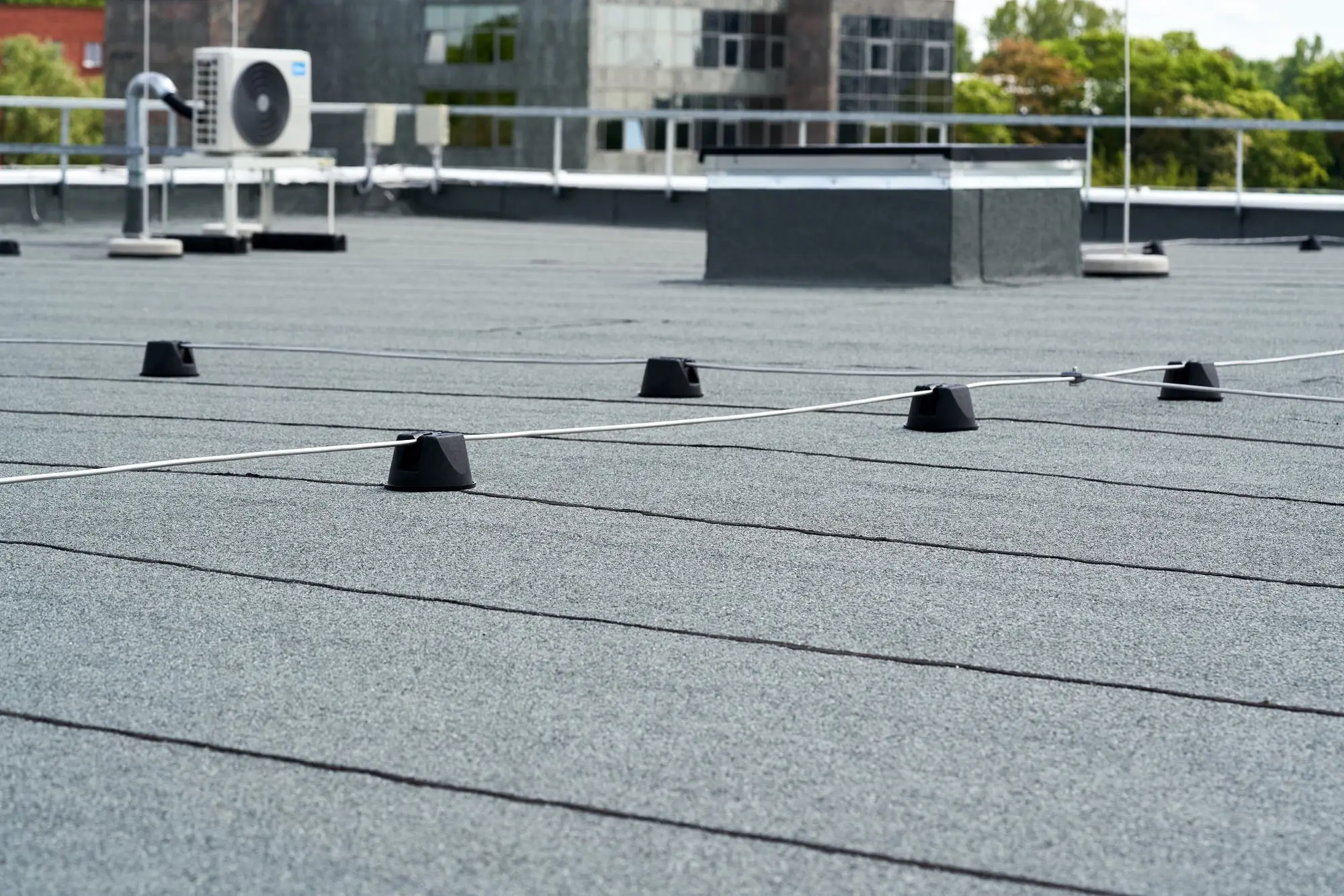
Built-up and modified bitumen roofs are the layered asphalt systems found on a lot of older buildings, sometimes with a gravel surface. Many still have life in them. When one wears out, owners often switch to a single-ply membrane.
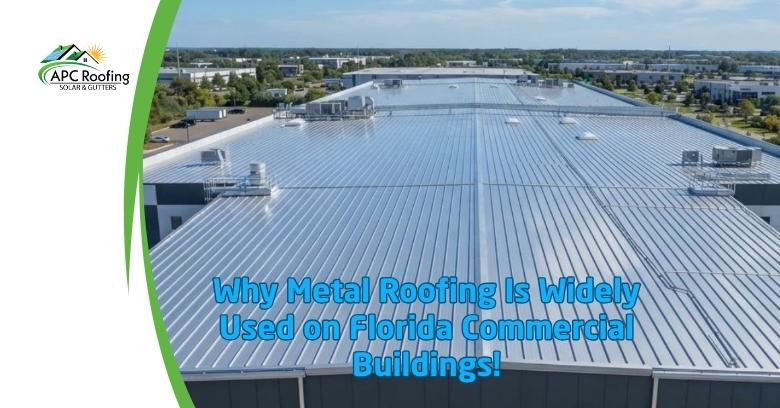
Metal roofs show up on shops, storage buildings and some newer retail. Their trouble spots are usually fasteners, seams and rust at cut edges.
How Kansas City weather works on a commercial roof
A flat roof in Blue Springs takes every storm straight on. Spring hail can bruise or puncture a membrane, and the damage is easy to miss until a leak shows up weeks later. Strong straight-line winds pull at the edges and corners first, which is where a commercial roof is most likely to peel back.
Winter is slower but just as hard on it. Snow sits on a flat roof instead of sliding off, ice can block drains and scuppers, and freeze-thaw cycles keep working at seams and flashing. Then July heat bakes the surface and dries out older membranes.
Rooftop equipment adds its own wear. Air conditioning units, exhaust fans and vents all need sealed openings, and every service visit puts boots on the roof. A lot of commercial leaks start where something sticks up through the membrane or where a technician dropped a screw.
Repair, re-roof or replace
The age of the roof matters less than its condition. A sound membrane with a few bad seams or a failed curb flashing is usually a repair. A roof where water has soaked into the insulation across large areas is a different story, because wet insulation loses its value, adds weight and keeps feeding leaks.
Finding out which one you have often takes more than a visual check. Moisture can hide under a membrane that looks fine. When a leak has been going for a while, a core sample or moisture scan shows how far the water has spread, so the recommendation is based on what’s under the surface and not a guess.
If storm damage is part of the picture, here’s how it works with us. You file the claim with your insurance company, and you pay your own deductible. We document the damage with photos, give you a written estimate and work with your adjuster so the damage on the roof is clearly accounted for. Be wary of anyone who offers to waive or cover your deductible.
Working on a building that stays open
Your business doesn’t stop because the roof needs work, and it shouldn’t have to. Before any job starts, it’s worth talking through the things that matter to you: which hours are the busiest, where deliveries and customers come and go, which areas inside hold equipment or stock that needs protecting, and how noise or adhesive odors might affect the people below. A good plan answers those questions before the first crew member climbs up.
How it works
- Book your free inspection. Call 913-398-5020 or request a free estimate online.
- Get a clear, honest assessment and estimate. We look at the membrane, seams, drains, edges, walls and every rooftop unit. You’ll get photos tied to locations on the roof and a written estimate with your options.
- The work gets done and the site gets cleaned up. Old material and debris leave with the crew.
A small commercial leak rarely stays small. Water runs along the deck and through the insulation long before it shows on a ceiling tile, and every month it runs, more of the roof is affected.
Commercial roofing questions from Blue Springs owners
Do you work on small commercial buildings?
Yes. We work on offices, shops, restaurants and other small to mid-size buildings, along with flat-roofed additions and outbuildings.
Can my commercial roof be repaired instead of replaced?
Often, yes. If the membrane is still sound and the insulation underneath is dry, targeted repairs can buy you years. We’ll show you what we found before recommending anything bigger.
What’s the best commercial roof for the Kansas City climate?
For most low-slope business roofs here, TPO or EPDM is the starting point. TPO’s white surface helps in July, and EPDM handles cold well and is easy to patch. Drainage, rooftop traffic and what’s already on the roof decide which one fits, and we’ll explain the trade-offs for your building.
Can you help after a hailstorm?
Yes. We inspect the roof, document hail damage with photos and give you a written estimate. You file the claim and pay your deductible, and we work with your adjuster.
Get your commercial roof looked at
You shouldn’t have to wonder whether the next storm will put a bucket in your lobby. Call 913-398-5020 or start your free estimate online to set up a time.
When it’s done, you’ll have a dry building, a roof plan you understand and one less thing on your list. You can see everything else we do in the area on our Blue Springs roofing page.