There’s a bucket in the stockroom again. Maybe a ceiling tile over the front counter has a brown ring, or your building’s roof is old enough that every summer storm makes you a little nervous. You need commercial roofing in Clermont, FL from someone who’ll get up on the roof, find what’s really going on and give you options that fit your budget and your business.
Running a business is hard enough without a roof decision hanging over it. You’ve got customers, tenants or inventory under that roof. You can’t afford a bid that grows once the work starts, and you shouldn’t have to guess whether you’re being sold more roof than you need.
APC Roofing is headquartered here in Clermont and has been roofing since 2017. We’re GAF Certified, licensed in Florida (CCC1337030) and insured. We handle commercial repairs, re-roofs and new roofs, and your inspection and estimate are free.
The commercial roofs we see around Clermont
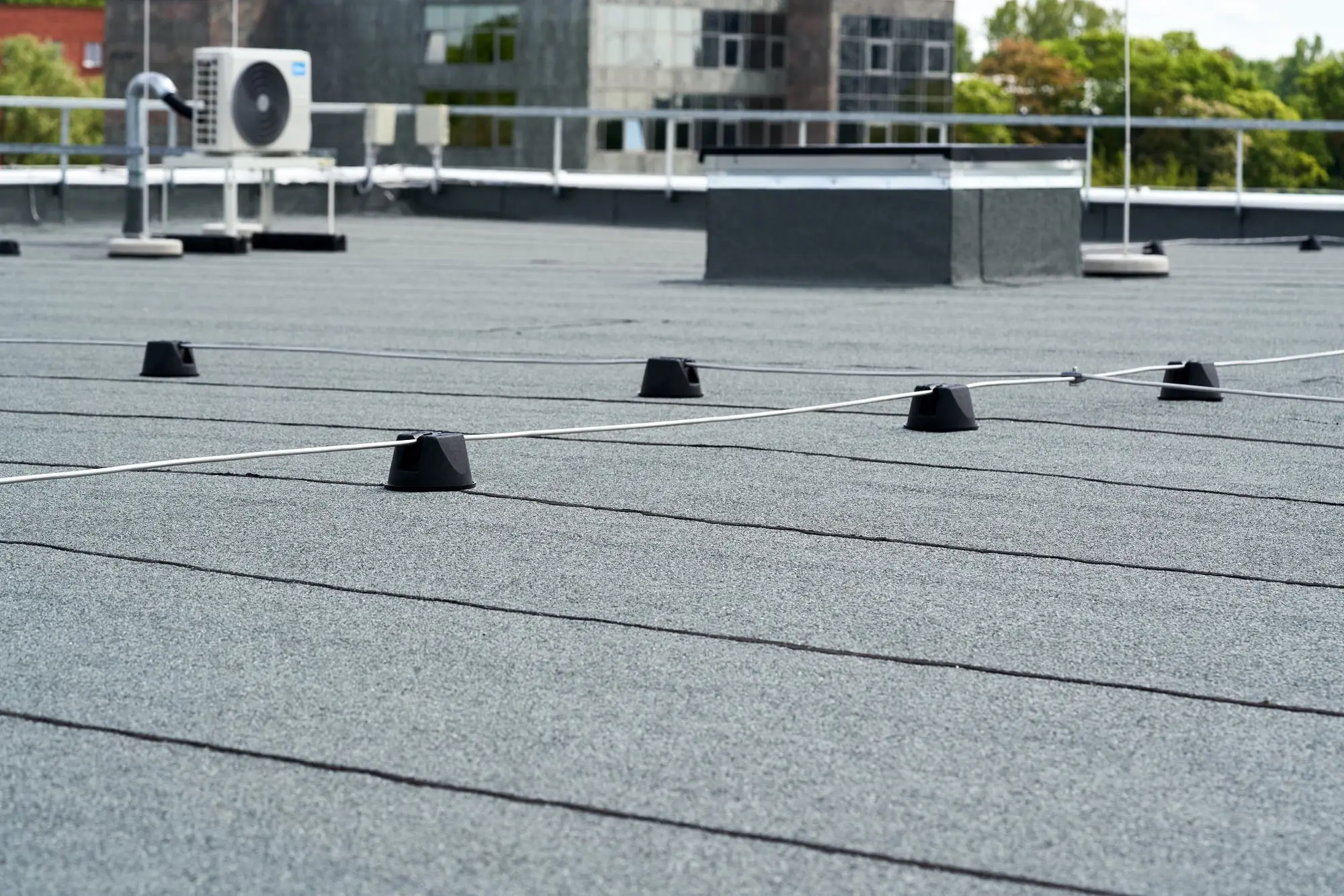
Most commercial buildings in Lake County have low-slope roofs: strip retail, offices, warehouses, churches and medical buildings. They look flat from the parking lot, but they’re built with a slight pitch so water runs to drains, scuppers or gutters. The roof systems you’ll find on them include:
- TPO. A white single-ply membrane with heat-welded seams. It reflects a lot of sunlight, which matters under a Central Florida sky. Read more about TPO roofing in Clermont.
- EPDM. A black rubber membrane with glued or taped seams, common on older buildings. See EPDM roofing in Clermont.
- Built-up and other membrane roofs. Layered asphalt systems, often topped with gravel, still found on plenty of older commercial buildings.
- Metal. Panel roofs on warehouses, shops and pre-engineered steel buildings.
The right system for your building depends on what’s under the roof now, how well it drains and what goes on inside. A restaurant with greasy kitchen exhaust has different needs than an office or a dry storage warehouse.
What Central Florida weather does to a commercial roof
A low-slope roof gets no shade. Year-round sun and heat dry out membranes and bake the sealant around pipes, curbs and drains until it cracks. Dark roofs take the worst of it, and the rooms underneath feel it too.
Then come the storms. Summer afternoon downpours can dump a lot of rain in an hour, and on a nearly flat roof, water that can’t reach a drain fast enough sits in low spots. If you still see standing water a couple of days after a storm, a clogged drain or a sag in the deck is the usual cause. Over time, that pond works its way into seams.
Hurricane season, June 1 through November 30, brings wind. Wind pulls hardest at a roof’s corners and edges, which is why loose edge metal, lifted membrane and missing coping caps are often the first damage you’ll spot after a storm.
Repair, recover or replace
A lot of commercial roofs don’t need replacing. If the membrane is still sound and the trouble is a few seams, a leaky flashing at a rooftop unit or one damaged section, a targeted commercial roof repair is usually the right first step.
If the membrane is worn out but the insulation below is still dry, some roofs can take a new membrane over the old one. That depends on code and on how many layers are already up there. If water has soaked the insulation or rusted the deck, the wet material has to come out, and a full tear-off and re-roof is often the better use of your money.
The only way to know is to look under the surface. Roofers use moisture scans and small test cuts to see whether the insulation is wet. You’ll see photos of what we find before you decide anything.
Where commercial roof leaks usually start
The wide open middle of a commercial roof rarely causes trouble. The details do.
Every AC unit sits on a curb that has to be flashed, and when an HVAC company swaps a unit, the new curb adapter sometimes goes in without proper flashing. Drains and scuppers clog with leaves, and the water backs up. Parapet walls and their coping caps let water into the wall when a joint opens. And every pipe, conduit or satellite mount added over the years is another hole in the roof.
That’s why an honest inspection covers all of it, not just the spot over the stain.
Planning a commercial roof project
Before any commercial roofing job starts, it’s worth settling a few things with your roofer:
- When the noisiest work will happen, so it doesn’t land during your busiest times
- Where materials and the dumpster will sit, and how customers and tenants will get in and out
- Whether any adhesives have a strong odor, and whether nearby air intakes should be shut off while they cure
- How the roof will be kept watertight if an afternoon storm rolls in mid-project
Storm damage and your insurance claim
If a storm damaged your building’s roof, the building owner files the claim with the insurance company and pays the deductible. We document the damage with photos, provide a written estimate and work with your adjuster. You can read more on our insurance roof claims page.
How it works
- Book your free inspection. Call 407-270-1129 or request a free estimate online.
- Get a clear, honest assessment and estimate. You’ll get photos, a plain explanation of what we found and repair or replacement options with the reasons behind them. Financing is available through Aqua Finance, Fortifi, Hearth and Home Run Finance.
- The work gets done and the site gets cleaned up. You’ll know the plan and the timeline before anyone climbs a ladder.
Waiting tends to cost more, not less. A small opening at a curb can soak insulation across a wide area long before a stain shows inside, and wet insulation is heavy, holds no heat back and rusts a steel deck.
Commercial roofing questions from Clermont business owners
Do you work on small commercial buildings?
Yes. We work on offices, retail spaces, warehouses and other light commercial buildings, along with larger low-slope roofs.
Can my roof be repaired instead of replaced?
Often, yes. If the insulation is dry and the problems are limited to seams and flashings, a repair can buy you real time. If the roof is wet underneath, you’ll see the evidence before we recommend a re-roof.
What’s a good roof for a commercial building in Florida?
TPO is a popular choice here because its white surface reflects heat. EPDM, built-up roofs and metal all have their place too. The right one depends on your building, and you’ll hear the reasons behind any recommendation.
Can my business stay open during the work?
Usually. The work happens outside, so most businesses keep their doors open. The things to plan around are noise during tear-off and the smell of some adhesives.
Get commercial roofing in Clermont, FL off your to-do list
Call 407-270-1129 or request your free estimate online, and we’ll set up a time to look at your building.
The goal is a dry building, no more buckets in the stockroom and a roof you don’t have to worry about every time the sky turns dark. Trust matters, and you should feel good about the decision you make.