A tenant calls about a ceiling tile that’s stained brown. A week later there’s a bucket in the hallway, and you’re trying to figure out whether this is a small repair or the start of a full reroof you didn’t budget for. If you own or manage a building and need commercial roofing in Hilltop, Denver, you need to know what’s going on up there before it turns into lost rent, damaged inventory or an unhappy tenant.
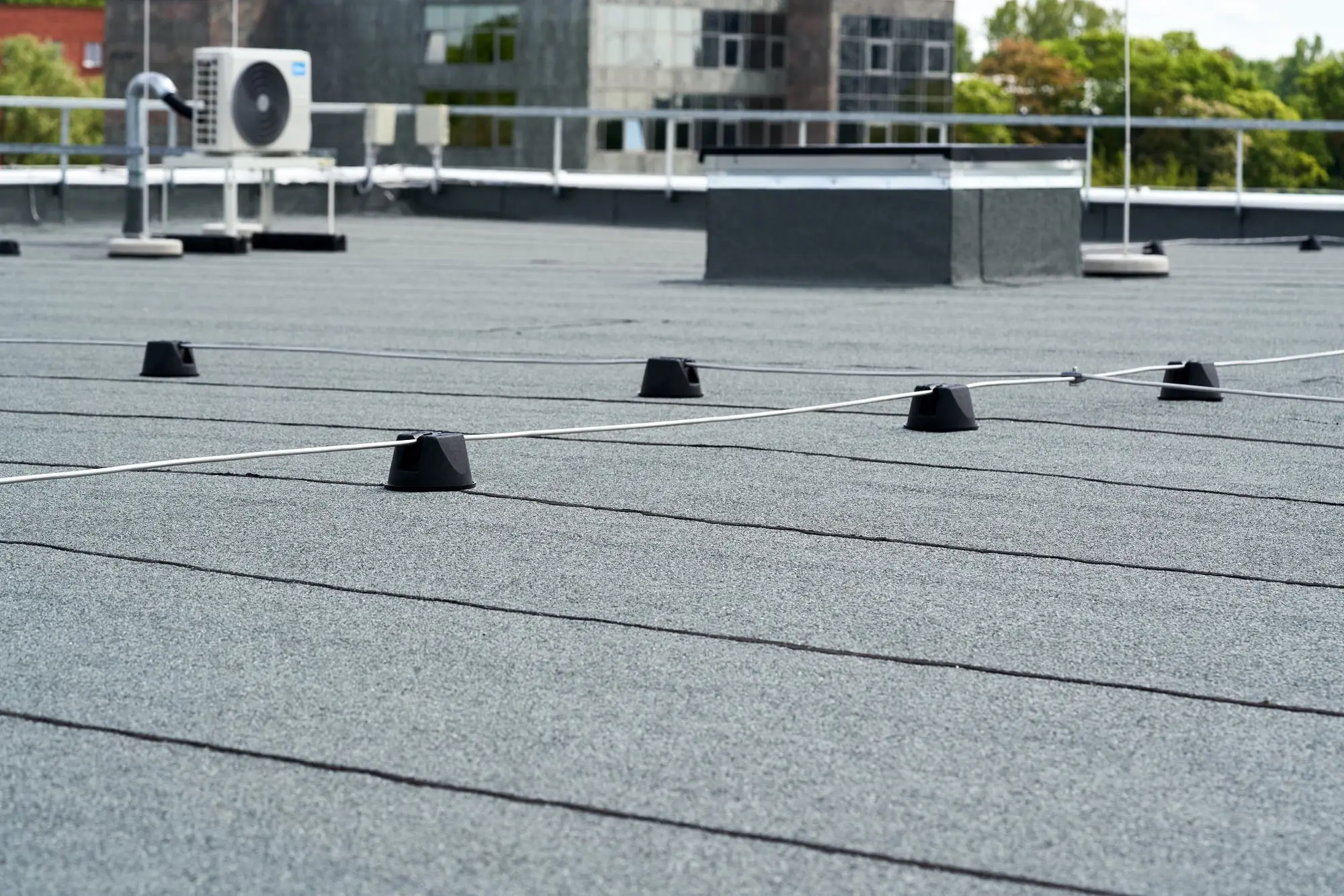
Commercial roofs are hard to judge from the parking lot. Most are nearly flat, the problem is usually far from the drip, and there’s a lot of equipment up there that can hide trouble. You deserve a roofer who goes up, finds the cause and gives you a plan in writing.
APC Roofing has been in business since 2017. We’re GAF Certified, licensed and insured, and your inspection and estimate are free. Call 720-902-6940 to set up a time to see the building.
What sets commercial roofing apart
A house roof sheds water by slope. Most commercial roofs are low-slope, so they depend on a continuous membrane, sealed seams and drains that actually move the water off. That changes where things go wrong.
Rooftop units, exhaust fans, conduit and vents all pass through the roof, and each one is a spot that has to be flashed and kept sealed. Service techs walk the roof to reach that equipment, and dropped screws and dragged tools can puncture a membrane. Parapet walls, metal edges and roof hatches each have their own weak points.
What’s below the roof matters too. A small office, a retail space, a restaurant and a storage building each have different needs, so the right system depends on how the building is used.
Commercial roofing systems we work with
TPO. A single-ply membrane, usually white, with heat-welded seams. It reflects a lot of sunlight, which helps with cooling costs on a building that bakes in the afternoon. See TPO roofing in Denver.
EPDM. A black rubber membrane that stays flexible in cold weather. Seams are glued or taped, so careful seam work is what makes it last.
Built-up and modified bitumen. Layered asphalt systems that are tough and common on older commercial buildings. They handle foot traffic well.
Metal. Standing seam and exposed-fastener panels show up on shops and some commercial buildings. Exposed screws need attention as their washers age.
How Denver weather treats a commercial roof
Hail hits a flat roof straight on. Older membranes that have lost their flexibility can crack or puncture, and the damage is easy to miss without walking the whole surface. A tough cover board under the membrane helps it resist hail.
Snow sits on a flat roof instead of sliding off. When it melts during the day and refreezes at night, frozen drains can back meltwater up until it finds a weak seam. Heavy, wet spring snow also adds real weight.
Strong high-altitude sun dries out and cracks roofing materials faster than at lower altitudes, and big daily temperature swings make membranes, seams and metal edges expand and shrink over and over.
Wind pulls hardest at corners and edges. That’s why perimeter fastening and edge metal matter so much on a commercial roof.
Repair, recover or replace
There are usually three paths, and the right one depends on what’s under the membrane.
A repair fixes a specific problem: a puncture, a split seam, a failed flashing at a rooftop unit. If the rest of the roof is dry and sound, this is often the right call. More on commercial roof repair in Denver.
A recover puts a new membrane over the existing roof. It can work when there’s only one existing roof and the insulation underneath is dry.
A full replacement makes sense when the insulation is wet, the deck is damaged, or there are already two roofs on the building. Wet insulation doesn’t insulate, it adds weight and it keeps rotting the deck from under a sealed membrane. A moisture survey and a few core samples show how far the water has spread, even when the surface looks fine. Our commercial roofing installation in Denver page covers that process.
Keeping your business running
Roofing work on an occupied building takes planning. Before work starts, we’ll talk through the schedule, access, parking and anything noisy or messy so you can let tenants or staff know.
Storm damage and insurance
If hail or wind damaged the roof, the property owner files the claim and pays the deductible. We document the damage with photos, give you a written estimate and work with your adjuster.
How it works
- Book your free inspection. Call 720-902-6940 or request a free estimate online.
- Get a clear, honest assessment and estimate. We walk the roof, check the drains, seams, edges and every penetration, test for moisture where there are leaks, and give you photos with a written recommendation. Financing is available through Aqua Finance, Fortifi, Hearth and Home Run Finance.
- The work gets done and the site gets cleaned up. You’ll know the schedule and the scope before anything starts.
A small seam failure can soak a lot of insulation over one wet spring. Catching it early is usually what keeps a repair from turning into a reroof.
Commercial roofing questions from Hilltop property owners
Can you find a leak that’s been patched several times?
Usually, yes. On a flat roof, water often travels before it drips, so the real entry point may be well away from the stain. We trace it from the roof down.
Is a recover cheaper than a tear-off?
It often costs less up front, but it only makes sense when the existing roof is dry. Covering wet insulation locks the problem in.
Can work happen while the business is open?
In most cases. Planning the schedule and access ahead of time keeps disruption down.
Do you work on small commercial buildings?
Yes. Small offices, shops, restaurants and multi-unit residential buildings are a big part of commercial roofing.
Commercial roofing in Hilltop, Denver: get a plan for your building
Call 720-902-6940 or book your free inspection online. You can also see our other Hilltop roofing services.
The goal is a roof that keeps tenants dry, a budget with no surprises and the confidence that the next storm won’t shut you down.