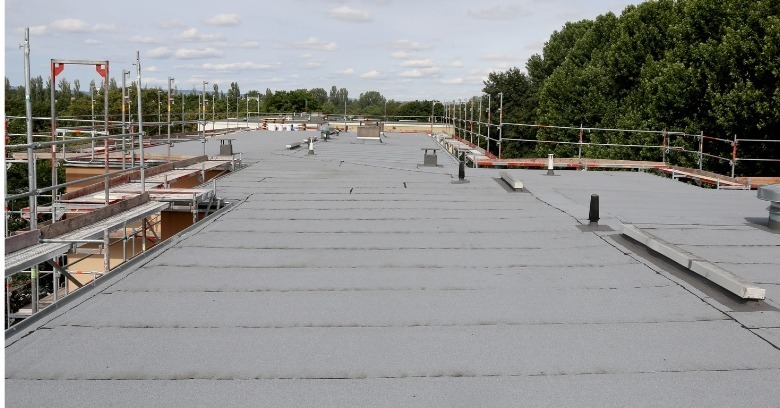
Hoping to find Commercial Roofing in Kissimmee Florida?
APC Roofing replaces and patches membranes on warehouses, shops and offices, with the flashings, outlets and trim included.
Reach us at 407-270-1129 and a roofer will walk the surface and explain the findings.
Above a Shop or Office – Some Background
Desks, shelving and production lines lie under the sheet, and a leak can halt sales rather than just mark a ceiling. A large building is usually topped by a broad, nearly level surface, so drainage and wind resistance are worked out by calculation.
Condensing units, exhaust stacks and antennas are spread across the top, and each duct, line or support passes through the waterproofing. How the building is used guides the specification, because a bakery and a document archive ask for different things.
Common Low-Slope Materials – Names Decoded
Single-ply goods such as TPO, PVC and EPDM go down as one broad layer, modified bitumen is rubberized asphalt sold by the roll, and built-up roofing is felt sealed with hot tar several plies deep. The laps on a thermoplastic sheet are fused by a welding machine, but rubber is spliced with tape over a primed surface.
Kitchen exhaust leaves a film of grease around a restaurant's fans, and asphalt and EPDM membranes break down under oily buildup, so PVC tends to be installed across the exposed zone. Gravel-surfaced built-up roofing weighs a lot and wears well, because the loose aggregate keeps ultraviolet light off the bitumen.
Metal on Shops and Plants: What to Watch
Some profiles are held down by screws driven through the flat of each sheet, and the purlins below take the grip. Sunlight bakes the washers until the rubber splits, and fasteners loosen as the metal moves with temperature.
A standing-seam system uses clips hidden inside raised ribs, and the hardware lets each pan travel. Rust tends to appear at side laps and cut edges, and a coating over steel that is still sound can slow the damage.
Deck Types: Age and Condition
Attachment methods are limited by what the original builders put in, and a new covering goes over the same framing. Steel with flutes holds screws securely, a poured slab gets adhesive or anchors in bored holes, and wood planking takes ring-shank nails or plates.
Rust from old leaks can leave soft spots in metal decking, and failing stretches are replaced rather than covered. From inside, the underside is inspected wherever the ceiling allows, and cores drilled from above confirm the remainder.
Anchoring the Membrane – Pros and Cons
Plenty of commercial sheets are pinned by screws and plates in each overlap, adhered work is glued from edge to edge, and ballasted sheets stay put under a blanket of stone. The deck, the building's height and the site's exposure steer the decision, and an engineer confirms the framing can carry any added weight.
A fastened membrane lifts and drops between plates in a gale, whereas glue keeps a sheet calm only over a dry, clean base. Ballast makes any inspection slow, because the stone or pavers must be moved aside to expose a seam.
Gusts and the Membrane: Setting the Screw Pattern
Suction peaks at the corners, as vortices form where the flow crosses the parapet line. The strip down each side carries a smaller share, and the open middle is loaded more gently.
Attachment rows tighten on the approach to corners and edges, and design tables for the height and exposure set the spacing. An under-fastened outer angle lets the sheet curl up, and pressure underneath can strip a wide section.
Rigid Foam – Several Jobs at Once
Polyiso sheets are laid across the deck with joints staggered, and a firm cover board spreads concentrated weight. Insulation keeps utility bills in check, and a tapered layout pitches the finished face toward the drains.
A saturated panel no longer holds back heat, and the soggy material sags while rust spreads beneath. Nondestructive meters and cored samples show how far the problem reaches, and nothing ruined is left under a new covering.
Drains and Overflows – Laying Out the Route
A metal strainer bolts over each interior opening, and trash and gravel stop at the bars instead of in the pipe. Once silt coats the grate, flow drops sharply, and a broad puddle collects at the low spot.
An overflow scupper sits a little higher than the main drain, and runoff spilling at the upper level points to a plug further down. Ponded water adds load that the framing may not be sized for, and a puddle that survives two days hints at settling or a choked strainer.
Locating an Opening Overhead – No Guesswork
The mark on a suspended ceiling shows where moisture landed, though the actual flaw may be far across the bay. The valleys in a steel deck steer seepage lengthwise, and joints between boards lead a trickle further still.
A roofer probes the laps, curbs and outlets upslope of the stained area, and a flood test on a small section can reveal a stubborn leak. Guesswork patches above the ceiling spot usually miss, and the next downpour sends water through again.
Rooftop Mechanical Units – a Closer Look
A sturdy curb holds each machine clear of the membrane, and the sheet is carried up the faces and tucked under metal. The corners are the fussiest detail up there, and a rushed job leaves gaps for rain.
A new unit from the HVAC contractor may sit on an adapter with no flashing, so a new leak follows within a season. Condensate lines left dribbling onto the membrane grow algae, so the stream ought to be carried to a drain.
Pipes, Vents and Conduit: Details That Add Up
Round stacks take a factory-made boot with a stainless band, while oddly shaped items get a metal pan poured full of sealant. The compound hardens, shrinks and separates at the edges, and adding fresh material is ordinary maintenance.
Electrical conduit and gas lines ride on blocks simply set in place, as a stand screwed into the deck punctures the waterproofing. A rubber pad beneath every foot distributes the weight, and the buffer takes the wear as everything expands and shifts.
Hinged Covers Up Top: What Wears
Sunlight slowly turns acrylic bubbles dull and fragile, and hairline breaks radiate from each fastener. A gap at the frame corner lets rain inside, and the drip is often charged to the covering.
Every trip up the ladder means lifting the hatch cover, and constant use loosens hinges and flattens the weatherstrip. Heat-activated vents over a warehouse are designed to fling wide, and nothing stacked or sealed nearby is allowed to jam the lid.
Parapet Walls and Coping – Getting the Details Right
The field sheet continues upward as base flashing, a termination bar clamps the upper end, and counterflashing hangs down to shield the fastened line. Coping over the crest steers rain to either side, but joints whose sealant has cracked admit runoff beneath.
Unsealed brick draws water in and carries moisture indoors, so the stain that appears gets blamed on the membrane. Inspection extends past the sheet to the coping, the flashings and the wall, and open mortar joints are repointed instead of caulked.
Fascia Metal at the Outer Edge – Parts and Purpose
The flange is hooked onto a cleat fastened along the eave, and a cover strip ties the sheet to the upper face. Perimeter pieces must carry a wind rating for the building's height, and an underrated section can let go in a gale.
Gutters along a long eave take a huge volume in a storm, which calls for sturdy hangers and oversized downspouts. Crumpled or raised trim is a clear repair item, since early work protects the covering behind the edge.
Visitors Who Are Not Roofers: Protecting the Sheet
Refrigeration mechanics may call on a large store every few weeks, and the direct path slowly abrades the covering. A dropped screw gets pressed through the membrane by the next boot, and a toolbox dragged across the top tears the surface.
Walkway pads outline a lane from the hatch to each unit, and grinding hits dense material instead of the field. Service agreements can tell outside trades to stick to the protective strips, and screws and scraps can be bagged and taken down.
Upkeep Through the Year – the Routine
Twice annually is a sensible rhythm for a walk-through of a commercial system, and a damaging storm earns an additional check. Upkeep includes emptying every strainer, seam edges are tested with a probe, and the sealant at each pocket is inspected.
The trip ahead of the stormy months focuses on outlets and perimeter metal, and a later round looks for anything a punishing season loosened. Little defects go into a log, each tied to a spot on the plan, and trouble shows up long before water comes through.
Paperwork Worth Keeping – a Long Memory
A clear drawing pins down the position of each unit, drain and hatch, and a written cross-section lists every layer from the deck up. Photos with dates accompany every repair entry, and moisture readings are added as taken.
Many older properties change hands without a scrap of information about the covering, and every crew works out the layers again. A roof log stays with the site, so a later buyer or manager starts out informed.
Fix, Refresh or Rebuild: What Tips the Balance
Localized faults on a healthy sheet are patched in place, and a weathered surface that is still dry can take a fresh liquid layer. Big stretches of waterlogged insulation make a new covering the sensible answer, as does brittleness at every lap, though years alone never decide the matter.
Any restoration coating depends on a washed, repaired substrate, because trapped moisture beneath gets locked in. A partial tear-off of the spoiled areas can be a reasonable compromise, where the surrounding membrane still has life left.
Reroofing Options: What Codes Allow
A recover puts a fresh membrane over the current roof, and a separation board is laid in between. Building codes accept an overlay where only a single covering is in place, and only over dry insulation.
Tearing off takes the assembly back to the bare structure, and an open view shows what needs mending. Fresh tapered boards can give a dead-flat surface some fall, and a saddle between drains turns the flow toward each outlet.
Clues Around the Building: Before a Small Fault Grows
- Rain gushing out of the high overflow, which betrays a choked everyday outlet.
- A tan mark on acoustic tile that keeps growing, which shows moisture has worked through the insulation.
- Algae streaks on the siding beneath a scupper outlet, which can point to seepage passing through the masonry.
- Fascia metal that flutters or rattles in a gust, which can put the membrane at risk in a storm.
- Puddles seen from the hatch that linger for days, which may reflect a depression or a sluggish drain.
- A skylight whose plastic has turned chalky, which can shatter under a person's weight.
- Water trickling down an interior column in a storm, which tells of moisture moving along the flutes.
- A gutter pulling away from the hangers, which can signal a blockage or a separated seam.
How APC Roofing Carries Out Commercial Roofing in Kissimmee Florida – Our Sequence
The drains, scuppers and overflows get our attention before anything else, and the seams, curbs and edges are next in line. When a leak is present, the boards beneath are scanned, and the advice waits for the numbers.
A written report, photos and a sketch record what we found, and each fault is marked at the exact spot. Each proposal names a choice: repair, restore or replace, and you get reasons to weigh for yourself.
Commercial Roofing in Kissimmee Florida: What Needs Doing Up Top
Reach us at 407-270-1129 and we will schedule a time to come out.
Life Under the Job – Clear Communication
Fastening into metal decking carries a racket into the offices underneath, and the smell of primers can reach the fresh-air intakes. The facility manager hears in advance when the noisy stage is coming, and nearby vents can be closed off during curing.
Torn-off material goes down a chute or on a hoist, and desks and machines under an open section can be shielded. Solvent adhesives carry a strong smell that water-based products lack, and the gentle option fits a store that stays open.
Phasing a Large Replacement – Order and Timing
No more old material comes off than can be closed up before dark, and fresh foam and sheet cover the bare area without delay. A night seal links the finished part to the untouched field, and the patch comes out once progress picks up.
How much is stripped depends on the weather outlook, and any hint of showers shortens the stretch. Water that lands on uncovered foam saturates the panels, and drips can reach the rooms below.
Regional Conditions: How Specifications Adapt
The colder end of our territory adds hail and snow load to the list, and denser cover boards with verified beam capacity follow. Sunlight and heat wear down a membrane in all of our markets, and a pale surface sends much of the radiation back.
At the coastal end, hurricane wind pushes attachment requirements up, and tropical downpours need generous overflow capacity. Many adhesives have a minimum application temperature, but heat-welded seams tolerate chilly air as long as the deck is dry.
Guarding Against Falls: a Standard Part of the Job
A knee-high parapet or a bare perimeter leaves a sheer drop, so a warning line keeps crews back from the edge. Skylight lenses cannot take a body falling onto the plastic, so guards over each opening are standard practice.
Permanent anchors help everyone who services the units, and a safety gate at the ladder completes the setup. Any missing guard is noted in our findings, since a fall from even a single story can cause serious injury.
For Commercial Roofing in Kissimmee Florida, speak with APC Roofing at 407-270-1129. A roofer will walk the membrane, the drains and the perimeter, and a written report follows, with the next step up to you.
Verified

Verified
Verified
Verified
Verified