In the market for Commercial Roofing in Holly Hill Florida?
APC Roofing installs and mends membrane and metal coverings on business buildings, along with the details at units and drains.
Dial 386-356-2111 and a roofer will go up top and check every part.
Workplaces and Storefronts – an Overview
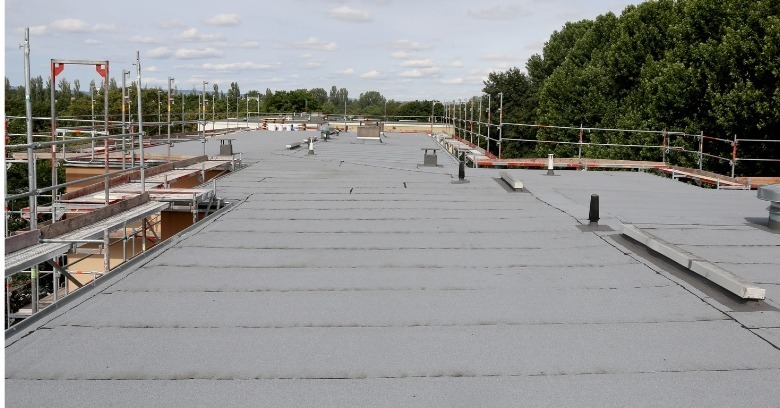
Employees, inventory and equipment are what the membrane protects, and dripping water can idle a conveyor or spoil a pallet of product. Wide commercial buildings carry a top surface that is nearly flat, so outlet sizes and wind design come from engineering figures.
Exhaust fans, condensers and antennas are mounted up top, and every duct or conduit crossing the covering demands a watertight seal. The business inside shapes the choice of system, and cold storage calls for vapor control an office can skip.
Membrane Families – Sorting the Catalog
Single-ply goods such as TPO, PVC and EPDM go down as one broad layer, modified bitumen is asphalt blended with polymer and rolled out, and built-up roofing is felt sealed with hot tar several plies deep. Thermoplastic overlaps are heat-welded into a continuous piece, whereas a rubber splice depends on primer and tape.
Cooking vents on a restaurant leave fat beside the fans, and asphalt and EPDM membranes break down under oily buildup, so PVC is a common pick for the spot. Built-up plies under a gravel layer make a heavy, durable assembly, because the loose aggregate keeps ultraviolet light off the bitumen.
Commercial Steel: What to Watch
Exposed-fastener sheets are secured with screws through the flats, and each shank is set into a purlin or joist. Sunlight bakes the washers until the rubber splits, and daily expansion and contraction slowly back the fasteners out.
Standing-seam panels attach with clips tucked under the raised seams, which lets each pan glide lengthwise. Rust is often found at overlaps and cut edges, and a retrofit coating can give sound metal more years of service.
Decking on Big Buildings – Why the Base Counts
How the system is held down is set by the structure under the insulation, and reroofing leaves the framing in place. Ribbed steel accepts screws with no trouble, a concrete slab needs glue or anchors set in drilled holes, and wood or gypsum plank takes nails or purpose-made fasteners.
Old, slow leaks corrode patches of a metal deck, and a weak area gets a new panel before anything goes on top. The underside can be viewed from below where no ceiling blocks the view, and cores drilled from above confirm the remainder.
Anchoring the Membrane: Weighing the Choices
Plenty of commercial sheets are pinned by screws and plates in each overlap, adhered systems are rolled into a coat of adhesive, and ballasted sheets lie loose under stone or pavers. Height, exposure and the deck below guide the selection, and the framing's spare load capacity limits how much weight can go on top.
Gusts make a screwed membrane ripple between the fastener lines, but adhered work stays motionless and needs a dry surface to grip. Close inspection goes slowly on a ballasted system, since rock or pavers have to be cleared before a lap can be read.
Wind on Low-Slope Work: What Codes Expect
The strongest suction lands at each corner, since air accelerates on rolling over the perimeter. Along the sides, a narrower band sees a little less, and the interior bears a light load.
Fasteners go in closer together near corners and edges, and published wind tables fix the spacing for each height. An under-fastened outer angle lets the sheet curl up, and the opening grows as each gust gets beneath.
Rigid Foam – Several Jobs at Once
Polyiso sheets are laid across the deck with joints staggered, and a thin, hard cover board is often added last. The layer cuts energy use across the building, and tapered stock tilts the finished surface toward the drains.
A saturated panel no longer holds back heat, and the soggy material sags while rust spreads beneath. Infrared scans, capacitance meters and core cuts map the affected area, and every ruined section is replaced rather than covered.
Outlets on a Big Building – Laying Out the Route
A metal strainer bolts over each interior opening, so debris stays out of the leader below. Once silt coats the grate, flow drops sharply, and a wide pool gathers in the surrounding field.
Codes call for a backup outlet mounted above the main drain, and a stream from the upper spout shows the ordinary route has stopped. Rain held across a wide area can put tons onto the beams, and a pool that outlasts a downpour by two days marks a low spot or a fouled strainer.
Following Water Back to the Entry Point – a Careful Search
A brown ring on an acoustic tile shows where rain reached the room, and the break in the membrane can sit many yards away. Steel decking guides runoff down the corrugations, and joints between foam panels open more paths.
A roofer probes the laps, curbs and outlets upslope of the stained area, and electronic leak detection can locate a pinhole. Guesswork patches above the ceiling spot usually miss, so the trouble returns with the following storm.
Rooftop Mechanical Units – Practical Notes
A sturdy curb holds each machine clear of the membrane, and base flashing climbs the sides under a metal cap. Each folded inside corner takes careful work to stay watertight, and a pinhole at the crease lets rain run down behind.
An equipment change often brings an adapter curb that no roofer ever flashed, and water reaches the office below soon enough. Condensate lines left dribbling onto the membrane grow algae, and the fix is carrying the flow to a drain.
Smaller Openings: Handling Each Type
Round stacks take a factory-made boot with a stainless band, while oddly shaped items get a metal pan poured full of sealant. Aging compound contracts and opens hairline gaps, so a fresh layer goes on every maintenance list.
Gas lines and conduit are meant to float on movable supports, since a bracket screwed through the covering becomes a leak. Pads cut from spare roofing stock go under each base, and the buffer takes the wear as everything expands and shifts.
Openings With Lids: Where Attention Goes
Ultraviolet light leaves acrylic and polycarbonate hazy and weak, and cracks spread from the screws at the rim. A tired gasket on a skylight admits water, yet the membrane usually takes the blame.
The access hatch is lifted on every service visit, and hinges, springs and weatherstrip wear from constant opening. Smoke vents release automatically when a fusible link melts, so work nearby leaves every mechanism free.
Parapets on Commercial Buildings – What Goes Where
Base flashing carries the membrane up the inside face, a termination bar holds the top margin, and counterflashing tucked into a reglet covers the fastened line. A coping cap spans the crest to push rain aside, yet a gap between sections funnels runoff downward.
Brick and block that have weathered let water migrate indoors, and the resulting mark resembles a roofing defect. An inspection covers the coping, the counterflashing and the wall as well as the membrane, and failing mortar is raked out and repointed.
Gravel Stops and Fascia – Wind at the Border
A continuous cleat is fixed along the eave and locks the hem of the flange, and a cover strip seals the sheet to the horizontal face. Tested wind ratings decide which profile suits a given height, since a bent clip can let a gust peel a whole stretch.
Gutters on a large building must swallow drainage from an enormous area, and the hangers, joints and leaders must be sized generously. Trim that is kinked or raised deserves prompt attention, and fastening down loose runs helps stop the membrane peeling away.
Other Trades Overhead: Protecting the Sheet
Equipment mechanics may be up top every few weeks on a busy building, and the direct path slowly abrades the covering. A stray sheet-metal screw is driven into the membrane underfoot, and a cabinet panel leaned on a corner cuts a slit.
Thick rubberized pads trace a safe path to each unit, so scuffing lands on a sacrificial layer. Property managers can ask each contractor to keep off bare membrane, and a bucket for scraps and screws keeps the membrane clear.
Maintenance Visits: Timing and Tasks
A commercial system benefits from a walk-through twice annually, plus a further check after a storm with high wind. A service call clears leaves and trash from the strainers, any open lap is found with a probe, and the sealant at each pocket is inspected.
A walk before the stormy months concentrates on outlets and the perimeter, and a later round looks for anything a punishing season loosened. Minor faults get noted and pinned to a sketch, so decisions can be made calmly and in advance.
Paperwork Worth Keeping: Knowledge That Lasts
A scaled drawing shows where each unit, drain and hatch sits, and the assembly is described from the structure to the membrane. Photos with dates accompany every repair entry, and cut samples and infrared findings get appended.
Many older properties change hands without a scrap of information about the covering, so the same facts get rediscovered with each visit. Roof documentation outlasts any single service firm, and a copy passes to the next manager or buyer.
Repair, Restore or Replace: The Main Signals
Where the sheet is healthy apart from isolated defects, patching is enough, while a tired but dry surface can carry a silicone or acrylic layer. Widespread waterlogged boards signal a full replacement, as does brittleness at every lap, though age on paper proves nothing.
A silicone or acrylic coat demands a clean, mended substrate, because trapped moisture beneath gets locked in. Now and then the answer is replacing just the spoiled sections, if the rest of the sheet remains in good shape.
The Reroofing Decision – Guided by What Lies Beneath
With a recover, the old sheet stays and a new membrane goes over the top, and a cover board sits in between. Codes permit an overlay on a single existing covering, and only where the insulation underneath is dry.
A complete strip-off clears away every layer, so rusted or soft decking gets fixed in the open. Tapered insulation installed at the same time can reduce chronic puddling, and a cricket between outlets divides the flow.
Signs Worth Reporting – Deserving a Closer Look
- A spout of runoff from the secondary scupper, which suggests a plugged strainer.
- A brown ring overhead that widens with each downpour, which shows moisture has worked through the insulation.
- White salt deposits across the parapet face, which can suggest flashing trouble near the top.
- Rattling trim along an open eave, which can expose the border to uplift.
- Standing water in the same place long after a downpour, which can indicate an overloaded deck or a plugged outlet.
- A yellowed, brittle skylight lens, which can admit rain at the frame.
- Rust spots spreading on the underside of a steel deck, which points to an entry somewhere on the membrane.
- Downspouts that gush at the joints, which can soak the wall and the ground below.
How APC Roofing Tackles Commercial Roofing in Holly Hill Florida: Readings Before Advice
The first thing we examine is each drain, scupper and overflow, and the seams, curbs and edges are next in line. A leak brings a moisture survey of the insulation, and no recommendation is made until the readings are in.
Everything we find is written up with photographs and a sketch, and every defect is keyed to a location. The outcome we propose is a repair, a coating or a replacement, and you get reasons to weigh for yourself.
Commercial Roofing Around Holly Hill Florida – A Clear Picture First
Dial 386-356-2111 and someone will find a time to come out.
Life Under the Job: Noise, Odor and Debris
Power fastening through steel echoes through the space beneath, and glue fumes can travel down through open intakes. The facility manager hears in advance when the noisy stage is coming, and vents near the work can be shut while the cement cures.
Torn-off material goes down a chute or on a hoist, and desks and machines under an open section can be shielded. Solvent adhesives carry a strong smell that water-based products lack, and the gentle option fits a store that stays open.
Section by Section – Protecting the Interior
Old layers come off only in amounts that can be closed up by evening, and each opened area is made tight again as stripping advances. A night seal links the finished part to the untouched field, and the barrier is cut out as work continues.
The weather report limits the size of each tear-off, so an approaching storm means a smaller opening. Bare foam hit by a downpour absorbs a great deal of water, and drips can reach the rooms below.
Weather Across the Region: Timing and Materials
The colder end of our territory adds hail and snow load to the list, so a hard cover board and an engineer's review of the framing are sensible. Strong sun across every town we serve slowly bakes a membrane, so a bright, reflective finish reduces solar gain.
At the coastal end, hurricane wind pushes attachment requirements up, and heavy tropical rain calls for extra overflows. Some adhesives will not cure below a set temperature, but heat-welded seams tolerate chilly air as long as the deck is dry.
Keeping People Safe Overhead: a Standard Part of the Job
A knee-high parapet or a bare perimeter leaves a sheer drop, so a warning line keeps crews back from the edge. Skylight lenses cannot take a body falling onto the plastic, so every opening should get a screen or a railing.
Permanent anchors help everyone who services the units, and a safety gate at the ladder completes the setup. A missing screen or warning line is flagged in our findings, since a fall from even a single story can cause serious injury.
When you need Commercial Roofing in Holly Hill Florida, reach APC Roofing at 386-356-2111. We will cover the surface on foot, from the outlets to the parapets, and the results arrive in writing to act on as you see fit.
Verified

Verified
Verified
Verified