A tenant calls to say there’s a bucket under a drip in the back room again. Or the roof on your building is old enough that every spring hailstorm makes you wonder what the next leak will cost in damaged stock or an unhappy tenant. If you own or manage a building and need commercial roofing in Washington Park, you want someone who finds the actual problem and gives you a plan you can budget for.
Commercial roofs are hard to judge. You can’t see most of them from the street, the leak inside is rarely right under the opening, and a business can’t just shut down while someone figures it out. You deserve clear answers, photos of what’s on your roof and options that fit how your building operates.
APC Roofing is a GAF Certified contractor, licensed and insured, and inspections and estimates are free. Call 720-902-6940 and a roofer will walk the roof, check the drains and the edges and tell you plainly what you’re dealing with.
The commercial roofs we work on
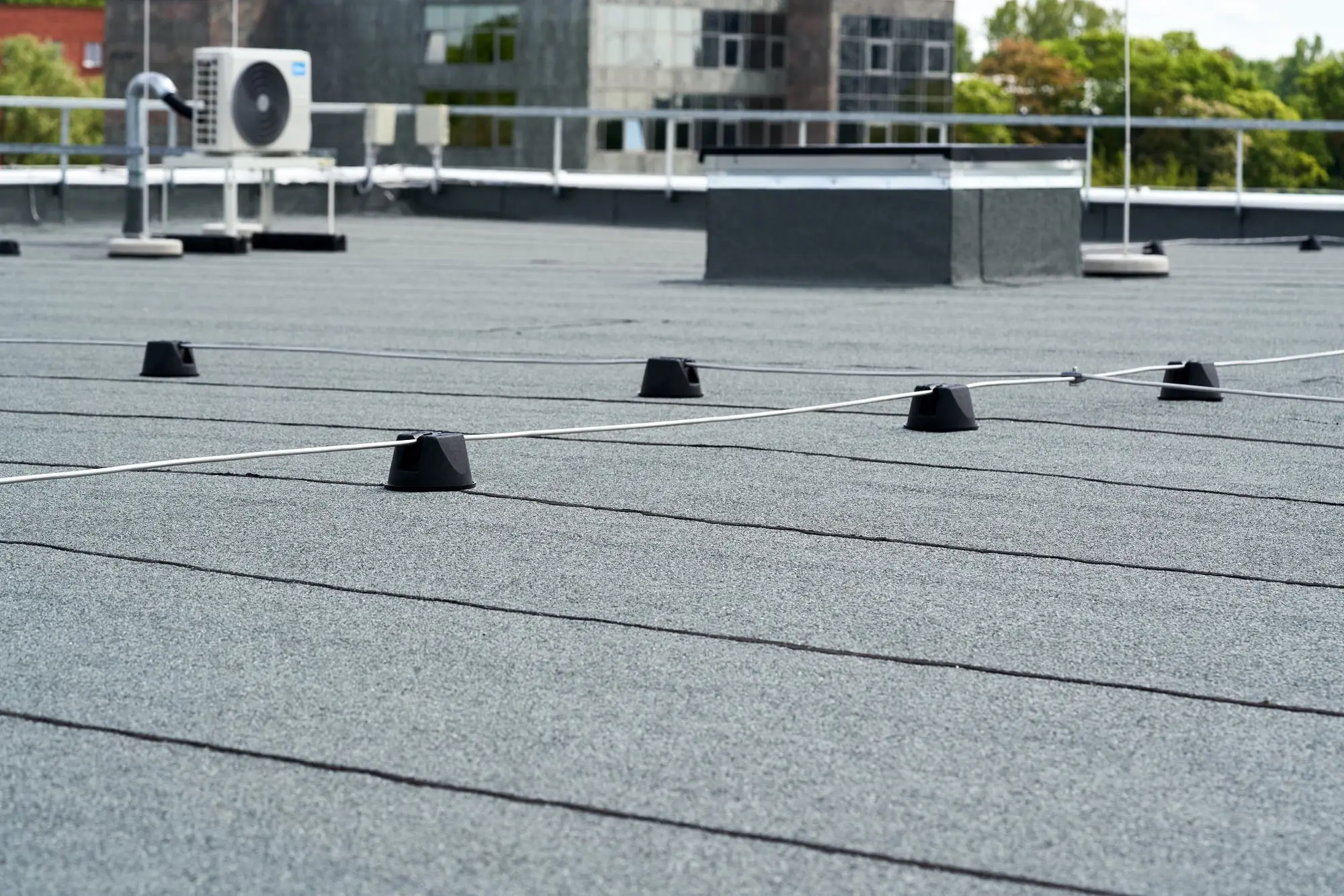
Most small commercial and mixed-use buildings around Washington Park and the rest of Denver have low-slope roofs. They look flat but are built with a slight pitch toward drains or scuppers. The common systems are:
- TPO: a white single-ply membrane with heat-welded seams that reflects much of the sun
- EPDM: a black rubber membrane that handles cold well and is straightforward to patch
- Built-up roofing (BUR): layers of felt and asphalt, often topped with gravel, found on many older buildings
- Modified bitumen and other membranes: asphalt-based sheets that are torched or adhered in place
Some commercial buildings also have pitched sections in shingle or metal, especially over storefront canopies and smaller mixed-use buildings.
What Denver weather does to a commercial roof
A flat commercial roof takes Denver weather head-on.
Snow sits instead of sliding off. Daytime melting and overnight refreezing can block drains and scuppers with ice, and water that can’t drain finds the weakest seam. Heavy, wet spring snow also adds real weight to a roof structure.
Hail lands square. On a low-slope roof, hail hits the membrane straight on rather than glancing off. An older membrane that has lost its flexibility can crack or puncture, and the damage is easy to miss without walking the whole surface.
Sun and temperature swings make the membrane expand and shrink every day. Over years that movement pulls at seams, flashings and the metal edging that holds the roof down.
Where commercial roof leaks usually start
The middle of a membrane rarely fails first. Leaks on commercial roofs tend to start at the details:
- Drains and scuppers that are clogged, cracked or sitting higher than the roof around them
- Seams that were welded or taped poorly, or have pulled apart with age
- Rooftop units where the curb flashing has worn, or where service techs have punctured the membrane
- Parapet walls and coping where water gets in behind the membrane from the top of the wall
- Pipe and conduit penetrations with failed boots or sealant pockets that have shrunk
Water often runs along the deck or insulation before it drips, so tracing a leak takes patience. Wet insulation can stay hidden under a membrane that looks fine from above, and a moisture survey or core sample is the way to know how far it has spread.
Commercial roof repair, recover or reroof
There are three paths, and the right one depends on what’s under the surface.
Repair fits when the roof is mostly sound and the problem is local: a failed seam, a punctured section around a rooftop unit, a bad drain. This is the most common answer for commercial roof repair in Washington Park buildings with a membrane that still has life left.
Recover means installing a new membrane over the existing roof. It can save the cost and disruption of a tear-off, but only if the insulation underneath is dry and the building doesn’t already have two roofs on it.
Reroof means tearing off down to the deck. It’s the right call when insulation is soaked, the deck is damaged or the roof has already been recovered once. It’s also the chance to fix drainage, add tapered insulation and upgrade the edge metal.
You’ll get photos and the reasoning behind the recommendation, so you can plan the expense. For more on repairs, see commercial roof repair in Denver. If your building’s roof is a smaller membrane system, our Washington Park flat roofing page may fit better.
Planning roof work around a business
Roof work on an occupied building takes coordination. Before any project starts, it’s worth agreeing with your roofer on where materials and equipment will sit, how noise and odors from adhesives will be handled, how rooftop units will be protected or shut down, and how tenants will be notified. Get those answers in writing with the estimate.
How it works with APC Roofing
- Book your free inspection. Call 720-902-6940 or request a free estimate online.
- Get a clear, honest assessment and estimate. We walk the roof, check the drains, seams, edges and rooftop units, and give you photos with a written estimate. Financing is available through Aqua Finance, Fortifi, Hearth and Home Run Finance.
- The work gets done and the site gets cleaned up. The scope and schedule are set before anyone starts.
If hail damaged the roof, the building owner files the claim and pays the deductible. We document the damage, provide the estimate and work with the adjuster.
A slow leak on a commercial roof costs more than the roof. It can soak insulation, rust the deck and damage inventory or a tenant’s space before anyone sees a stain.
Commercial roofing questions
How often should a commercial roof be inspected?
Twice a year is a common rule of thumb, usually spring and fall, plus a check after any major hail or windstorm.
Can you repair just part of a commercial roof?
Yes, if the rest of the membrane is sound and dry. A matching patch or section replacement is often the right first step.
Is TPO or EPDM better for a Denver building?
Both are used widely here. TPO reflects more sun and has welded seams. EPDM handles cold well and is easy to repair. The best choice depends on your deck, drainage and what sits on the roof.
What should I do when a leak shows up inside?
Move what you can away from the drip, catch the water, note where and when it happens, and call for an inspection. Don’t send staff onto the roof to look.
Commercial roofing in Washington Park starts with a free inspection
Call 720-902-6940 or book your free inspection online. For homes and other properties in the neighborhood, see our Washington Park roofing page.
The goal is a roof that drains, tenants who stop calling about drips and a budget you can plan around. Your satisfaction is our reputation.