Searching for Commercial Roofing in Deltona Florida?
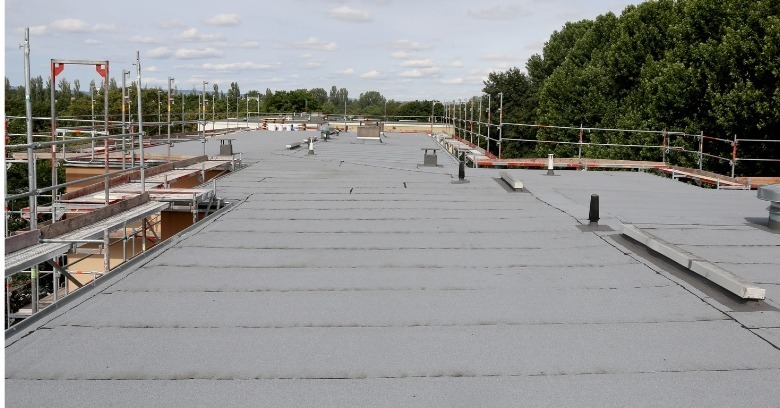
APC Roofing builds and mends the wide, low coverings above places of work, down to the drains, edge trim and equipment curbs.
Dial 386-356-2111 and a roofer will walk the surface and explain the findings.
Business Property – the Basics
Staff, stock and machinery sit beneath the membrane, so a small opening can interrupt a full day of trade. Across a large building, the upper surface is broad and barely sloped, so outlet sizes and wind design come from engineering figures.
Mechanical units, vents and satellite dishes share the space overhead, and each duct, line or support passes through the waterproofing. The purpose of the building drives the design, because a bakery and a document archive ask for different things.
Sheet Systems in Wide Use: a Plain Primer
One flexible layer of TPO, PVC or EPDM is what single-ply describes, modified bitumen is asphalt blended with polymer and rolled out, and built-up roofing mops hot tar between plies of felt. Seams in thermoplastic membranes melt together under a welding nozzle, but rubber gets primer and tape at every splice.
Kitchen exhaust leaves a film of grease around a restaurant's fans, and oily residue softens asphalt and EPDM, so PVC tends to be installed across the exposed zone. Built-up plies under a gravel layer make a heavy, durable assembly, and the aggregate shields the bitumen from sunlight.
Commercial Steel: What to Watch
Exposed-fastener sheets are secured with screws through the flats, and the threads grip purlins or joists underneath. Sunlight bakes the washers until the rubber splits, and fasteners loosen as the metal moves with temperature.
Clips concealed in the raised seams secure a standing-seam roof, and the pans slide freely along the length. Red rust breaks out at laps and along cut edges, and a retrofit coating can give sound metal more years of service.
Deck Construction: Age and Condition
The structure underneath decides how everything above is secured, and reroofing leaves the framing in place. Fluted steel accepts screws readily, concrete is glued or drilled for anchors, and wood planking takes ring-shank nails or plates.
Moisture trapped for years can rust through metal decking, and a damaged area is removed and a new piece fastened in place. Where a drop ceiling lifts out, the bottom of the structure is examined, and cores drilled from above confirm the remainder.
Attachment Methods: Weighing the Choices
Mechanically fastened sheets carry rows of plates and screws in the laps, adhered work is glued from edge to edge, and ballasted sheets are held down by rock or pavers. The deck, the building's height and the site's exposure steer the decision, and the framing's spare load capacity limits how much weight can go on top.
Screw-down systems flutter between plates when gusts hit, whereas a glued sheet holds steady on a clean, dry substrate. Inspecting a ballasted system takes time, because gravel or pavers must come off before anyone sees a joint.
Uplift on a Big Building: Setting the Screw Pattern
Pull is greatest at the outside angles, because moving air curls and speeds up on spilling over the edge. The strips along the sides rank next, and the open middle is loaded more gently.
Screws and plates are packed tighter toward corners and edges, and published wind tables fix the spacing for each height. An under-fastened outer angle lets the sheet curl up, and a blow-off can run well across the field.
Insulating Foam: Beyond Energy Savings
Panels of polyisocyanurate rest on the structural deck in offset rows, and a thin, hard cover board is often added last. Insulation keeps conditioned temperatures indoors, and tapered pieces create the fall that sends rain to the outlets.
A saturated panel no longer holds back heat, and the soggy material sags while rust spreads beneath. Scanning at dusk, with a few cores for proof, marks out the damage, and any spoiled patch is replaced, never roofed over.
Getting Rain Off: Main and Backup
A basket-shaped strainer caps each interior opening, which keeps litter from entering the pipe. When the grate mats over, rain has nowhere to go, so a shallow lake forms across the low area.
An overflow opening is placed higher than the regular drain, so a gush at the upper spout means the normal path is shut. Ponded water adds load that the framing may not be sized for, and a wet patch that stays two days reveals a dip or a packed strainer.
Locating an Opening Overhead – No Guesswork
The mark on a suspended ceiling shows where moisture landed, but the split in the sheet is often somewhere else entirely. Corrugated decking channels seepage the length of the building, and seams in the foam layer offer extra routes.
Laps, curbs and outlets upslope of the stain are checked by hand, and an electronic scan can pinpoint a hidden leak. A patch placed right over the wet ceiling often misses, so the trouble returns with the following storm.
Rooftop Mechanical Units: Where Care Is Needed
Each large machine stands on a raised curb, and the covering turns up the sides beneath metal counterflashing. Each folded inside corner takes careful work to stay watertight, and a poorly sealed crease admits rain.
A new unit from the HVAC contractor may sit on an adapter with no flashing, and stains appear below a few storms later. Condensate discharged straight onto the covering discolors and softens the surface, and a short extension to a drain ends the problem.
Objects That Rise Above the Surface: Details That Add Up
A round plumbing stack gets a molded boot clamped at the top, while oddly shaped items get a metal pan poured full of sealant. Over time the compound pulls away and splits, so topping up is part of routine upkeep.
Runs of conduit and gas line rest on unattached blocks, because a mount fastened through the sheet lets rain in. Each base needs a protective pad beneath, and the cushion absorbs rubbing as temperatures swing.
Openings With Lids – How Leaks Begin
Ultraviolet light leaves acrylic and polycarbonate hazy and weak, and hairline breaks radiate from each fastener. A tired gasket on a skylight admits water, yet the membrane usually takes the blame.
The access hatch is lifted on every service visit, and hinges, springs and weatherstrip wear from constant opening. Automatic smoke vents must deploy when heat melts a link, so work nearby leaves every mechanism free.
The Low Wall Around the Edge – What Goes Where
At the vertical face, the sheet climbs as base flashing, a screwed termination bar secures the top, and counterflashing tucked into a reglet covers the fastened line. Coping over the crest steers rain to either side, but an open joint between sections lets storms into the wall below.
Unsealed brick draws water in and carries moisture indoors, and occupants below mistake the damp for a roof leak. Coping, wall and flashing are all looked at in the same inspection, and loose mortar is repointed rather than coated over.
Metal Trim Where the Field Ends: Holding the Line
Along the eave, a long cleat grips the hemmed lip of the flange, and a stripping ply seals the sheet to the horizontal face. The profile chosen has to be rated for wind at the building's elevation, and an undersized section flexes until the metal pulls away.
Gutters along a long eave take a huge volume in a storm, which calls for sturdy hangers and oversized downspouts. Dented or lifting trim counts as a repair item, because refastening early lowers the risk of a blow-off.
Everyone Who Goes Up There: Living With Guests
Refrigeration and heating crews climb up to the equipment month after month, and the route wears a visible track into the field. Screws left lying about are pushed into the membrane by work boots, and an access panel set down on a corner slices a gash.
Heavy walkway pads laid along the route show where to tread, and the abuse lands on something made to take the wear. Contracts with service firms can spell out where crews may walk, and nobody should leave scraps or screws behind.
Maintenance Visits: What Gets Done
Owners of commercial property do well to arrange a walk-through twice annually, and heavy wind is reason for an extra check. Upkeep includes emptying every strainer, every lap is probed for loose spots, and brittle sealant gets marked for replacement.
A walk before the stormy months concentrates on outlets and the perimeter, and the next round, after a hard season, searches for fresh movement. Each small defect found is logged with the location on a plan, and repairs can be grouped and timed sensibly.
Keeping Track of a System: Kept for Later Years
A marked-up plan locates every unit, drain and hatch, and a section view names each material from deck to membrane. Each fix is logged with a date and photographs, and core and scan results are added whenever taken.
Lots of aging buildings have nothing on paper about the assembly overhead, and every crew works out the layers again. Documentation stays with the building, and a copy passes to the next manager or buyer.
Mend, Coat or Start Over: The Main Signals
Localized faults on a healthy sheet are patched in place, while a tired but dry surface can carry a silicone or acrylic layer. Waterlogged insulation across large areas points toward a new covering, and so do seams that have turned brittle everywhere, while a date on the calendar decides little.
A liquid coating needs a scrubbed surface and sound mending beneath, and material below that holds water never dries out. Removing only the ruined parts can make sense as a middle option, when the surrounding field is still performing.
Planning a Reroof – Picking a Direction
Recovering adds another membrane on top of the current roof, and a cover board sits in between. Codes limit an overlay to buildings with a single covering in place, as long as the insulation below is dry.
A tear-off removes every component down to the structure, so rusted or soft decking gets fixed in the open. A tapered system can be designed to empty the low spots, and saddles between drains steer water sideways.
Signs Worth Reporting – Before Leaks Spread
- A steady stream from the backup scupper in a storm, which betrays a choked everyday outlet.
- A brown ring overhead that widens with each downpour, which confirms a path through the assembly.
- Dark streaks running down the outside wall below a scupper, which can point to seepage passing through the masonry.
- Rattling trim along an open eave, which can put the membrane at risk in a storm.
- Ponding visible from a higher window days after rain, which may mean a low spot or a blocked outlet.
- A skylight whose plastic has turned chalky, which is ready to fail at the frame or under a load.
- Water trickling down an interior column in a storm, which often traces back to a lap or a curb.
- A gutter that overflows along the front edge in rain, which can mean a clog or an undersized run.
How APC Roofing Carries Out Commercial Roofing in Deltona Florida: the Order of Work
The drains, scuppers and overflows get our attention before anything else, and next we go along each lap, curb and edge. On a leaking building, cores and a meter check the foam, so nothing is proposed until the results are in.
Our findings go on paper, with pictures and a marked-up plan, and every trouble spot is pinned to a location. The recommendation names repair, restoration or replacement, and the why is explained in terms you can verify.
Commercial Roofing Across Deltona Florida – A Clear Picture First
Reach us at 386-356-2111 and a time to look things over gets agreed.
Business as Usual Downstairs – What Gets Agreed
Fastening into metal decking carries a racket into the offices underneath, and the smell of primers can reach the fresh-air intakes. Noisy tasks are scheduled with the manager's input, and vents close to the work can be blocked until curing ends.
Waste is sent to the ground through an enclosed chute, and stock under the open area can be covered over. A water-borne glue smells much milder than a solvent type, and the gentler choice suits a building full of people.
Sequencing a Big Replacement: Avoiding Surprises
Crews remove only as much old covering as can be made watertight by evening, and the bare deck gets new boards and membrane promptly. A cutoff between finished and untouched portions keeps rain out overnight, and the stopgap is lifted at the restart.
The outlook decides how far the tear-off goes, and a front on the way shrinks the stretch. A sudden soaking ruins exposed insulation, and drips can fall on whatever sits underneath.
Our Service Area's Range: Timing and Materials
At the colder end of our territory, hail and snow load both count, so a hard cover board and an engineer's review of the framing are sensible. Intense sunshine in every city we cover breaks a membrane down over time, and white TPO or PVC keeps the top cooler.
At the coastal end, attachment is engineered for hurricane gusts, and tropical storms require ample secondary drainage. Low temperatures slow or stop many adhesives from curing, whereas welded seams can go down in cool weather but never onto a wet deck.
Safety for Everyone Who Goes Up – No Shortcuts
Where the wall is low or missing, nothing catches a misstep over the side, so warning lines and harnesses come into play. Skylight lenses cannot take a body falling onto the plastic, so every opening should get a screen or a railing.
Permanent tie-off points benefit the service crews who visit later, and a safety gate at the ladder completes the setup. Our findings mention any guard that is lacking, since even a low building is high enough for a serious fall.
If Commercial Roofing in Deltona Florida is on your agenda, dial APC Roofing at 386-356-2111. A roofer will inspect the drainage, the seams and the flashings, and the results arrive in writing to act on as you see fit.
Verified

Verified
Verified
Verified