Hoping to find Commercial Roofing in Spring Lake Pointe Neighborhood Florida?
APC Roofing builds and mends the wide, low coverings above places of work, along with the details at units and drains.
Reach us at 407-270-1129 and a roofer will go up top and check every part.
Buildings Where People Work: Setting the Scene
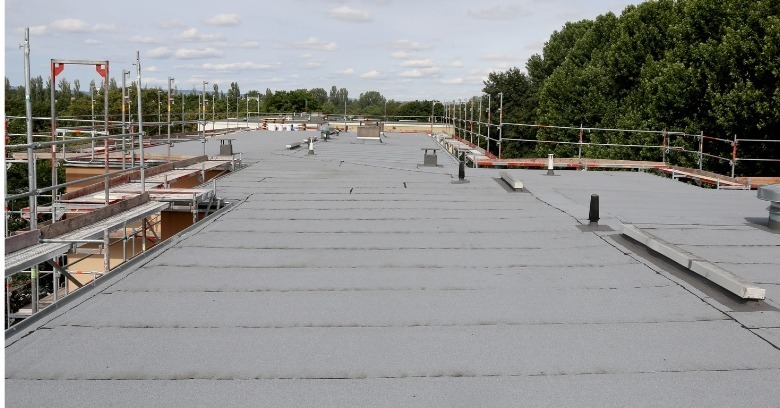
Desks, shelving and production lines lie under the sheet, and a leak can halt sales rather than just mark a ceiling. Wide commercial buildings carry a top surface that is nearly flat, so drainage and wind resistance are worked out by calculation.
Air handlers, fans and communications gear sit on the membrane, and each support, line or duct gets careful flashing. The business inside shapes the choice of system, and a freezer warehouse needs details an office never does.
Common Low-Slope Materials: a Short Guide
TPO, PVC and EPDM are single-ply products made as one flexible layer, modified bitumen is rubberized asphalt sold by the roll, and built-up roofing stacks felt and hot tar in plies. Seams in thermoplastic membranes melt together under a welding nozzle, whereas rubber splices rely on primer and adhesive tape.
Kitchen exhaust leaves a film of grease around a restaurant's fans, and EPDM and asphalt swell and weaken beneath oily residue, so PVC tends to be installed across the exposed zone. Gravel-surfaced built-up roofing weighs a lot and wears well, because the loose aggregate keeps ultraviolet light off the bitumen.
Steel Over a Warehouse – Wear Over Time
Exposed-fastener sheets are secured with screws through the flats, and each shank anchors in the framing below. The neoprene washer at each head dries out under years of sunlight, and daily heating and cooling gradually loosen the fasteners.
A standing-seam roof is held by clips folded into the ribs, so each pan can creep as the metal grows and shrinks. Corrosion gathers where sheets overlap and at trimmed ends, and a coating over steel that is still sound can slow the damage.
The Deck: Reading the Substrate
How the system is held down is set by the structure under the insulation, and a reroof almost never replaces the framing. Fluted steel accepts screws readily, a concrete slab needs glue or anchors set in drilled holes, and gypsum plank takes specialty fasteners made for gypsum.
Rust from old leaks can leave soft spots in metal decking, and a weak area gets a new panel before anything goes on top. The structure's underside is checked from indoors when access permits, and small cores from above show the rest.
Anchoring the Membrane: Weighing the Choices
Some commercial sheets go down with plates and screws at the seams, adhered work is stuck down across the full surface, and ballasted sheets lie free beneath river rock or concrete pavers. Building height, site exposure and deck material shape the choice, and extra weight is used only where the structure can bear the load.
Between the plates, a fastened sheet balloons in stiff gusts, whereas a glued sheet holds steady on a clean, dry substrate. Ballast makes any inspection slow, because the stone or pavers must be moved aside to expose a seam.
Wind on Low-Slope Work – a Matter of Engineering
Pull is greatest at the outside angles, since air accelerates on rolling over the perimeter. The zone running down each side follows close behind, and the center is loaded far more lightly.
Screws and plates are packed tighter toward corners and edges, as set out in engineering tables for height and wind speed. A thinly anchored outer angle can peel back, and pressure underneath can strip a wide section.
Foam Insulation – Several Jobs at Once
Polyisocyanurate panels cover the deck with offset joints, and a thin, hard cover board is often added last. Insulation keeps utility bills in check, and tapered sections supply the gradient that carries rain to the drains.
Soaked foam gives up most of the thermal resistance, and the heavy mass adds weight and rusts a steel deck. Nondestructive meters and cored samples show how far the problem reaches, and each sodden piece is removed instead of buried.
Where Runoff Exits: Clogs and Standing Water
Each interior sump wears a cast strainer dome, and the slots hold back gravel and plastic bags. When the grate mats over, rain has nowhere to go, and a broad puddle collects at the low spot.
An overflow opening is placed higher than the regular drain, so a steady discharge up high means a jam below. An inch of standing water weighs about five pounds per square foot, and water lasting two days suggests a depression or a clogged strainer.
Leak Hunting on a Large Building: The Method
The mark on a suspended ceiling shows where moisture landed, but the split in the sheet is often somewhere else entirely. Fluted steel decking carries runoff sideways along the ribs, and gaps between insulation boards add more routes.
A roofer probes the laps, curbs and outlets upslope of the stained area, and electronic leak detection can locate a pinhole. Sealing whatever sits above the soggy tile rarely fixes anything, and the next rain brings the trouble back.
Package Units Overhead – a Closer Look
A sturdy curb holds each machine clear of the membrane, and base flashing climbs the sides under a metal cap. Corner work calls for patient hands, and a rushed job leaves gaps for rain.
A new unit from the HVAC contractor may sit on an adapter with no flashing, and the ceiling underneath begins to spot. Condensate discharged straight onto the covering discolors and softens the surface, and a short extension to a drain ends the problem.
Smaller Openings – the Small Stuff
A round plumbing stack gets a molded boot clamped at the top, and irregular shapes sit in a pitch pan of pourable sealer. Sun and seasons shrink the compound until cracks open, which makes a refill a normal maintenance task.
Conduit and gas lines belong on free-standing supports, since every screw driven through the sheet is a future leak. A square of sacrificial material under each foot spreads the pressure, so daily movement rubs the buffer rather than the covering.
Hinged Covers Up Top: Common Faults
Ultraviolet light leaves acrylic and polycarbonate hazy and weak, and cracks spread from the screws at the rim. A shrunken gasket or a separated miter lets water through, yet the membrane usually takes the blame.
The hatch at the top of the ladder sees daily traffic on some buildings, so the latch, springs and weatherstrip eventually give out. Heat-activated vents over a warehouse are designed to fling wide, and no roofing work may block the mechanism.
Parapets on Commercial Buildings – What Goes Where
Base flashing carries the membrane up the inside face, a screwed termination bar secures the top, and counterflashing tucked into a reglet covers the fastened line. Formed metal coping caps the parapet to keep rain off the top, but joints whose sealant has cracked admit runoff beneath.
Brick and block soak up a long downpour, and the resulting mark resembles a roofing defect. A proper look takes in the coping, the flashings and the wall along with the sheet, and cracked mortar gets repointed rather than smeared with sealant.
Fascia Metal at the Outer Edge – Wind at the Border
Along the eave, a long cleat grips the hemmed lip of the flange, and a cover strip ties the sheet to the upper face. The profile chosen has to be rated for wind at the building's elevation, since a bent clip can let a gust peel a whole stretch.
An eave gutter on a big building collects runoff from a vast surface, so hanger spacing and outlet size follow the flow. Bent or lifted trim belongs on the repair list, because refastening early lowers the risk of a blow-off.
Foot Traffic From Technicians: Protecting the Sheet
Refrigeration mechanics may call on a large store every few weeks, and a worn lane appears between the hatch and the units. A dropped screw gets pressed through the membrane by the next boot, and a falling wrench can split the sheet.
Walkway pads set out a marked route to the equipment, so heels grind on a tough layer and spare the waterproofing. Managers can require contractors to keep off the unprotected sheet, and nobody should leave scraps or screws behind.
A Regular Look Up Top: Timing and Tasks
Twice annually is a sensible rhythm for a walk-through of a commercial system, with an added check after any violent storm. A service call clears leaves and trash from the strainers, seam edges are tested with a probe, and the sealant at each pocket is inspected.
A walk before the stormy months concentrates on outlets and the perimeter, and a later round looks for anything a punishing season loosened. Little defects go into a log, each tied to a spot on the plan, so repairs can be arranged before a leak starts.
Keeping Track of a System: Knowledge That Lasts
A sketch of the whole area places each unit, drain and hatch, and a section view names each material from deck to membrane. Photos with dates accompany every repair entry, and moisture readings are added as taken.
Older properties frequently hold no notes on the covering, so the same facts get rediscovered with each visit. Roof documentation outlasts any single service firm, so a future manager or purchaser inherits a copy.
Mend, Coat or Start Over: What Tips the Balance
A sound membrane with a handful of local faults simply gets patched, and a weathered surface that is still dry can take a fresh liquid layer. Widespread waterlogged boards signal a full replacement, and brittle joints throughout lead the same way, though age on paper proves nothing.
Pressure washing and repairs have to precede the coating, since damp layers below stay hidden and soggy. Taking out just the spoiled areas occasionally works as a halfway measure, as long as the remaining membrane has plenty of service ahead.
Reroof Paths: What Codes Allow
In a recover, a fresh membrane goes directly over the old surface, and a cover board sits in between. Codes permit an overlay on a single existing covering, and only over dry insulation.
Tearing off takes the assembly back to the bare structure, and any soft or rusted area can be rebuilt. Tapered insulation installed at the same time can reduce chronic puddling, and a saddle between drains turns the flow toward each outlet.
Clues Around the Building: Before a Small Fault Grows
- Splashing from the upper overflow opening, which exposes a blocked lower drain.
- A brown ring overhead that widens with each downpour, which indicates water reaching the interior.
- Algae streaks on the siding beneath a scupper outlet, which can point to seepage passing through the masonry.
- Edge metal visibly bent or lifted from the ground, which can put the membrane at risk in a storm.
- Ponding visible from a higher window days after rain, which hints at a low area in the structure or a slow drain.
- A skylight bubble with hairline fractures, which may give way under a misstep.
- Drips from light fixtures or sprinkler heads after a storm, which shows a leak traveling inside the assembly.
- A downspout that backs up in heavy rain, which can reflect loose brackets or a jam.
How APC Roofing Plans Commercial Roofing in Spring Lake Pointe Neighborhood Florida: What Happens and When
The drains, scuppers and overflows get our attention before anything else, and after the outlets we move to the laps, curbs and edge metal. A leak brings a moisture survey of the insulation, because saturation below changes the answer.
A written report, photos and a sketch record what we found, and every trouble spot is pinned to a location. Each proposal names a choice: repair, restore or replace, and the reasoning is laid out for you to question.
Commercial Roofing for Property Owners in Spring Lake Pointe Neighborhood Florida – A Clear Picture First
Phone 407-270-1129 and a time is agreed with whoever runs the building.
Working Above Occupants – What Gets Agreed
Every screw driven into steel decking is heard indoors, and solvent smells from adhesives can be drawn into the ventilation. Noisy steps are discussed with the manager beforehand, and vents close to the work can be blocked until curing ends.
Torn-off material goes down a chute or on a hoist, and shelving or machinery directly below can be tarped. A water-borne glue smells much milder than a solvent type, which makes the gentler kind a sensible pick over offices.
Sequencing a Big Replacement: Planning the Steps
Crews remove only as much old covering as can be made watertight by evening, and fresh foam and sheet cover the bare area without delay. A holding seal ties the completed edge to the untouched field each night, and the stopgap is lifted at the restart.
How much is stripped depends on the weather outlook, and a front on the way shrinks the stretch. Bare foam hit by a downpour absorbs a great deal of water, and drips can fall on whatever sits underneath.
Our Service Area's Range: Timing and Materials
Hail and the weight of snow matter at the colder end of our territory, so a resilient top board and stronger framing are called for. Wherever we operate, ultraviolet light and heat age the sheet, and a white reflective surface cuts the warmth absorbed.
Hurricanes at the coastal end raise the bar for anchoring, and tropical storms require ample secondary drainage. Glues and primers carry a temperature floor, while hot-air welding copes with cool days but not with showers.
Fall Protection Up Top – Measures Worth Having
A perimeter without a tall parapet leaves an open drop, so a warning line keeps crews back from the edge. Skylight lenses cannot take a body falling onto the plastic, so guards over each opening are standard practice.
Permanent tie-off points benefit the service crews who visit later, and a gated ladder hatch adds another safeguard. Our findings mention any guard that is lacking, because a drop from a single floor can badly hurt someone.
When you need Commercial Roofing in Spring Lake Pointe Neighborhood Florida, contact APC Roofing at 407-270-1129. We will cover the surface on foot, from the outlets to the parapets, and you receive the findings in writing and decide from there.