Hailstorms do their most visible work in about four minutes. A spring cell rolls across Johnson County, pea to golf-ball-sized stones strip the driveway of leaves, and then the sun comes back out. The roof looks the same from the sidewalk and there is no water in the ceiling, no shingles in the yard, nothing urgent. That is exactly why so many hail claims are filed too late and why roofing contractors in Shawnee Kansas spend their winters repairing damage that was actually caused nine months earlier.
Hail rarely punches a hole through a modern asphalt shingle. Instead, it usually bruises the fiberglass mat beneath the surface, loosens the protective granules, and dents the soft metal components that control where water goes. Such damage is invisible from the ground and easy to overlook from a ladder. Then freeze-thaw cycling widens the cracks, attic temperatures climb the following summer, and the roof finally fails long after the claim window has quietly closed.
This article explains how hail damage progresses, which small components cause most post-storm leaks, how dented gutters trigger problems that have nothing to do with the roof surface, what Kansas law says about registration and deductibles, and how property owners in the Shawnee and Overland Park Kansas areas can evaluate roofing companies after a storm without getting burned by a crew that left the state three weeks later.
The Three Ways Hail Damages an Asphalt Roof
Understanding the types of damage present matters because two of the three are nearly impossible to see without stepping onto the roof.
1. Granule Loss
The ceramic granules on a shingle are not decoration but rather the UV shield for the asphalt below. Hail impact knocks granules free in clusters, leaving the shiny black spots a roofing contractor looks for after a storm. The shingle still sheds water the next day, which is why owners assume everything is fine. But exposed asphalt oxidizes, hardens, and shrinks under the Kansas sun, and a roof that lost significant granule coverage ages years in a single season.
2. Mat Bruising
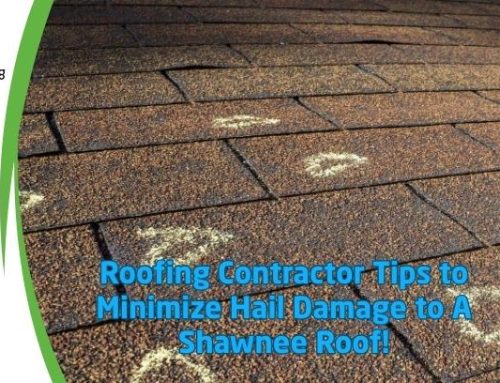
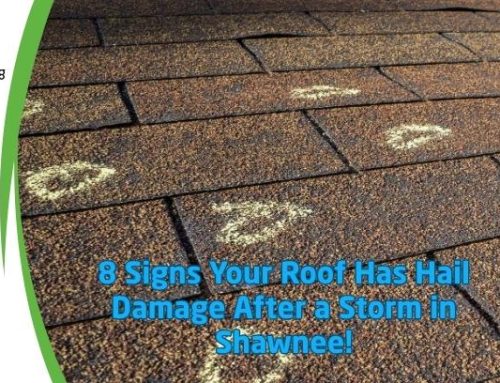
This is the one that drives almost every delayed failure. A hailstone can fracture the fiberglass mat without breaking the surface, creating a soft spot that feels like a bruise on fruit when you press it. Experienced roofing contractors find these by touch, chalking each one before an adjuster arrives. Months of thermal cycling turn that soft spot into a crack and that crack becomes a leak. A storm in May commonly produces a ceiling stain in January.
3. Fracture and Puncture
Roughly one-inch hail is the common threshold for functional damage to asphalt shingles. Three-quarter-inch stones can damage aged roofs, older 3-tab shingles, and soft metals, while 1.5-inch hail and larger usually means widespread mat fracture. The 1950s-70s ranch stock around Nieman Road often still carries 3-tab shingles over original decking and those roofs reach the functional-damage threshold at smaller stone sizes than the architectural shingles common in the Monticello, Clear Creek, and 66226 build-outs.
Soft Metal Tells the Truth
When a claim is contested, metal usually settles the argument, not shingles. Adjusters and reliable roofing companies in Shawnee Kansas both read the same evidence to confirm hail size and the direction it fell:
- Dents in gutter faces, gutter aprons, and crushed downspouts
- Spatter marks and dings on drip edge
- Dented turbine, turtle, and ridge vents
- Pocked furnace and plumbing flashings
- Flattened AC condenser fins
- Torn or dimpled window screens
- Fresh dents on garage doors, grills, and mailboxes
Property owners across the metro in older Shawnee subdivisions as much as in Overland Park Kansas tend to photograph the roof and ignore all of this. The metal is the corroborating record a roofing contractor can use to substantiate the claim. When it is repaired before an inspection, the claim loses its supporting evidence.
The Drainage Cascade Nobody Connects to the Storm
Dented gutters are not a cosmetic issue. A crushed downspout or a gutter deformed enough to change its pitch stops moving water away from the structure and the consequences migrate downward over the following year:
- Water backs up behind the gutter face and saturates fascia, which begins to rot.
- Overflow runs down the wall, staining soffit as well as siding and finding its way into trim joints.
- Discharge concentrates at the foundation instead of several feet out.
- Saturated foundation soil moves and basement seepage appears the next wet spring.
By the time a homeowner is calling about a damp basement wall, nobody is thinking about hail. Roofing contractors working storm-damage claims routinely trace that chain backward to a single deformed downspout. It is one of the strongest reasons to have the whole water-management system inspected after a storm, not just the shingle field.
Small Parts Cause Most Post-Hail Leaks
The most common source of a post-hail leak is not the shingles – it is a neoprene pipe boot. Those rubber collars around plumbing vents typically crack on their own in 10 to 15 years and hail impact accelerates the process. A roofing contractor can replace a boot for very little, yet a cracked one dumps water directly into the attic alongside the pipe, often showing up as a ceiling stain in a hallway or bathroom.
The same logic applies to step flashing, chimney counterflashing, and sidewall transitions. Hail bends and loosens them, the fasteners back out under thermal movement, and water enters at the seam rather than through the field. This is why targeted repairs typically cost a small fraction of a full asphalt reroof in the Kansas City metro. Standing seam metal typically costs more than asphalt and pitch, existing layers, stories, decking repair, and skylights all move those numbers.
Insurance Realities Property Owners Should Know First
ACV, RCV, and Why the First Check Looks Small
Most policies pay replacement cost in two stages. The first payment is actual cash value or replacement cost minus depreciation and the deductible. The balance, the recoverable depreciation, is released after the work is completed and documented. Owners who assume the first check is the full settlement often shop by price alone and end up with the cheapest roofing company that knocked on the door.
Percentage Deductibles
Wind and hail percentage deductibles are now common across Kansas insurance policies, typically 1 to 2 percent of dwelling coverage. On a typical home, that runs into the thousands of dollars, a figure many owners discover only at claim time. Kansas law also prohibits any contractor from paying, waiving, absorbing, or rebating a customer’s deductible, so an offer to cover the deductible is a reason to end the conversation.
Timing Decides More Claims Than Damage Does
Policies generally require prompt notice and impose a one to two-year statute of limitations. Delay is the single biggest cause of denied hail claims, so owners should call a roofing contractor as soon as the storm passes. A typical sequence would include: claim filed, adjuster inspection within 3 to 10 days, a 30-square tear-off and reroof in one to two working days, and supplements settled over the following weeks.
Metal Roofs and Cosmetic Exclusions
Dented metal panels usually still shed water, so insurers frequently treat that damage as cosmetic. Many policies now carry cosmetic-damage exclusions or separate roof-surface schedules. Owners of metal roofs around Shawnee Kansas should read those endorsements before a storm, not after.
Screening Roofing Contractors After a Storm
Out-of-state crews surge into the metro after every significant hail event and work Shawnee and Overland Park Kansas neighborhoods door to door within days. The Kansas Roofing Registration Act gives owners a simple screening tool: roofing contractors must hold a state registration issued by the Kansas Attorney General and display that registration number. It is a registration, not a license so it confirms identity and accountability rather than skill, which makes the rest of the vetting important.
A practical checklist before signing anything:
- Verify the state registration number and look it up independently.
- Confirm general liability and workers compensation coverage in writing.
- Ask who pulls the building permit as Shawnee requires one for reroofing.
- Ask whether a tear-off is required as two existing layers means full removal under the residential code.
- Confirm the ice barrier at eaves, extending to 24 inches inside the interior wall line and metal drip edge, both required in this climate zone.
- Ask for manufacturer certification and the specific warranty terms being offered.
- Get the scope in writing, line by line, including boots, flashings, vents, and decking allowance.
Established roofing companies answer those questions without hesitation. For example, APC Roofing works from written scopes, provides free estimates and offers financing options. Insurance-experienced roofing contractors also know how to document bruising and soft-metal evidence in a format adjusters accept, which is often the difference between an approved and a denied claim.
Reducing the Next Storm’s Damage
Shawnee sits inside the region’s heaviest hail corridor, with peak season from March through June and a secondary spike in late August and September. That frequency makes material choice a financial decision rather than an aesthetic one. Class 4 impact-rated shingles, tested under UL 2218 with a two-inch steel ball, often earn an insurer premium credit on the roof portion of a policy and carriers vary widely, often in the range of 5 to 30 percent. Owners in Overland Park Kansas and neighboring communities increasingly specify impact-rated products for exactly that reason and competent roofing contractors will price both options side by side so the trade-off is visible before the next storm arrives.
Final Thoughts
Hail damage is a slow-motion problem disguised as a non-event and the roof looks fine, the ceiling stays dry, and the clock on the insurance claim keeps running. Owners who avoid the expensive version of this story treat a hail storm as a trigger for inspection rather than waiting for a leak, because mat bruising, granule loss, cracked pipe boots, and deformed gutters can cause real damage months after the sky clears.
Anyone whose property in the Shawnee Kansas area took hailstones this season should schedule a documented inspection, photograph the soft metal before any repairs, and verify state registration before signing with any roofing contractor working in the neighborhood. Acting while the evidence is fresh and the notice period is open preserves options that disappear entirely once a year has passed!
Key Takeaways
- Hail usually bruises the shingle mat rather than puncturing it, so leaks commonly appear six to twelve months after the storm.
- Dents in gutters, downspouts, vents, flashings, and AC fins are the evidence adjusters use so photograph them before any repairs.
- Cracked neoprene pipe boots, not field shingles, are the most frequent source of post-hail leaks.
- Kansas requires contractors to hold an Attorney General registration and state law forbids anyone from paying or waiving your deductible.
- Wind and hail percentage deductibles of 1 to 2 percent of dwelling coverage can mean a deductible in the thousands of dollars.
- Class 4 impact-rated shingles often qualify for an insurance premium credit on the roof portion of a policy.
Frequently Asked Questions
There is no leak, so why file a claim now?
Because the damage is already present inside the shingle and the policy clock is already running. Most policies require prompt notice and impose a one to two-year suit limitation, so waiting for a visible leak is the most common reason hail claims get denied.
Can hail damage be repaired instead of replaced and will the shingles match?
Scattered damage on a newer roof can often be repaired, but exact color matching is unlikely because granule blends change over production runs. Widespread mat bruising generally cannot be repaired, since the failure points are not yet visible.
Why is the first insurance check so much smaller than the estimate?
The first payment is actual cash value, the replacement cost minus depreciation and the deductible. The remaining recoverable depreciation is released after the work is finished and the final invoice is submitted.
Who pays my deductible?
The property owner does in every case. Kansas law specifically prohibits a contractor from paying, waiving, rebating, or absorbing a customer’s insurance deductible, so any such offer is a red flag.
Do I need a permit and who pulls it?
Yes, Shawnee requires a building permit for reroofing and the contractor should pull it. If a crew asks the homeowner to obtain the permit, that usually signals a registration or insurance problem.
What if the adjuster misses damage or denies the claim?
Request a re-inspection with the contractor present and supporting documentation. Chalked bruise locations, close-up photographs, and soft-metal evidence submitted as a supplement resolve a large share of initially denied hail claims.