
A bucket under a drip in the back office. A stain spreading across the ceiling tiles over your inventory. When the roof over your business leaks, you lose more than drywall. Commercial roofing in Daytona Beach is a big line item, and you want to know whether this is a patch or a full replacement, what it’ll cost, and whether the work will shut your doors for a week.
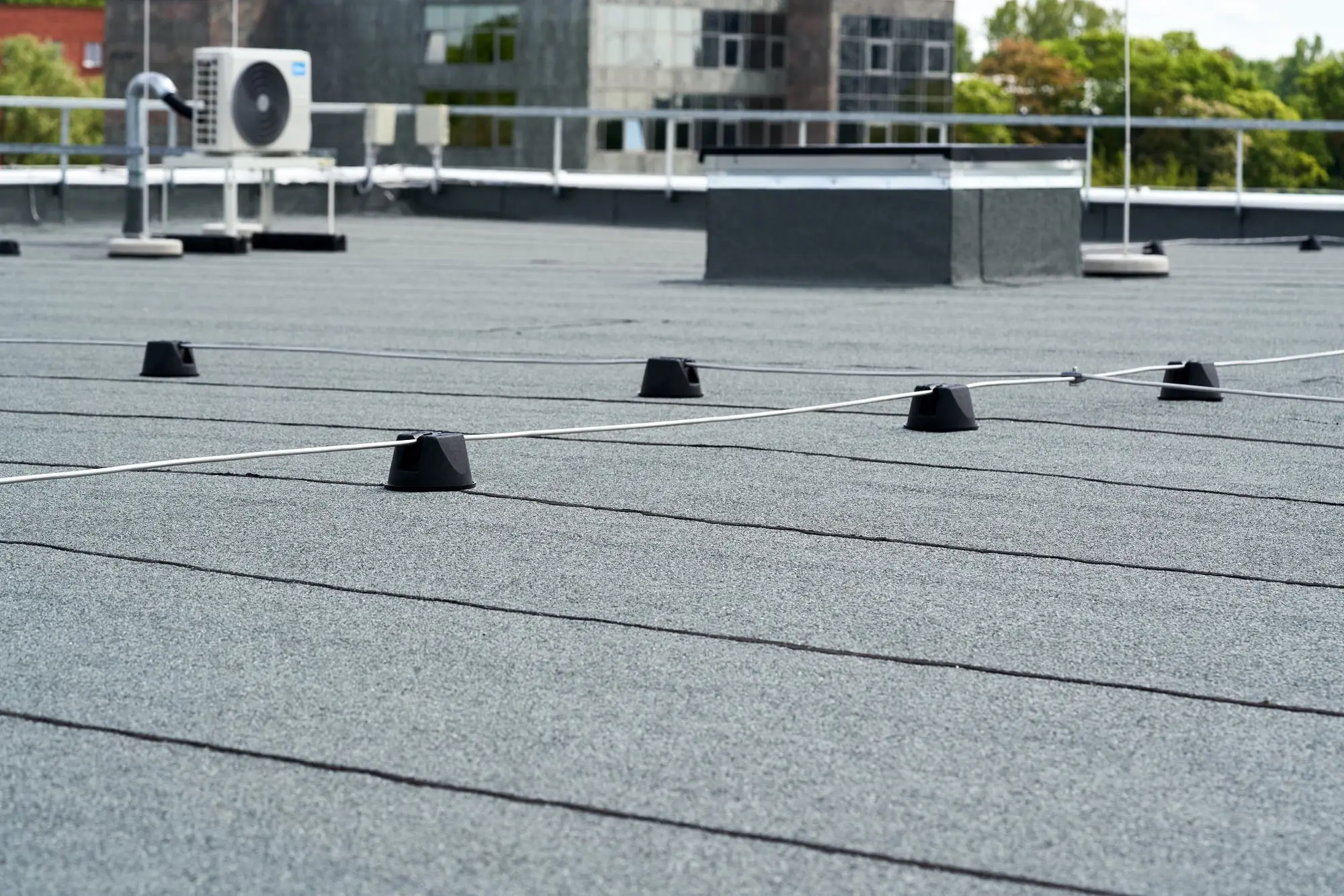
Those are the right questions. You deserve a roofer who answers them plainly and shows you the proof.
APC Roofing is a GAF Certified roofing contractor, licensed in Florida (CCC1337030) and insured, with an office in Holly Hill. We install and repair low-slope and metal roofs on shops, offices, warehouses and other light commercial buildings across Daytona Beach, Ormond Beach, South Daytona and the rest of Volusia County. Inspections and estimates are free. Call 386-259-8425 to set up a visit, or see all of our roofing services in Daytona Beach.
What the coast does to commercial roofing in Daytona Beach
A business roof near the ocean deals with more than most. Salt air speeds up rust on metal edge trim, fasteners, HVAC curbs and metal roof panels, especially at cut edges and scratches. Hurricane season, June through November, puts the heaviest wind load on the corners and perimeter of a flat roof, where a loose edge can let air in under the membrane and peel it back.
Then there’s the rain. Summer afternoon storms can dump a lot of water on a big, nearly flat roof in a short time, so drains and scuppers need to keep up. And the sun beats on a commercial roof almost every day of the year. A white or reflective membrane bounces much of that heat back, which can take some load off your air conditioning.
Commercial roofing systems we work with
TPO is a white single-ply membrane with heat-welded seams. It’s reflective, which makes it a popular choice for Florida buildings. You can read more about TPO roofing in Daytona Beach.
EPDM is a black rubber membrane with taped seams. It’s flexible and simple to repair.
Built-up roofing (BUR) layers felt and hot asphalt several plies deep, often under gravel. It’s heavy and long-wearing, and plenty of older buildings still have it.
Metal roofing shows up on warehouses and shops, either as exposed-fastener panels or standing seam. On the coast, rusty fasteners and cut edges are the usual trouble spots. See our metal roofing in Daytona Beach page for more.
Where commercial roof leaks start
Leaks on a low-slope roof rarely come from the open middle of the membrane. They start at the details:
- Seams, where two sheets of membrane overlap.
- Drains and scuppers clogged with leaves and debris, so water ponds instead of leaving. Water still standing two days after a storm is a problem, because it wears out the membrane and adds weight to the deck.
- HVAC curbs, especially when a unit gets replaced and the new curb never gets properly flashed.
- Pipes, conduit and other penetrations, often sealed with a pocket of sealant that shrinks and cracks over time.
- Parapet walls and coping caps, where cracked joints let water into the wall. That moisture can show up indoors and look like a roof leak.
- Edge metal that’s been bent or loosened by wind.
Finding the source takes patience. On a steel deck, water can run along the ribs and come through the ceiling far from where it got in. A patch slapped on right above the wet ceiling tile often misses entirely.
How we inspect a commercial roof
The drains, scuppers and overflow outlets come first, because blocked drainage causes so many problems. Then the roofer walks every seam, curb, penetration and edge, and checks the insulation under any suspect areas for moisture. Wet insulation loses most of its value and has to come out, not get covered over.
You get a written report with photos, each problem tied to a spot on a sketch of your roof, and a recommendation you can verify: repair, a recover over the existing roof, or full replacement. Building code allows a recover only when there’s a single existing layer and the insulation is dry.
Repair, recover or replace
Most commercial roofs that leak need repair, not a new roof. A failed seam, a cracked boot or a poorly flashed curb can be fixed on its own. Replacement makes sense when seams are failing across the whole roof, the membrane has gone brittle, or large areas of insulation are wet. If only part of the roof is worn out, replacing that section can be a sensible middle path. If you’re comparing options, our flat roof repair in Daytona Beach page covers the repair side.
If storm damage is involved and you decide to file an insurance claim, we’ll document the damage, provide the estimate and work with your adjuster. You file the claim and pay your own deductible.
Keeping your business open during the work
Roofing over an open business takes planning. Loud work like drilling into a steel deck gets scheduled with your building manager ahead of time. On a replacement, the crew tears off only as much as they can make watertight by the end of the day, so your building and inventory stay dry overnight. Storms in the forecast mean a smaller section gets opened.
How it works with APC Roofing
- Book your free inspection. Call 386-259-8425 or request a free online estimate.
- Get a clear, honest assessment and estimate. You’ll see photos, a written report and your options side by side. You decide what gets done and when.
- Get the work done and the site cleaned up. The crew works around your schedule as much as possible and cleans up before leaving.
Financing is available through Aqua Finance, Fortifi, Hearth and Home Run Finance for larger projects.
Commercial roofing questions
Can my commercial roof be repaired instead of replaced?
Often, yes. Most leaks come from one detail, like a seam, curb or drain. A full replacement only makes sense when problems are widespread or the insulation underneath is soaked.
What’s the best commercial roof for a building near Daytona Beach?
For most low-slope buildings here, a white TPO membrane is a strong choice because it reflects heat and its welded seams hold up well. The right pick also depends on your deck, your drainage and what’s on the roof, so we’ll go over the options with you.
How often should a commercial roof be inspected?
Twice a year is a good rule, plus after any major storm. A check before hurricane season, focused on drains and edge metal, is worth the time.
Do you serve Ormond Beach and South Daytona?
Yes. We work on commercial roofs across Daytona Beach, Ormond Beach, South Daytona and the surrounding Volusia County area.
A roof you can stop budgeting for every storm
A small leak over a commercial space gets expensive fast. Water soaks the insulation, rusts the deck and ruins whatever sits underneath. You don’t have to fix everything at once. It helps to know where your roof stands.
The next summer storm rolls in off the ocean, the drains keep up and nobody has to put out a bucket. Your customers never notice the weather. Call 386-259-8425 to book your free commercial roof inspection, or start with our free online estimate.


















