Storm Damage
The first two days after a storm shape almost everything that follows: how much water gets inside, how well the damage is documented, and who ends up on your roof. This page is the short version of what to do while the weather is still clearing.
Start with the part that is not about roofing. Stay away from downed or sagging power lines and anything touching them. Do not climb onto a wet, hail-covered or debris-strewn roof, and do not put a ladder up in gusty conditions. If a ceiling is sagging with trapped water, keep people out of that room until it has been drained deliberately rather than by collapse. Look from the ground, from an upstairs window, or from a neighbor's vantage point, and let someone with fall protection and the right footing handle the rest. More people are hurt in the days after a storm than during it.
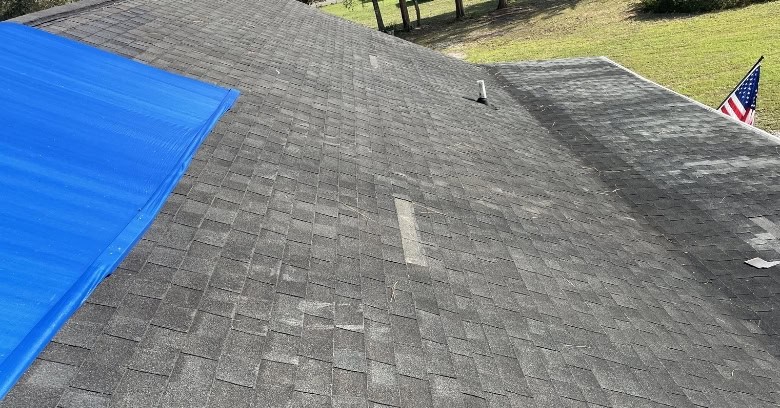
Then work the order. Photograph everything from the ground, including yard debris and fallen limbs, and note the date and time — phone photographs carry that automatically, which is worth knowing. Check interior ceilings and upper walls for fresh staining and put containers under active drips. Move furniture and belongings clear of anything wet. Call your insurance company to report the loss and ask what your policy requires of you next, because the reporting deadline is in your policy and not in anyone's advice. Arrange a professional inspection promptly. And if the roof is open, get temporary protection on it: a tarp or dry-in sized past the opening, fastened so wind cannot get under an edge and lapped so water runs over it rather than into it. Most policies expect you to take reasonable steps to prevent further damage, and a properly installed dry-in beats a week of rain in the attic by a margin no repair can recover.
Know which force hit you
Storm damage is not one thing, and the repair depends on which force did the work. Hail bruises and fractures roofing materials with almost nothing visible from ground level; it starts marking asphalt shingles at around one inch of stone diameter, which is also the size at which a thunderstorm is called severe. Straight-line wind lifts, creases and peels, starting at edges, ridges and corners where the pressure drops hardest — and it does that hundreds of miles from any coastline. Tropical systems combine hours of sustained wind with rain driven sideways into openings that would shed a vertical downpour without complaint. Freezing rain is different again: it is a weight problem, loading gutters and edges with clear ice arriving straight from the sky. Ice dams are different from all of these and are not really a storm at all — they need only a couple of inches of snow on the roof and a warm attic underneath, with heat escaping to melt snow that refreezes at the cold eave. Each leaves its own signature, which is why the sub-pages treat them separately.
A roof can look fine and still be damaged
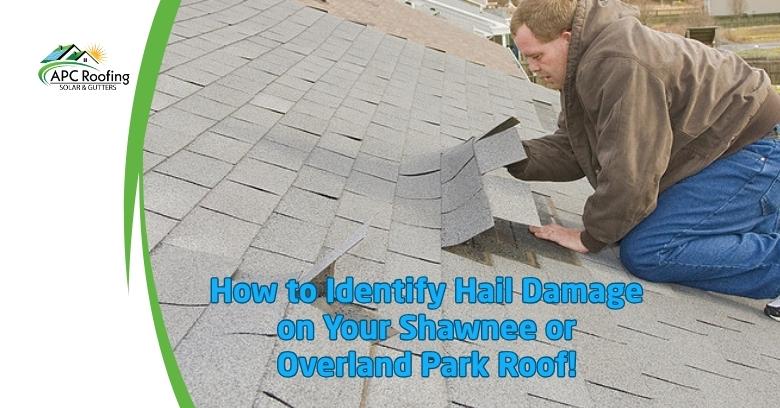
This is the part that costs people the most money. Impact bruising, broken sealant strips, lifted-and-reseated shingles and hairline flashing separations are all invisible from the driveway, and they leak weeks or months later — often after the reporting window has closed. If a significant storm crossed your area, have the roof looked at even when nothing appears wrong. You can check whether one did: NOAA's severe weather database holds the record of hail, wind and tornado reports by date and location, and it settles the "did anything actually happen here" question independently of anyone's sales conversation. An inspection that finds nothing is a good outcome and a normal one — customers here describe exactly that result often enough to say so plainly.
How to check anyone who turns up
Widespread storms bring roofers from everywhere. Some are excellent and some are gone by the following spring, and you cannot tell them apart from the doorstep. So apply the same tests to everybody who knocks, including us. Confirm who the company is, where it is registered, and how you will reach it in two years rather than two weeks. Get the scope in writing before signing anything, and read what you are signing — some documents presented as an inspection authorization are contingency contracts. Be wary of pressure to decide immediately, of any offer to handle or absorb your deductible, and of anyone promising an insurance outcome that only your insurer can decide. None of those tests are unreasonable to put to a company that came to you, and a contractor who objects to them has answered the question.
Straight answers
What should I do in the first 48 hours after a storm damages my roof?
Stay off the roof, document everything before anything is moved or fixed, stop further damage with a tarp or temporary repair (your policy requires it), report the loss to your insurer, and get your own inspection. Keep a claim file from day one, and slow down before you sign anything a stranger puts in front of you.
What you do in the first two days shapes both the repair and the claim. Most of it is documentation and stopping the bleeding, in that order.
Stay off the roof
A storm-damaged roof is a genuinely dangerous surface: wet, possibly missing decking, possibly holding a broken limb under tension. Wet hail-struck shingles are slick. Nothing you would find up there is worth a fall. Look from the ground, from a ladder at the eave, and from inside the attic with a flashlight.
Check for downed power lines near the house before you walk the perimeter at all. If a line is down, stay away from it and call the utility.
Document before anything gets moved or fixed
Photograph and video everything while it is exactly as the storm left it. Wide shots of each elevation of the house. Close shots of shingles on the ground, dented gutters and downspouts, split fascia, damaged vents and flashing, broken windows. Photograph the ceiling stains and any water on floors and contents. Get the hail on the ground if it is still there, with a coin or ruler in frame for scale — hail size is a fact your carrier will care about.
Write down the date and rough time of the storm. Then confirm it against the public record: the NOAA Storm Prediction Center storm reports log confirmed hail and wind reports by date and location, and your local National Weather Service office publishes event summaries. Having your loss date match an official report removes an entire category of argument later.
Stop further damage — that is your obligation
Policies require the insured to take reasonable steps to prevent further loss. That means covering openings, tarping, moving furniture and electronics out from under an active leak, putting buckets down, and getting standing water off floors.
Emergency work is generally covered, but keep every receipt and photograph the temporary repair before and after. Have any contractor doing emergency tarping give you a written scope and price for that work separately from any permanent repair. Do not sign a contract for a full roof replacement as the price of getting a tarp on the house.
Report the loss
Call your carrier or use their app. Give the date of loss, what happened, and what you have observed. You do not need a repair estimate to open a claim, and you should not delay reporting in order to get one. Ask for the claim number, the adjuster's name, and the deadlines that apply to your claim.
Do not guess at causes or costs on that call. "Wind and hail on the fourteenth; shingles on the ground; water staining in the back bedroom" is a good report. Speculating about how old the roof is or whether something was already leaking is not.
Get your own inspection
Have a licensed or registered local roofer inspect and produce a written report with photographs and measurements. If you can, arrange for that roofer to meet the insurance adjuster on site. Two people on the same roof at the same time, agreeing on what they are looking at, prevents most scope disputes.
Keep a claim file
One folder, physical or digital. Every photograph, the storm report, the inspection report, every estimate, every receipt for tarps and hotel nights and dehumidifier rental, and a running log of every phone call with the date, the name of the person, and what they said. That log is the single most useful thing homeowners fail to keep.
Slow down on signing
Within a day of a hail or wind event, people will knock. Some are established local companies. Some are not. Do not sign anything that assigns your claim, authorizes work at "insurance proceeds" with no stated price, or commits you before the roof has been properly inspected. There is no scenario in which a contract has to be signed at the door on the same afternoon.
Before the next storm, the National Weather Service preparedness pages for hurricanes, severe thunderstorms and high wind are worth twenty minutes.
How do I avoid storm chaser roofing scams after a hailstorm?
The crews to worry about arrive with the storm, want a signature today, and will not be around to honor a warranty. Check state registration or licensing, insist on a local address and references, never sign an assignment of benefits or a contract before you understand it, and never accept an offer to waive your deductible. Colorado's contract law gives you a way out of a storm-season signature.
Large storms bring out-of-town crews, and not all of them are a problem. The ones to worry about share a pattern: they arrive with the storm, they want a signature today, and they cannot honor a warranty because they will not exist here in two years.
The checks that take five minutes
Kansas. Kansas requires state registration to do roofing work for a fee. The Kansas Roofing Registration Act, K.S.A. 50-6,121 and following, is administered by the Attorney General, and there is no dollar threshold — any roofing work for a fee requires a valid registration certificate. It is worth knowing that under K.S.A. 50-6,123, an unregistered roofing contractor cannot bring or maintain a claim in a Kansas court related to that work. Ask for the registration number and verify it with the Attorney General's office.
Colorado. No state roofing license, but roofing contracts are regulated by statute and cities and counties issue their own licenses and permits. Verify the license for the jurisdiction your house is in, not a neighboring one.
Florida. Roofing is a state-licensed trade. Verify the license with the Department of Business and Professional Regulation, and confirm the license holder is the company you are contracting with rather than someone whose license is being borrowed.
Missouri. No statewide roofing license. Registration is municipal, so check with the city — Kansas City, Independence, Lee's Summit and others each run their own.
Everywhere: ask for the certificate of general liability and workers' compensation coverage, and call the insurer named on it to confirm it is active. An uninsured crew member injured on your roof is your problem.
Colorado's contract law is a genuine consumer protection — use it
Colorado's 2012 residential roofing law puts real rights in your hands. A residential roofing contract must be in writing. It must let you rescind and get your deposit back within 72 hours of signing. And under C.R.S. 6-22-104, if the work is to be paid from insurance proceeds and your insurer denies the claim in whole or in part, you may rescind within 72 hours of getting that written denial, and the contractor has ten days to return your money.
The same law makes it illegal for a Colorado roofer to pay, waive or rebate your deductible, and requires the contract to say so in writing. A contractor who offers anyway has told you what their contracts are worth.
The specific red flags
A signature demanded at the door, with pressure framed as a deadline — "we're only in the area this week."
A contract that authorizes work at "whatever insurance pays" with no scope and no price. You are signing a blank check against your own claim.
Any document titled assignment of benefits, or any clause handing your claim rights to the contractor. Florida heavily restricted assignment of benefits in property insurance after 2022 precisely because of how it was abused.
An offer to cover, absorb or "eat" your deductible. Illegal in Colorado by statute, and a misrepresentation to your insurer everywhere. An offer to inflate the estimate or add undamaged slopes is worse: that is insurance fraud, and the homeowner who signs the claim documents is a party to it.
A large deposit demanded up front, especially in cash, before material is ordered. No local address, magnetic door signs, out-of-state plates on every truck.
Someone who climbs on your roof uninvited and comes down with photographs of damage. You cannot tell whether those marks were there before they went up.
What good looks like
A written scope with materials named by manufacturer and product line, a stated price, a decking allowance, a permit line, a start window, payment tied to milestones, and a written workmanship warranty from a company you can still find in five years. A contractor content for you to get two other bids. A contractor who tells you your roof does not need replacing when it does not.
If something has already gone wrong, your state insurance department takes complaints about claim handling and your state attorney general takes complaints about contractors. Both are free and both create a record.