Trying to Find Storm Damage for a House in Republic Missouri?
APC Roofing climbs onto the shingles once bad weather has passed through, measuring every mark before anything is touched.
Call us at 913-398-5020 and a roofer will come out for a closer look.
How Air Travels Over Shingles: a Detail Worth Knowing
The greatest pressure gathers at the eaves, the rakes and the ridge, and a wide center area sees far lighter duty. Blowing air reaching under a curled tab pushes on the course set above the tab, and a single fastener ends up holding that shingle down alone.
Where two exterior faces meet, wind tumbles rather than running smooth, and hardware spacing shrinks at that point on a well-built roof. A row nearest a projecting edge takes on more force than a row set well off to the side, and a closer-set fastener arrangement there is a direct answer to that pressure.
A Last Step the Sun Finishes: No Machinery Involved
A strip of sealant under every shingle grips the course sitting beneath, and that formed hold is what stops rain from working up under a lap. A hard gust can break a bond across a stretch of roof, and the shingle shows no gap at all.
A broken seal goes unnoticed until the wind returns, so nail heads take on whatever weather follows. A single shingle off a bond hurts nothing taken alone, but a cluster of parted shingles makes a real opening.
A Rating Printed on a Wrapper – Often Misread
In a lab, unused shingles are pinned to a board and every seal is made deliberately, and moving air is then driven across the surface at a measured speed. Years of sun and cold change how a shingle performs compared with the shingle's very first months in place, and a bench rating stops matching a roof once real weather sets in for good.
A nail set too far up misses the layer a shingle relies on for a full hold, and a section can then give way at a wind speed below the figure on the wrapper. Long exposure to sun leaves asphalt beneath the granules stiffer than new, which is why an early rating belongs to day one alone.
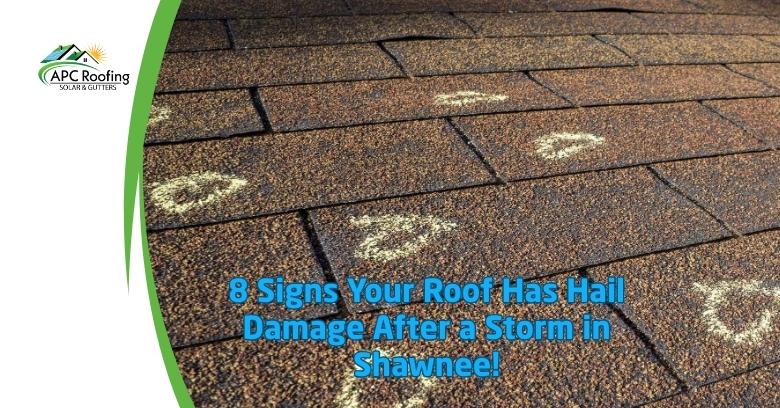
What a Hailstone Does to a Roof: Under the Surface
At the colder end of our territory, spring storms drop the heaviest stones, and even a brief burst can cause lasting dents. A strike drives surface granules down into the asphalt underneath, and a dimple stays on a shingle after a storm passes.
What stops rain from reaching a deck lies under the topmost grit, so a bruise reaching that depth is a fault, not a blemish. A struck shingle weathers faster than a sound shingle nearby, which shortens the years a covering has left.
Beyond the Roofline – a Second Place to Look
A stone that asphalt shrugs off can still dent an aluminum vent hood, so a mark from a storm remains long after the weather clears. A boot opened by a strike lets water follow a pipe downward instead of around a pipe, and a ceiling underneath is usually where that water first appears. Marks on a gutter's surface rarely stop a gutter from working, but a flattened downspout holds a run's water behind a flattened point.
A roofer counts hollows in the flashing the same way a roofer counts marks on a slope, and every mark gets photographed along with the shingle damage. Dented metal parts rarely turn up where the asphalt above escaped unharmed, so marked shingles hardly ever stand next to hardware with no marks at all.
What Ends Up in a Downspout: Where the Sand Came From
Colored granules bedded into a shingle block sunlight from reaching the asphalt below, and exposure without that finish shortens a shingle's working life. Heavy rain sweeps freed grains down toward a downspout outlet, and the amount collected hints at the extent of a storm's toll.
A shingle stripped of a protective coat starts to curl at the edges, and a covering left that way begins to fail in scattered places. Whatever collects at an outlet used to be part of the covering, and a roofer can trace the source back to the face above.
Rain That Arrives Sideways – Joints That Rarely Get Tested
A shingle's lap directs a vertical descent down across the surface, which is why angled weather overwhelms defenses built only for a plumb, downward arrival. An open soffit can draw damp air upward into the attic space, and drops fall well away from any actual break in the covering.
A Branch Across a Slope – Small Mark, Real Harm
A concentrated load transmits pressure through only a few square inches of contact, and a substantial dose of force travels downward into the framing. A board can crack even though the covering keeps a normal shape from above, and daylight or a flashlight from below often finds what the surface hides.
A swaying bough polishes a bright curve into the granules a branch touches, and the outline stands out clearly once the pattern is known. Getting to a split panel calls for removing the covering above the crack first, and the finished patch ends up wider than the mark visible above.
The View From the Rafters: Where the Story Is Plainest
A gleam higher up signals a gap in the roof, so a person can pin down the location before ever climbing outside. Damp sheathing stains in a pattern that follows the path water traveled, and following that mark upward usually leads to where water first got in.
Compressed insulation records a history of repeated soaking over time, and material packed down that way stops insulating long before the fibers look worn. A louver can admit rain into the far end of an attic during a hard blow, and the fix there is a baffle rather than a shingle.
Evidence Inside the House – the End of a Long Path
A discolored area forms where a drop of rain finally let go, and the true entry point can lie well uphill of the visible blemish. Paint lifting into blisters shows a board stayed wet for a stretch of time, and a small mark can sit directly under a much larger fault.
Water reaching a ceiling fan is reason enough to cut power to that circuit, and only after that switch is confirmed off does the cleanup begin. A dark line under a flue traces the outer face of the chase, and step flashing along that run gets looked at as well.
The Metal Details on a Roof: Quietly Doing Real Work
Counterflashing set into masonry has to pin an apron in place at the same time, and one weak point undermines the protection for the entire span. Air sliding under a gable edge can roll that length of metal upward, and the covering can begin to unzip from that corner inward.
Ridge caps sit in the roughest airflow on a roof and can still come away as a unit, and slack fastening opens the seal on the seam sitting beneath. A raised end on a vent lets rain slip in under the baffle, and framing well beyond that single spot can end up soaked as a result.
Openings for Daylight – What a Storm Finds
The frame under a skylight stands above deck level on purpose, and courses step around that rise in a set sequence. A hailstone can star the top layer of glass and leave the lower layer whole, and the assembly comes out complete rather than in pieces.
Debris striking a plastic dome can leave a pattern that spreads with heat, and a small fracture can widen with every hot afternoon that follows. Moisture trapped between the panes of a sealed glass unit means the edge seal has failed, and the surrounding curb is a separate matter from that fault.
Swamped Within Seconds: the Overshoot
Sheet flow off a wide slope can outpace the capacity built into that edge, so the excess spills across the fascia and onto the ground below. Leaves and grit washed off a roof can choke the drain opening at the point of collection, and moisture sitting in a clogged length can work beneath the trim over time.
Not the Final Answer – Anchored, Not Weighted
Plastic pulled across a break can stop rain from reaching rooms below, because anything temporary is meant to come off once real repairs begin. A covering laid over the high side and anchored on both slopes stays effective, so a support strip backed by lumber spreads the load across a wider stretch.
Loose weight on top rarely secures a sheet once the gusts pick up, and debris from that failure can end up scattered across the yard. Fasteners set into an undamaged course create holes that need sealing afterward, and nothing gets fastened through material that was already solid.
Sizing Up the Aftermath – a Straightforward Description
Close-up shots are captured from several angles while marks are still clear, and nothing gets tidied up or moved before that record is made. Measured lengths and a plain description accompany every damaged spot, and a ruler answers what the eye alone cannot.
Wind keeps moving debris that an earlier storm loosened, and marks seen now may look different again next week. What gets requested for review comes across precisely as the paperwork shows, and nothing in that record gets dressed up to suit the occasion.
New Faces After the Damage – Why the Hurry
Canvassing teams can appear on a block within a week of a bad night, though picking the sound ones out from the rest can be difficult. A deal reached at a front door carries the same weight as one signed indoors, and reading every line before agreeing is always worth the extra minute.
A business rooted in the area tends to stay put once a season passes, and a repair that fails down the road still has someone accountable on record. Pressure to sign a contract before anyone has been on the roof is worth resisting, and a reliable roofer has no trouble giving a homeowner time to decide.
A Repeat Performance – Reading a Pattern
A roof that lost some grip once needs less wind the next time to lose more, and each following round can claim more than the round that came first. A creased shingle carries a line that later sun cannot undo, which no amount of resealing along the edge actually cures.
Runoff with an established route moves along that route with little resistance, which is how a small fault can grow into a much more sizable one. Delamination can begin wherever dampness settles between the layers underneath, and that is exactly where leaving early damage unaddressed shows up later.
Marks Worth a Closer Look: Notes Worth Keeping
- A course lifted clear of the row beneath, obvious from across a street.
- Soft metal marked where a stone or a branch made contact, wherever thin sheet sits exposed.
- A heap of mineral grains under a spout, gathering again within a few weeks.
- Light where there should be none up top, with an attic lamp switched off.
- A brown ring on a ceiling that grows after rain, in any room below the roofline.
- A soft spot in the wallboard near a corner, following the line of the masonry.
- A skylight with bent flashing around the frame, after a violent night of weather.
- Gutter spikes backed partway out of the wood, after a heavy limb came down.
How APC Roofing Goes About Storm Damage in Republic Missouri – Our Method
Our roofer opens with a slow circuit of the house from ground level, so anything unusual gets flagged before the review wraps up. Each roof face gets covered on foot wherever conditions allow, while the underside of the deck gets a separate look from below.
Findings come back in writing, with photographs attached to every item, and nothing in that summary gets dressed up beyond what a roofer actually saw. What gets proposed comes with the reasoning spelled out, and a homeowner decides from there without pressure either way.
Storm Damage for Homes in Republic Missouri – Inspected and Measured
Call us at 913-398-5020 to book a time for an inspection.
Snow Banked on a Slope – Ready for Tougher Conditions
At the colder end of our territory, a big accumulation rests on the structure for days, and wet, packed snowpack weighs far more than dry powder ever does. Frozen runoff at the roof's edge can pond meltwater on the slope, and water held back that way can find a path up under the lowest courses.
At the colder end of our territory, valleys and the sides of a dormer fill well past the general depth, which is often where sagging first becomes visible. A sheet coming free from a metal surface can drop without warning, and hangers can bend under strain from a sudden release like that.
A Harder Grind for Roofing Material by the Water – Strain That Builds Fast
At the coastal end of our territory, a large system can take a full day to move through, while rain rides sideways for much of that span of time. Sustained force can tire sealant strips and nail holes alike, and failures can multiply the more that sort of weather lingers.
Driven rain can reach seams that stay dry during the rest of the year, which is why the whole house gets checked after a storm like that, not just the roof. Homes at the coastal end of our territory generally go up with tighter nailing along every edge, which any patch in that region has to respect.
New Work Beside Old – What Stands Out Up Close
Material from a current production run differs in tone from shingles baked by years of sun, which holds true across every manufacturer's lineup. A mended area on a visible elevation can show up as a distinct patch, though a season or two eases some of that mismatch.
An older style no longer sold gets replaced with something comparable, and the outline rarely lines up with total precision. A slope covered in individual patches tends to read as pieced-together rather than one continuous surface, and redoing that whole slope from eave to ridge is sometimes the tidier outcome.
Signs of Careful Work – a Short Checklist
A mended section sits down without any visible ridges, and the courses run true with the shingles set on either side. New flashing gets woven into the shingles rather than smeared over the surface, and caulk never ends up as the thing actually keeping water out.
No fastener shows on the visible face of a completed area, and the count per shingle matches the maker's specification. An image of new shingles taken soon after the work finishes makes a handy reference, since a later inspection can see exactly what section was replaced and when.
If Storm Damage is on your mind after a hard blow in Republic Missouri, reach APC Roofing at 913-398-5020 and a roofer will come out and look the covering over. What is up there gets inspected, measured and photographed in full, and any question that comes up gets answered on the spot.
Verified

Verified
Verified
Verified