Looking for Storm Damage in Springfield Missouri?
APC Roofing climbs onto the shingles once bad weather has passed through, noting where the elements took the heaviest toll.
Dial 913-398-5020 to arrange a visit from a roofer.
Airflow Over a Sloped Roof: Not Spread Out Evenly
The greatest pressure gathers at the eaves, the rakes and the ridge, and a wide center area sees far lighter duty. Air slipping beneath a raised lip pushes upward on the shingle set over the lip, so a lone nail beneath a shingle bears a following blast unaided.
A building corner carries the turbulence a roofline creates, so a tighter attachment pattern goes into that area during installation. A row of shingles at that outside edge carries more push than a row set farther out, and a crew's layout accounts for that extra pull in advance.
The Detail Heat Completes: Not Done at the Factory
A band of adhesive along a shingle's underside catches the row sitting below, which is what keeps a shingle from lifting in a light breeze. Wind can undo a bond that summer heat put together, though nothing shifts out of place in the first hour after.
A broken seal stays quiet for the next windy spell, so nail heads take on whatever weather follows. A lone row loosened from a bond changes little alone, but a long band of parted shingles turns into a way in.
A Rating Printed on a Wrapper – What Gets Left Out
A test rig holds freshly made stock to a deck with every bond formed on purpose, and a known airspeed is pushed across the surface. A roof that has carried several seasons of weather no longer acts like unweathered shingles straight off a supplier's truck, so a rating drawn from the original goods does not describe an aged roof.
A fastener placed high of the nailing band grips a smaller area than a maker intended, and a course can fail at a wind nobody would call extreme. A weathered mat behaves differently from the sample once tested at a factory, so a rating measured on fresh stock says little about a roof carrying years of weather.
A Bruise in a Shingle's Mat: Under the Surface
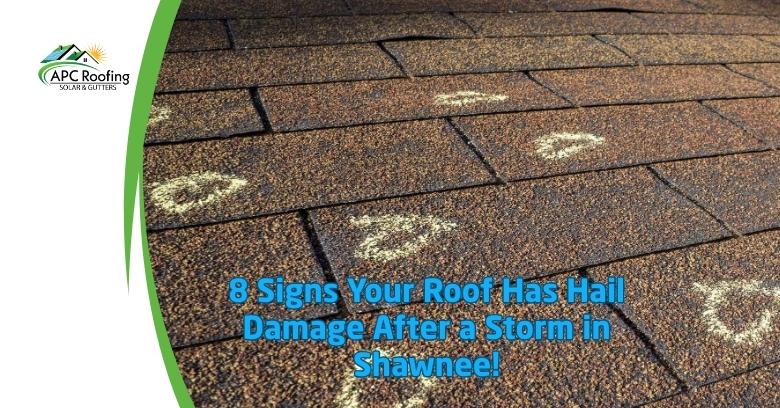
At the colder end of our territory, spring storms drop the heaviest stones, though a milder shower still reaches every market we serve. The force of a hailstone buries granules in the layer set below, and the struck spot goes soft under a thumb.
The core doing real waterproofing lies under a shingle's visible face, so damage that deep counts as structural, not cosmetic. A damaged section of a shingle breaks down ahead of the surface nearby, and a roof weakens in patches rather than all at once after a wide hailfall.
The Rest of a Roof's Hardware – Damage With No Warning
A jolt a covering absorbs still marks a gutter face nearby, and a mark left that way keeps the same shape for years. A collar broken by a strike quits sealing where a pipe passes through a roof, so a stain indoors turns up close under the opening. A gutter knocked about at the front still moves water as designed, but a downspout pinched shut floods the run feeding a pinched downspout.
A roofer counts hollows in the flashing the same way a roofer counts marks on a slope, and measurements cover trim as carefully as the shingles. Trouble in the metal fixtures seldom arrives without a shingle nearby in equally poor shape, so marked shingles hardly ever stand next to hardware with no marks at all.
A Story in the Grit: More Than Dirt
A stony coat over a shingle keeps ultraviolet rays off the layer beneath, which keeps a covered stretch flexible for years longer. Heavy rain sweeps freed grains down toward a downspout outlet, and a pile of grit at that spot shows how much broke loose.
Bare spots widen as the sheet beneath a bare patch dries out, and small trouble in one place tends to spread outward from there. A heap at an outlet is a rough measure of what washed down, and tracing grains back to that slope is straightforward for a roofer.
Water Pushed Uphill by Wind: Where Water Is Not Meant to Go
Every overlap in a shingle assembly assumes gravity alone does the moving, and a strong gust uncovers a route that ordinary wet weather never finds. Gable louvers admit blown moisture through open slats in a hard blow, and dampness pulled in that way lands on the insulation nearby.
What a Storm Drops From Above – Small Mark, Real Harm
Momentum arriving fast concentrates weight in one tight spot, so structural members absorb the shock directly. Boards can splinter under a blow the surface layer survives, and the underside tells a roofer what a glance from above cannot.
A swaying bough polishes a bright curve into the granules a branch touches, and the outline follows exactly where that motion carried. A cracked plank is only reachable from the top of the roof, so the finished work covers more area than the scar first suggested.
Signs Inside the Attic – Quick to Check
A pinprick of brightness through the roof boards points to a hole, and noting the location from within saves time once outdoors. A wet section of decking darkens and rust often follows at fastener tips, and following that mark upward usually leads to where water first got in.
A sunken patch in loose fill points to a regular drip somewhere overhead, and the fibers rarely spring back once squeezed that way. Wind forcing air through an opening can carry moisture well past the covering, so nothing on the covering needs disturbing at all in a case like that.
Ceilings and Walls – the End of a Long Path
A blotch overhead turns up where a trickle gave out, not where the leak began farther up, because water can travel the length of a rafter before any hint develops. Paint lifting into blisters shows a board stayed wet for a stretch of time, so a broad patch can trace back to nothing bigger than a pinhole.
A dripping recessed light is reason enough to shut off that circuit, and live wiring beside water is left to an electrician. Staining on both sides of a chase usually points at the metal overhead, and the reglet sawn into the brick is examined as part of the same check.
The Metal Details on a Roof – What Pulls Free
The assembly at a wall junction depends on staying tucked beneath the shingle layers while nailed in place at once, so the entire system is only as strong as the weaker of the two parts. Wind lifting a rake edge can peel that length of metal back off the trim underneath, and the covering can begin to unzip from that corner inward.
Cap shingles at the crest take a steady buffeting during most of a storm, and the seam remains without any seal for the full distance when that happens. A section that lifts leaves an unbroken slot running the same length, which wets structure over a much longer run than the opening suggests.
Glass Placed Into the Roof – What a Storm Finds
Every skylight frame stands taller than the surrounding shingles, and courses step around that rise in a set sequence. The outside glass of a unit can break while the inside layer holds, and nothing laminated gets mended in place.
A dome hit by a falling branch can crack as force travels through the material, and warm weather can lengthen a split that started out tiny. Moisture trapped between the panes of a sealed glass unit means the edge seal has failed, so the affected section is exchanged for a sound one.
When the Rate Climbs Too High – Watching the Overflow Point
A sudden downpour can pass along more volume at once than a trough can handle, and the surplus pours over the front lip instead of down a downspout. Buildup at a drop point can turn an entire drain line into a stagnant pool, and dampness trapped that way can seep in wherever the metal meets the trim.
Getting Past the First Stretch: Made to Outlast the Wind
A patch of poly over a break can buy time until conditions allow proper work, and sunlight degrades that kind of covering within a matter of weeks. A covering carried past the peak and pinned on each face sends water away, which curbs a sudden surge from ripping the covering free.
A sheet weighted rather than tied down can lift the moment the wind returns, and a gap in the covering can scatter granules in the same blast. Nailing a cover to a clean slope adds unnecessary work down the line, and fastening for a cover stays confined to the area already broken.
Putting Findings on Paper: What a Roofer Writes Down
Photographs are taken of the whole house while conditions still match what a storm left behind, so a complete set of images exists from the very outset. Comments in everyday language accompany a description of each spot, because a mark's true size is hard to judge without a reference point.
The next rain shower can change what is visible on a damaged slope, so a fresh look afterward can turn up something different entirely. Any review of the property draws on findings written up in ordinary language, and the record describes the roof, and nothing beyond the roof.
When Everyone Arrives Together: Take a Moment First
Vehicles with out-of-area plates can work a neighborhood for days after a big storm, but not every outfit working the area is a problem. Paperwork handed over on a driveway still counts as a real contract, and reading every line before agreeing is always worth the extra minute.
A roofer with a nearby yard is easy to track down if a question comes up, and a repair that fails down the road still has someone accountable on record. Being rushed toward a decision before an inspection happens is a warning sign, so there is no harm in declining to agree to anything on the spot.
A Repeat Performance: Back Again
Material weakened by an earlier storm reacts sooner to the next one, and each following round can claim more than the round that came first. Where a course folded over once, the mat carries a break along that fold, and water can find that same flaw on a future occasion.
Once framing has taken on water before, a fresh leak follows the same open path, and interior finishes end up part of the repair once that happens. Plywood swollen and dried repeatedly holds a nail less firmly with each cycle, which turns what should be a simple job into a larger, structural one.
Signs Worth a Call to a Roofer: Inside and Out
- Corners of shingles curled or torn loose, plain enough from a driveway.
- Dents in a vent hood, a cap or a length of trim, with a shape that holds for a long time afterward.
- Coarse sand lying in a trough, noticeable at cleaning time.
- A visible gap in a deck seen from inside, best looked for at midday.
- A spreading mark on drywall upstairs, in any room below the roofline.
- A dark line running down an interior wall, drying out between storms.
- A skylight with bent flashing around the frame, on any unit facing the weather directly.
- Gutter spikes backed partway out of the wood, visible from the yard below.
How APC Roofing Takes On Storm Damage in Springfield Missouri – Our Method
Everything begins at ground level, logging anything that fell before going up, and scattered wreckage gets a record made before any cleanup starts. Every accessible section of the roof gets covered in person, while the underside of the deck gets a separate look from below.
Photographs, measurements and notes get written up and handed over in plain language, and nothing in that summary gets dressed up beyond what a roofer actually saw. A recommendation comes with the reasoning laid out step by step, and the choice of what to do next belongs entirely to the homeowner.
Storm Damage for a House in Springfield Missouri – Inspected and Measured
Dial 913-398-5020 to arrange a visit.
Snow Banked on a Slope: Built to Take More
At the colder end of our territory, a heavy fall can sit on the framing for days, and rain soaking into the pile adds weight that dry powder never carried. Ice built up along an eave can hold meltwater back behind that ridge of frost, and water held back that way can find a path up under the lowest courses.
Across the colder end of our territory, snow blown off one plane lands on the plane below, and one section can carry many times what the rest of the roof holds. Material breaking free can damage anything sitting beneath the eave, which can leave dents wherever a large piece comes down.
The Toll Taken Near the Water – Strain That Builds Fast
At the coastal end of our territory, a tropical system can settle over a house for most of a day, while rain rides sideways for much of that span of time. A load held that steadily can work fasteners loose in a way a brief burst never would, so shingles can lift well after a storm peaks rather than at the height of the storm.
Water thrown at a house again and again can test every joint in the building envelope, and the attic is far from the only place moisture like that turns up. Along the coast, roofs typically go on with extra fastening at rakes and eaves, and repair work there follows that same stricter approach.
New Work Beside Old: Close, Not Exact
Granules fade with age, so freshly made stock looks noticeably brighter, and the surrounding roof ends up setting the visual standard. A repair on the street-facing side can be noticeable from the sidewalk, though a season or two eases some of that mismatch.
Where the original product is gone, the closest current shape takes over, and a close substitute still shows a little on close inspection. A slope covered in individual patches tends to read as pieced-together rather than one continuous surface, and redoing the whole side is a suggestion worth considering, not a requirement.
A Proper Result – a Short Checklist
Replacement shingles bed in as though installed on the original day, and the courses run true with the shingles set on either side. New flashing gets woven into the shingles rather than smeared over the surface, and the overlaps alone do the real work of keeping water out.
Every nail head on a mended spot sits beneath the next course up, so nothing on that work is left open to the weather. A photo of new work, dated, becomes useful the next time a question comes up, since a later inspection can see exactly what section was replaced and when.
If a search for Storm Damage brought you here after a storm in Springfield Missouri, get in touch with APC Roofing at 913-398-5020 to arrange for a roofer to come out. What is up there gets inspected, measured and photographed in full, and the next step gets described without any pressure attached.
Verified

Verified
Verified
Verified