Insurance Roof Claims
An insurance claim on a roof is a paperwork problem wrapped around a roofing problem, and the two halves move at completely different speeds. The install is a day. The claim is weeks to months — approval, sometimes a supplement, sometimes a final draw that lands well after the roof is finished. Worth setting that expectation early, because the most common disappointment here is not the outcome, it is the calendar. APC Roofing handles the roofing half: inspect the roof, record what is there, and put the same evidence in front of you and your insurer. What no contractor can do is decide whether your policy covers the loss.
What an adjuster is actually looking at
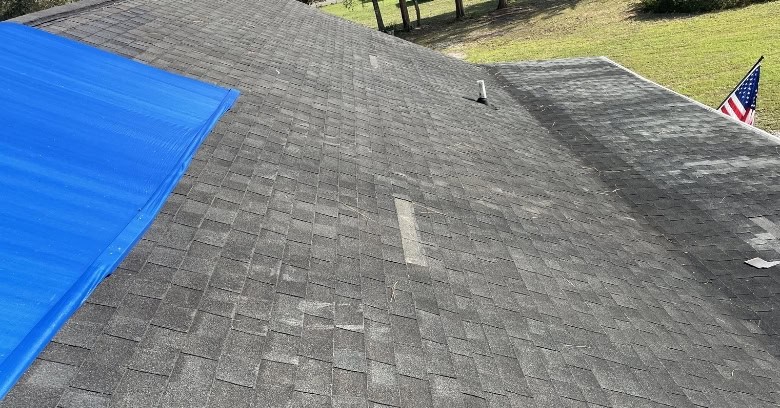
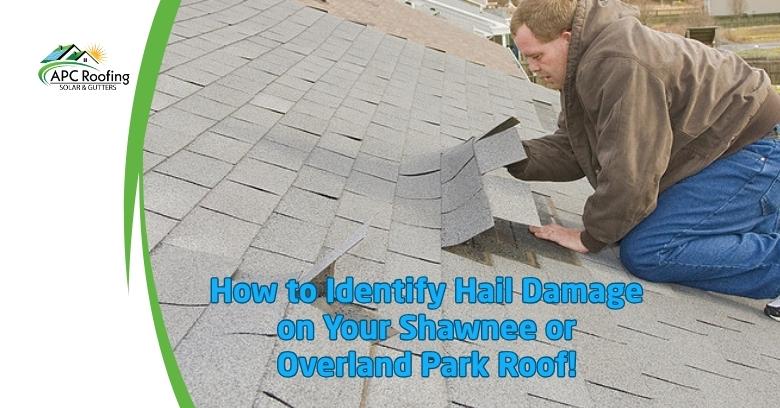
An adjuster is answering two questions: was this roof damaged by a covered event, and how much of the roof did that event affect. So the useful evidence is specific. The date and track of the storm. Impact marks with a consistent size, pattern and direction. Creased, torn or displaced shingles. Marks on soft metals — vent hoods, gutters, drip edge, fascia — which register hits the shingle surface can hide. Interior staining that lines up with a roof-side point of entry. Photographs that show scale and location, not one heroic close-up of a single dent.
Hail claims usually come down to arithmetic. A hundred-square-foot area is marked out on each slope, and only impacts that fracture the mat or strip granules down to bare asphalt are counted — cosmetic marks do not qualify. Eight in a square is the threshold many carriers use to authorize replacing that slope, though it varies, and the squares go where the damage is heaviest. Knowing that in advance tells you what an inspection ought to hand back to you.
Why the inspection should happen early
The record of roof damage fades faster than the damage does. Every week layers on more weather, more foot traffic and ordinary wear, all of which make it harder to tie one failure to one event. Policies also carry their own reporting deadlines, and those vary — read yours rather than assuming. If a severe storm crossed your county, you can verify the date and path yourself: NOAA's Storm Events Database is a public record of hail, wind and tornado reports by county and date, and a printout from it is a stronger opening than a recollection. Where reps do attend the adjuster's visit, customers describe that as the moment nothing gets missed, since both sets of eyes are on the same roof at the same time.
What we will and will not do
We inspect the roof and write down what is there — dated photographs from the ground and from the roof, a written description of each damaged area, measurements of the affected slopes, notes on materials and pre-existing conditions. Where damage is old and unrelated to the storm, that gets written down too, because accurate documentation is harder to argue with than optimistic documentation. We can be on the roof while the adjuster is. We can pull the permit and complete the work to the approved scope.
We cannot approve or deny a claim, promise an outcome, act as your legal representative, or interpret your policy language — that is work for your insurer, a licensed public adjuster, or an attorney. We also will not absorb, discount or otherwise make a deductible disappear. Anyone offering that is proposing something that puts your claim and your standing with your insurer at risk. The deductible is yours to pay. And if the claim is denied or covers less than the repair costs, the roof still has to end up right, so the conversation turns to what it needs now, what can safely wait, and what waiting is likely to cost.
Straight answers
Will homeowners insurance pay for a whole new roof, or only repairs?
Nobody can promise an outcome, but the same four things decide every claim: whether a covered peril caused the damage, how widespread it is, whether the policy pays replacement cost or actual cash value, and which deductible applies. Sudden wind or hail damage across most of the roof leans toward replacement; wear, age and old leaks are not claims at all.
Nobody can promise you an outcome on a claim, and any contractor who does is telling you something they cannot know. What you can do is understand the four things that decide it, because they are the same four things every time.
1. Was the damage caused by a covered peril?
Standard homeowners policies cover sudden accidental damage from named or open perils — wind, hail, a tree falling. They do not cover wear, age, poor installation, or long-running leaks the homeowner knew about. A twenty-year-old roof that finally gave up is a maintenance expense, not a claim. A ten-year-old roof stripped of shingles by an 80 mph gust is a claim. Adjusters spend most of their time on roofs deciding which of those two stories the evidence supports.
2. How widespread is the damage?
Insurers pay to restore what the storm damaged. If one slope took hail and the other three are clean, expect an argument about whether the claim is one slope or a roof. Adjusters commonly evaluate hail slope by slope, marking off a test area on each and counting genuine impact marks — bruises that fractured the shingle mat, not just dents in the granules. That test-square practice is an industry convention rather than a law, and different carriers and adjusters apply it differently.
Building code can override the arithmetic. If code requires that a repair above a certain size trigger a full replacement of the assembly, and your policy includes law and ordinance coverage, that coverage is what pays the difference. In Florida, law and ordinance coverage is built into the replacement cost structure set out in Florida Statute 627.7011, at 25 percent of the dwelling limit by default unless the homeowner selected otherwise in writing. It is worth finding out which option is on your declarations page before you need it.
3. Is your roof insured at replacement cost or actual cash value?
This is the single biggest driver of what lands in your bank account, and most people do not know their own answer. Replacement cost pays what a new roof costs. Actual cash value pays that number minus depreciation for the age of the roof, and on an older roof the depreciation can be most of the total.
Many carriers now convert older roofs to actual cash value automatically through a roof payment schedule endorsement. The schedule sits in the policy, it is tied to roof age and material, and it usually surfaces for the first time when a homeowner reads a claim summary and cannot work out where the money went. Read yours now, not later.
4. What deductible applies?
A flat $1,000 deductible and a 2 percent windstorm or hail deductible on a $500,000 dwelling limit are very different things — the second one is $10,000. Percentage deductibles for wind and hail are standard in Colorado and common across Kansas and Missouri. Florida policies typically carry a separate hurricane deductible, and many also carry a separate roof deductible.
The roof age question, answered accurately
In Florida, an insurer may not refuse to write or renew a homeowner policy solely because a roof is under 15 years old. For a roof 15 years or older, the homeowner has the right to get an inspection from a qualified inspector, and if that inspection shows five or more years of useful life remaining, the insurer may not refuse coverage solely on roof age. That is in 627.7011.
A lot of published material in 2026 states that Senate Bill 808 extended those protections. It did not. SB 808 died in the Senate Banking and Insurance committee on March 13, 2026, along with its House companion. The older statutory protections still stand; the expansion did not happen. If someone is telling you otherwise, check the bill history yourself.
Rules and policy language differ by state and by carrier, and none of this is legal advice. Your declarations page and your policy form are what govern your claim.
What is the difference between actual cash value and replacement cost on a roof claim?
Replacement cost value pays what it costs today to put back what you had, with nothing subtracted for age. Actual cash value pays that amount minus depreciation for the roof's age and condition, which can be most of the cost on an older roof. Many replacement-cost claims are paid in two parts: an actual-cash-value check first, then the withheld depreciation once the work is finished.
Two houses on the same street take the same hail. Both owners have insurance. One gets a check that covers a new roof. The other gets a fraction of it. The difference is almost never luck — it is two words on the declarations page.
Replacement cost value (RCV)
RCV pays what it costs today to put back what you had, using materials of like kind and quality. Age is not subtracted. On a claim settled at RCV, the total your insurer agrees the job is worth is the total available to spend on it, less your deductible.
Actual cash value (ACV)
ACV pays replacement cost minus depreciation for the age and condition of the roof. The logic is that you had a used roof, so you are being made whole for a used roof. The practical effect on an older roof is severe. If a carrier values a replacement at $22,000 and treats a 15-year-old shingle roof as having a few years of life left, the ACV settlement can land in the low thousands, and the rest of the job is yours to fund.
Recoverable depreciation, and why the first check is small
Here is the part that confuses people most. Even on a replacement cost policy, the first payment is usually not the full amount. Insurers typically pay the actual cash value up front and hold back the depreciation until the work is actually done and documented. Then you submit the final invoice and they release the rest. That held-back amount is called recoverable depreciation.
Florida writes this sequence into statute. Under section 627.7011, the insurer must initially pay at least the actual cash value of the loss less the deductible, then pay the remaining amounts as work is performed — and in a total loss, it must pay replacement cost "without reservation or holdback of any depreciation in value."
So the small first check is often not a denial. It is the first half of a two-part payment, and the second half depends on you finishing the work and sending proof. On a non-recoverable depreciation policy, that second half does not exist.
How to find out which one you have
Pull your declarations page and look under Coverage A for wording like "roof surfacing — actual cash value," a roof payment schedule, or a windstorm loss settlement endorsement. Many carriers in Florida, Colorado, Kansas and Missouri have moved older roofs onto scheduled ACV settlement as a condition of keeping the policy in force. The endorsement number will be listed even if the effect is not spelled out in plain English, so ask your agent directly: "If my roof is destroyed tomorrow, do you pay replacement cost or depreciated value, and at what roof age does that change?" Get the answer in writing.
The Missouri Department of Commerce and Insurance publishes a plain-language comparison of how the state's largest homeowners insurers settle roof claims. Even if you live elsewhere, it is a useful demonstration of how much the settlement terms vary between companies selling what looks like the same policy.
What this means for your decisions
If your roof is on ACV, the gap between your settlement and the real cost of the job is money you have to plan for. That changes what you should do now rather than after a storm: it may be worth shopping the policy, asking what an RCV endorsement would cost in premium, or replacing an aging roof on your own schedule while you still have the option.
It also means you should be skeptical of anyone promising that a claim will "get you a free roof." On an ACV policy with a percentage deductible, a claim can easily leave a homeowner responsible for more than half the cost. Knowing that in advance is better than discovering it after the tear-off.
Policy forms and state rules differ, and this is general information rather than legal or coverage advice. Your own policy language decides your claim.
How much is my roof insurance deductible, and can a roofer cover it?
No roofer can legally pay, waive or absorb your deductible, and in Colorado the prohibition is written into statute. Your deductible is on your declarations page, and a wind or hail deductible is often a percentage of the dwelling coverage rather than a flat amount, so 2 percent on a $500,000 home is $10,000 out of pocket before insurance pays anything.
Take the second question first, because it comes up in every driveway after a hailstorm. No. A contractor paying, waiving, rebating or absorbing your deductible is not a discount and not a favor. In several states it is a criminal or civil violation, and in all of them it is a misrepresentation to your insurer. Any company that offers is telling you exactly how it does business.
Colorado wrote the prohibition into statute. Under C.R.S. 6-22-105, a roofing contractor whose work will be paid from insurance proceeds may not advertise or promise to pay, waive or rebate any part of the deductible. If a contractor does it, the insurer does not have to consider that contractor's estimate at all, and both the insurer and the homeowner can sue. The same 2012 law requires the contract to state in writing that the deductible cannot be waived.
Now the first question: what is your deductible actually?
Most homeowners can name their all-perils deductible and stop there. Storm claims usually do not use it. Policies in APC's four states routinely carry one or more separate deductibles that apply only to specific perils, and they are calculated as a percentage of the dwelling limit rather than a flat dollar figure.
Wind and hail deductibles. Common across Colorado, Kansas and Missouri, typically 1 to 2 percent of Coverage A, and sometimes higher on older roofs. On a home insured for $600,000, a 2 percent wind and hail deductible is $12,000 before the insurer pays a dollar.
Hurricane deductibles. Standard on Florida policies, usually 2 to 5 percent of Coverage A, triggered by a named storm. Florida applies it on a calendar-year basis, so a second hurricane in the same year generally does not restart the full deductible.
Separate roof deductibles. Florida law permits a distinct roof deductible, capped at the lesser of 2 percent of the Coverage A limit or 50 percent of the cost to replace the roof. Section 627.701 also carves out where it may not be applied: total losses under valued policy law, roof losses caused by a hurricane, roof losses from a tree or other hazard puncturing the deck, and repairs involving less than 50 percent of the roof. The insurer has to offer you the chance to reject the roof deductible in writing at issuance and again at renewal, and policies carrying one must display a warning about high out-of-pocket expense behind the declarations page.
Why the number matters before you file
Run the arithmetic before you call the claim in. If a wind event tore off a dozen shingles and the repair is $1,400, and your wind and hail deductible is $9,000, filing achieves nothing except putting a weather claim on your record. Claims history follows the property and affects renewal and pricing, and in hail country carriers watch it closely. That does not mean avoid filing on real damage — it means know which side of the line you are on first.
If the deductible is genuinely unaffordable
There are legitimate options and they do not involve a contractor absorbing it. Some homeowners set up a payment plan with the roofer for their own share. Some finance the deductible portion through a normal home improvement loan. In hail states, a wind and hail deductible buy-down endorsement can be purchased before a loss to bridge the gap between a large percentage deductible and a smaller flat one. The Colorado Division of Insurance and the Missouri Department of Commerce and Insurance both publish consumer material on how these endorsements work and both take complaints if you believe a carrier has handled yours improperly.
What none of these options do is make your share disappear. A quoted job price that quietly excludes your deductible, or an invoice inflated by exactly the deductible amount, is not creative accounting. It is insurance fraud, and the homeowner who signed it is a party to it.
Deductible structures vary by policy and state. Read your declarations page and ask your agent to confirm which deductible applies to which peril.
My roof claim was denied or underpaid. What can I do?
A denial is a position, not a verdict. Get the reason in writing with the policy language it relies on, build the evidence the file was missing, ask for a reinspection, and use the appraisal clause or your state insurance department if the dispute is about price. Watch the deadlines in your policy: they keep running while you argue.
A denial is a position, not a verdict. Insurers make decisions on incomplete information, and plenty of disputed roof claims move once the homeowner supplies what the file was missing. Nobody can promise you a reversal, though, and some denials are correct. The work is figuring out which kind you have.
Step one: get the reason in writing
You are generally entitled to a written explanation citing the specific policy language relied on. Ask for the adjuster's full estimate and photographs too, not just the summary. Vague denials — "wear and tear," "no covered damage" — are hard to argue with until you know which exclusion is being applied and what the adjuster saw.
Read the reason carefully, because different reasons need different responses. "Not from a covered peril" is a causation dispute. "Does not exceed your deductible" is a scope and pricing dispute. "Reported too late" is a timing dispute. "The roof was already in poor condition" is a condition dispute. They do not get solved the same way.
Step two: build the evidence the file lacks
Date-stamped photographs, close and wide, from every slope. Any pre-storm photographs you have, including real estate listing photos and roof-level images from mapping services, which are often the cleanest proof that a roof was intact before a specific date.
Weather data tied to your address matters more than most homeowners realize. The NOAA Storm Prediction Center storm reports archive logs confirmed hail and wind reports by date and location. If a carrier says no severe weather occurred on your loss date and the public record says otherwise, that is a checkable disagreement rather than an opinion.
An independent inspection report from a qualified roofer or engineer, with measurements and photographs of the specific failures, gives the carrier something to re-evaluate.
Step three: ask for a reinspection
This is the cheapest escalation and often the effective one. Request that a different adjuster, or an engineer, re-examine the roof, and ask to have your roofer present so both are looking at the same marks at the same time. Many disputes are just the result of one person walking one slope on a hot afternoon.
Step four: the appraisal clause
Most homeowners policies contain an appraisal provision. Either side can demand appraisal when the parties disagree on the amount of the loss. Each side hires an appraiser, the two pick a neutral umpire, and any two of the three agreeing sets the amount, which binds both parties.
Two things to understand. Appraisal decides how much, not whether it is covered — a pure coverage denial usually cannot be fixed this way. And it is not free: you pay your own appraiser and half the umpire, commonly running into four figures. Worth it on a large gap, pointless on a small one.
Colorado considered making a binding appraisal process mandatory in 2026, but House Bill 26-1247 was postponed indefinitely in committee on March 25, 2026. So in Colorado, as elsewhere, whether you have an appraisal right depends on your policy form, not on state law.
Step five: your state insurance department
Every state has a regulator that takes consumer complaints and can require the carrier to explain itself. It is free, it creates a record, and carriers respond to it. Florida's Office of Insurance Regulation directs consumers to the Department of Financial Services helpline; Colorado takes complaints through the Division of Insurance; Missouri runs an online complaint process and a hotline; Kansas complaints go to the Kansas Insurance Department.
Watch the clock
Your policy contains deadlines much shorter than your state's general statute of limitations — often a notice-of-loss window measured in months and a suit limitation period of one or two years from the date of loss. Florida narrowed its property claim filing windows substantially in the 2022 reforms. Whatever the general limitations period says, the contractual deadline in your policy is the one enforced against you.
If the dispute is about coverage rather than price, that is the point to talk to a licensed public adjuster or an attorney in your state. This is general information, not legal advice.
Should I file a roof insurance claim at all?
File on real, documented storm damage to a roof you cannot afford to replace yourself. Do the deductible arithmetic first: if the repair costs less than the deductible, or only a little more, a claim can cost you more in premiums and claim history than it returns. Some damage must be reported regardless, and a professional inspection before you call helps you decide.
Almost every article on this subject is written by someone who gets paid when you file. Here is the version that is not.
Filing is the right move on real, documented storm damage to a roof you cannot afford to replace out of pocket. But there are situations where filing costs a homeowner more than it returns, and they are common enough to think through before you dial.
Run the deductible arithmetic first
Get a real estimate for the repair or replacement from a contractor who has been on the roof. Then find the deductible that actually applies — not your all-perils deductible, but the wind and hail or hurricane percentage deductible, which on a typical home in Colorado, Kansas, Missouri or Florida can run five figures.
If the repair costs $2,800 and your wind and hail deductible is $10,000, there is nothing to claim. You will pay for the repair either way, and you will have added a weather claim to the property's record for nothing.
If the roof needs replacing and the deductible is a fraction of the cost, filing is straightforward.
The awkward middle is a job worth somewhat more than the deductible on a policy that settles roofs at actual cash value. There, the payout after depreciation and deductible can be a small share of the total, and you should know that number before you commit rather than after.
Understand what a claim does to your policy
Claims history attaches to the property and follows it. In hail-exposed markets, carriers watch it. A paid weather claim will not usually cause a non-renewal on its own, but a pattern will, and availability is genuinely tight in parts of Colorado and Florida right now.
Hail is the largest single driver of homeowners premium increases in Colorado, according to analysis published by the Colorado Division of Insurance, which attributes roughly half of the average premium along the Front Range and Eastern Plains to hail risk. That pressure shows up as higher percentage deductibles, cosmetic damage exclusions, and roofs moved onto depreciated settlement at renewal. Those changes are applied at the territory level, not personally, but a claim is one of the things that puts your file in front of an underwriter.
Some things are not worth a claim, and some things must be
Not worth it, usually: a handful of shingles off after a thunderstorm, a single failed pipe boot, granule loss on an aging roof, small dents in gutters or a vent cap with no damage to the roof surface.
File promptly: any storm event that has visibly compromised the roof surface across slopes, any active leak into the living space, structural damage, tree impact, and anything where the cost clearly exceeds your deductible. Also file when there is water intrusion, even if the roof damage looks minor, because interior damage stacks up quickly and delay gives the carrier an argument that you failed to mitigate.
If you are not sure, get looked at before you file
You are allowed to have a roof inspected without opening a claim. A written report with photographs and measurements tells you what you have and what it costs to fix. Then you can decide, with numbers, instead of guessing.
Be careful who you let do that inspection. A contractor whose business model depends on claims has an incentive to find damage. A contractor who will tell you plainly that your roof is fine, or that the repair is cheaper than your deductible, is worth keeping the number of.
If you decide not to file, still document
Photograph the roof and date the file. Keep the inspection report and the storm date. If damage from that event surfaces later — a hail bruise that fractures the mat can take a season to become a leak — you will have contemporaneous evidence, and your policy's notice deadline decides whether you can still act on it. Those deadlines are shorter than most people assume.
None of this is legal or coverage advice. Your policy terms, your state's rules, and the facts of your loss decide the outcome.