Looking into Insurance Roof Claims in Holly Hill Florida?
APC Roofing tracks how air moves through the attic and how surfaces up top are holding up, and puts storm damage into a written record.
Phone 386-259-8425 and a roofer sets a time to walk the house, inside and out.
The Stack Effect – True for the Whole Setup
A vent up top stays idle unless outside air is entering the attic somewhere lower down, given that a boxed-in attic starves a high vent of any air to draw on. Nearly everything sold under the venting label is outlet hardware, and a part standing alone shifts hardly any air through the room.
The Roof Overhang – Overlooked From the Ground
The rafter tail crossing the wall plate leaves only a few inches of open space, and that few-inch gap is the entire supply route into the space above. Insulation packed out to the edge closes off that choke point entirely, a slip almost any blow-in crew makes.
The Baffle Piece: Inexpensive, and Easy to Skip
A rigid guide set between two rafters holds insulation off the narrow gap below the deck, so a clear route runs from the wall plate on up toward the peak. Placing a baffle is done as attic carpentry, not as work on the shingles above, a detail some crews rush through late in the day.
The Sizing Math – Easy to Shortchange
Trade practice calls for one square foot of net free vent area per 150 square feet of attic floor, and that ratio relaxes to one-in-300 once a tight, air-sealed ceiling pairs with balanced intake and exhaust. The number a vent’s label states falls short of the opening cut to receive that vent, and any sizing calculation should run off that figure instead of the rough width of the hole.
Summer’s Effect – Building Through the Day
A stagnant attic gains heat all afternoon and never sheds the excess, noticeably warmer to anyone who steps inside to check. Direct daylight hitting the surface accounts for most of what ages asphalt, and conditions in the attic play only a small part in the process. At the warmer end of our territory, a well-balanced vent setup keeps the framing and the deck under the shingles drier and cooler, which slows curling and early granule shedding.
An Ice Dam Overhead: Building Up, Not Just Cold
Where winters run harshest in our territory, an attic is meant to track close to the temperature outside, though the issue differs once the warmer months arrive. Heat escaping from the living space below melts the snow against the deck, and the resulting water refreezes at the eave, where nothing offsets the cold. A ridge formed in that spot dams later runoff, and the backup ends up beneath the courses above.
The Duct – Often Installed Halfway
The purpose of a bath fan is moving moisture clear of the house, not simply away from the ceiling. On many homes that duct ends inside the attic rather than reaching the open air, a gap between plan and reality that shows up years later. The deck above that room turns dark from repeated moisture over time, noticeable to anyone who looks up with a flashlight in hand. Extending that duct to a true outdoor exit resolves the matter, done from the attic side.
The Stain’s Origin – Before Anyone Touches Shingles
Air from the living space seeps into the attic wherever a fixture or hatch leaves a gap, carried up by ordinary stack effect throughout the house. On a cold night that same air beads up into clear droplets on the underside of the decking, and that condensation drips down onto whatever sits below. A stain that shows up with no rain in the forecast signals dampness building up inside, whereas darkening that only follows a storm traces back to water entering from outside.
The Seam Around a Skylight: the Joint, Not the Panel
The factory seal on a glazed unit is set before installation, and almost never lets water through unaided. Trouble usually shows up where that fixture meets the surrounding covering, the spot where two different materials connect. Every unit comes with the manufacturer’s flashing kit, which comes assembled from step pieces, a head piece and an apron.
Intake and Exhaust – What Keeps Things Working
A job’s total vent area is meant to split close to evenly between the low openings and the high openings, with the load not landing mostly on one end. Where the two cannot be brought to an exact match, more of the share is given to whichever set sits lower, because too little exhaust just slows the airflow down, while too little intake shuts the airflow off.
Exhaust Choices – Seldom a Single Answer
A vent running the length of the ridge draws along the entire peak, installed as one uninterrupted slot cut along the deck. Each box vent handles just a small section of the surface, so several are placed across a structure shaped with hips rather than one long high edge. A powered fan pulls air from whatever source offers the least resistance, and a blocked soffit turns the rooms below into that supply instead.
The Base Beneath a Skylight – Matched to What the Space Needs
A unit set on a curb sits on a wood frame raised clear of the deck, with the covering material brought up along the sides. A frame-mounted option works well on a low-slope area where water tends to pool near the opening, because the added lift keeps the opening safely away from the surface below. A deck-mounted unit attaches straight to the sheathing and holds up on roofs that drain well without help, and sits at a lower height than the curb-mounted version.
Skylight Styles – Suited to the Room
A fixed unit has no moving parts of any kind and stays sealed shut, placed there for daylight alone, with no other function. A venting assembly opens by way of a crank, a pole or a small motor, releasing warm air out of the room underneath. A tubular skylight sends daylight down a reflective tube to a hallway or closet, through a roof opening much narrower than a standard fixture needs.
Skylight Installation Work – Accounting for What Already Exists
When the opening runs past the rafter spacing, cutting one rafter and framing a header into the gap becomes necessary, with the new support taking over the load the missing piece once carried. Electrical wiring, ductwork or a plumbing vent passing through that bay has to move, before the remaining carpentry can be closed in. The gap between the roof opening and the ceiling below calls for framing, insulation and a finished interior surface, so the attic stays sealed off from light and air along that run.
Skylight Sweating – a Case of Mistaken Identity
In a bathroom or kitchen, the glazing is usually the coldest surface once the air turns humid, colder than everything else close by. Droplets moving down to the frame and falling from there can look exactly like a leak, even though nothing on the roof is actually failing. The real fix is found indoors, not up on the roof, either a larger fan paired with a longer run time or a properly insulated shaft.
Red Flags to Watch For – Noticed During a Walk-Through
- Rust-colored marks around nail tips inside the attic, noticeable with a flashlight in hand.
- Insulation carried all the way to the eave with no baffle installed, a gap that often results from a fast job.
- Shingles that curl or shed granules earlier than expected, commonly traced to airflow in the attic.
- A ridge of ice along the eave after snow, at the colder end of our territory, sometimes paired with discoloration near the inside edge of the roof.
- A stain on the ceiling that appears during a dry stretch, unrelated to what the sky is doing.
- A skylight corner with water tracks after heavy rain, typically traced to the flashing at that spot.
- A duct for a bathroom fan left loose in the attic instead of terminating outdoors, simple to spot on a walk through the attic.
APC Roofing works closely with the homeowner on Insurance Roof Claims in Holly Hill Florida
Attention goes to the attic before the slope, since many conditions there trace back to how the space breathes. Shingles, flashing and vents all get evaluated together, not only the particular item in question. Where a job needs financing, it is arranged through a partner; we are a roofing contractor, not a lender. Any recommendation includes clear reasons, and the homeowner makes the final call.
Making a Decision on Insurance Roof Claims in Holly Hill Florida: a Roofer’s Visit to the House
Dial 386-259-8425 and have both the attic and the slope looked at.
The Follow-Up After a Storm – What We Take Care Of
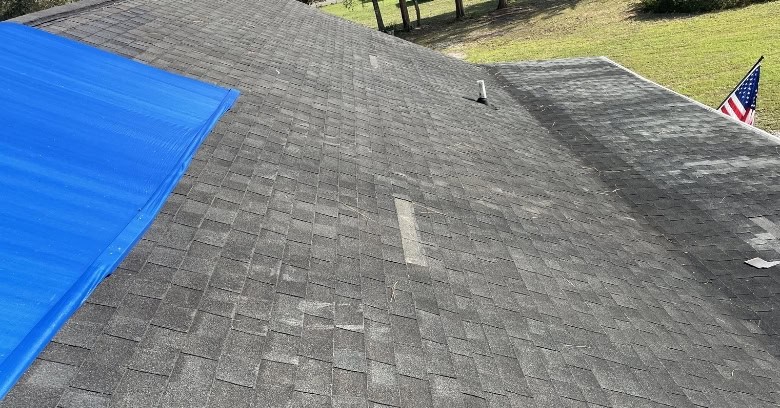
A full inspection covers the roof, and any damage gets photographed and measured, and the whole roof is gone over so no area is missed, and the homeowner is handed that written account afterward. Loose pieces get kept, not tossed, until every piece is checked, a small step that keeps everything straight.
Order Worth Getting Right – Why Timing Is Everything
Insulation carried beyond the baffle line closes the very intake meant to remain open, defeating the whole purpose of that piece. Putting in vents before the ceiling is closed up pulls conditioned house air out instead of moist air from the attic, spending energy that was never part of the problem. The correct order runs sealing before insulation, and insulation before sizing the vents, with baffles set in place at the same time.
Anyone who searched for Insurance Roof Claims in Holly Hill Florida can contact APC Roofing at 386-259-8425 and have a roofer look over the attic and the roof. Every visit covers what is worth seeing, with nothing left to wonder about.
« All Services in Holly Hill Florida