Getting Ready for Roof Replacement in Lee's Summit Missouri?
APC Roofing replaces coverings that have worn out, with the edge metal, boots and caps all done fresh.
Reach us at 913-398-5020 and we will come out and take measurements.
Laying Over the Old Roof: What Stays Buried
Code in plenty of places lets a new layer be nailed over the current one, and that route avoids stripping anything. A layover buries the plywood and the flashing under it, which leaves decay and rust free to spread.
Asphalt nailed onto asphalt copies each bump it sits on, and the extra thickness traps heat from the sun. A full replacement takes the old material down to bare sheathing, because wood that can be seen can be repaired.
The Boards Beneath: Repairs Before Anything Goes On
Once the tear-off is done, the condition of every panel is clear. Rotted sections are cut out and replaced with stock of matching thickness, while anything that moves underfoot is tied back to the framing.
A plank-and-gap deck is common on houses of a certain age, so a layer of plywood is laid across the top. A shingle nailed into rot pulls loose, so wind finds the weak patch within a few seasons.
Synthetic Underlayment – Laps and Fasteners
Engineered polymer goes across the field in long runs, so the structure remains dry when a storm tears something loose above it. Asphalt felt, the standard for generations, ripped in high wind, and the product that took its place stays smooth and strong.
The upper edge of each run tucks under the next one up, with cap fasteners set at the spacing the manufacturer calls for. The hidden layer is worth asking about by name, since what shows from the yard says nothing about this part.
Ice and Water Membrane: Sealed Around the Nails
A rubber-and-asphalt layer sticks directly to the sheathing, and it gives with the deck rather than cracking. The compound seals around the shank of every roofing nail, which stops a wind-driven drip from tracking down into the attic.
At the colder end of our territory, the eave strip reaches well up the slope, as frozen gutters send trapped meltwater upward. On some homes the full surface of the plywood is sealed, so rain that slips under torn shingles stays out of the attic.
Metal at the Eaves and Rakes: Laid Before or After
A bent strip of aluminum or steel runs along the bottom and up the slanted borders of each plane, which throws rain out past the trim. At the eave, the metal is tucked beneath the underlayment, while the rakes are done in reverse.
Numerous houses were finished without any flashing at the border, which often leaves the fascia spongy. Fresh metal goes on around the whole outline, and damaged lumber beneath it is repaired.
The Lowest Course: Built for Wind
The eave receives a manufactured piece whose adhesive sits right at the lip, and its outer border overhangs the drip metal slightly. Flipping ordinary field stock upside down puts its sticky line at the wrong end, so a strong blow can peel up the lowest row.
Manufacturers print a target band for the nails on each shingle, because only there does each hit pass through both plies. A slanting or deep-set head slices the mat, so the shingle has little left to resist wind.
Moving Air Through the Attic: Heat and Damp
The underside of the roof wants a draft that rises from the soffits to the peak, and the openings at each end are kept in proportion. Lower vents buried under insulation or paint starve the attic, and the exhaust openings then drag air from the house instead.
Proper ventilation cools the underside of the plywood, so the asphalt above does not cook from below. At the colder end of our territory, an attic kept chilly leaves the snow frozen until the sun gets to it, and the gutters stay clearer of ice.
Moisture From the Wet Rooms: Routed Outdoors
Plenty of bathroom vents simply stop short in the insulation, which puts steam against cold lumber. Rusty nail points and darkened panels give the problem away, so the material eventually weakens from the attic side.
With the old roof stripped, each duct is easy to get at, so each one can be run out to its own hooded cap. A flexible hose that has come apart is joined back together, and a wrapped jacket prevents drips forming in cold weather.
Where Siding Meets Shingles: Replaced, Not Reused
Where a slope ends at a raised face, one bent plate is laid with every row, while the upright leg sits under the trim above. Salvaged pieces carry corrosion, creases and old punctures, so the scrap pile gets every piece.
A kickout diverter at the foot of a wall turns runoff into the gutter, and without one, rain runs straight behind the siding. A great many older homes went up with no such piece, and the damage shows up as swollen, stained boards beside the roofline.
Around the Chimney: When a Mason Is Needed
An apron lines the lower face of the flue and stepped pieces run up its sides, while counterflashing let into sawn joints covers their tops. Any chimney of real width wants a cricket built against its back, so rain divides and flows past instead of pooling.
A peaked diverter can be added to a stack that never had one, since the plywood there is off or exposed. Spalling brick or a split crown is a mason's job, because fresh counterflashing grips only sound material.
Openings for Daylight – Swap or Keep
Every curb receives the step and head pieces its maker designed, and the parts overlap the adjoining courses like shingles. A skylight with fogged panes or rot around it is worth replacing during the job, as redoing it afterward disturbs brand-new tabs.
An overhead light the owners no longer want can be taken out, and the gap is filled with rafters and plywood. Droplets in the shaft after a cool night tend to be condensation, so the fix is humidity control, not flashing.
Valley Construction: the Layers Underneath
The crease between adjoining planes takes the drainage of both, so it is taken down to the sheathing and redone. A peel-and-stick membrane is pressed down its full length, and on that goes an exposed liner or a shingled finish.
With an open design, a stripe of steel stays in view, whereas closed-cut work brings one side's tabs through and trims the other to a crisp edge. The sensible pick depends on the manufacturer's instructions and the house, and neither is weaker when laid properly.
Roof Penetrations – Collars That Stand Up to Sun
Plumbing risers are given fresh flanged flashings, and fan outlets and static louvers are changed as well. Abandoned stacks, old antenna mounts and dish brackets come off, and new decking fills each opening.
A bead of sealant at a collar is a secondary defense, and the overlapping shingles and the flange do the real work. Silicone or lead flashing units handle sunlight better than plain neoprene, so they make sense on a new roof expected to serve many years.
Low-Slope Sections – Why Shingles Fail There
Many homes include a back room or carport covered at barely any rise, and it often got the same asphalt as the rest. Overlapping units shed rain only when it moves off briskly, and with hardly any tilt it wicks backward into the deck.
A membrane such as modified bitumen replaces the asphalt on that section, and it tucks under the shingled plane above. The seam between the two materials is flashed separately, since caulk alone fails there as the materials move.
Picking a Material – Weight, Wind and Looks
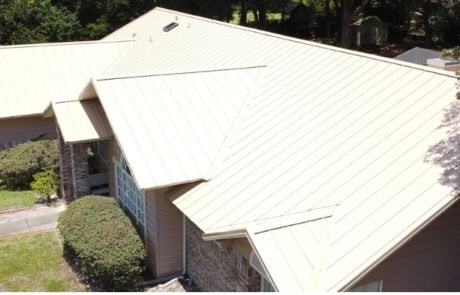
How steep the roof is narrows the options, because each system names a minimum slope. Architectural asphalt shingles suit the majority of homes, standing seam metal is prized for wind resistance, and tile asks for a structure sized to carry it.
The color and profile matter to the look of the whole property, while a pale finish holds less heat in the sun. We tell you what we would install and explain it, and the homeowner has the last word.
No Single Recipe: Edges Sealed Down
At the colder end of our territory, hail shapes much of the plan, and impact-resistant shingles take the blows better. The grade reflects a laboratory drop of steel balls on sample pieces, which speaks to toughness and promises nothing.
At the coastal end of our territory, wind is the force the roof is built against, and only shingles rated for strong uplift are used. The nailing pattern adds fasteners to every piece, and the perimeter gets beads of roofing cement.
Where the Planes Meet Up High – and the Vent at the Crest
Specially made folding shingles cover the apex and the corners, since a stiff laminated tab snaps when bent over. Under a ridge exhaust, a strip of sheathing is removed, and a vent product is nailed over the channel and capped.
The open ends at the gables are plugged, and driven rain stays outside. The slot is sawn to the width the manufacturer specifies, because too much invites drips and too little blocks ventilation.
The Ground Around the House: Nails in the Grass
Shrubs, flowers and patio furniture near the walls are worth covering, while the condenser and ground-floor glass want plywood propped against them. A dumpster or trailer is ideally parked where the tear-off can fall straight in, with runners under the wheels to spare the concrete.
The troughs fill with granules and small pieces of shingle, so the next downpour overflows the edge. Nails left in the yard catch tires, mowers and paws, which makes a thorough sweep worth the effort.
The Order of the Work – Sun and Sealant
Old shingles come off in manageable areas, so rain that arrives early finds little open decking. Any rotten panels are replaced, and the membrane and underlayment go down on top, and the rake trim is added after that.
The field is shingled from the bottom up, and the vent and caps come at the end. The tar strips grip the shingle beneath once they heat up, so the covering holds better after a few sunny days.
What Happens Below – Getting Ready Indoors
Every blow on the deck travels down through the studs, so artwork on upper floors can slip off its hooks. Fine grit filters down between the boards into the attic, and belongings stored there fare well under drop cloths.
Vehicles should be moved out of the garage and off the drive, because a dumpster and material deliveries use that stretch. A skittish dog copes more easily with a sitter across town, and children stay off the ground below the eaves while debris comes down.
The Town's Role: What to Expect
The majority of jurisdictions want a replacement registered with them, and an inspector visits afterward to look at the result. A permit is normally taken out by the roofer, not the owner, since the application names the firm doing the work.
Treating sign-off as optional is a way of dodging review, so a second opinion is sensible. The municipal file proves the re-roof was inspected, and it heads off doubts during the sale.
The Life of a Replacement: Material and Everything Else
A quality architectural shingle is rated in decades, while metal and tile often push past that. What moves the real lifespan is the care taken at the flashing and edges, along with the storms a home sees.
Roofs on neighboring houses with matching shingles may need replacing a decade apart, because air flows under one and the other cooks. A visit every year after the rough months spots issues early, and prompt fixes stretch the life of the covering.
Clues From the Yard and the Attic: Before a Patch Fails Again
- Cupped, buckled tabs – on the sides that face the sun.
- The black mat showing through, with grit piling up in the gutters.
- Repairs that do not hold – each one somewhere else.
- A ridge that has dropped – a sign the wood below has moved.
- Light coming through the sheathing – across the field, not at a vent.
- Brittle shingles that snap instead of bending, so patching damages more than it mends.
- Green growth pushing under the laps – on a surface already worn.
- An old layover now wearing thin – so the next job is a full tear-off.
How APC Roofing Approaches Roof Replacement in Lee's Summit Missouri: the Whole Way Through
Our inspection opens with a walk over every slope, and then the attic is checked from inside. Everything we see is turned into a proposal you can read, with each layer, the metal and the ventilation listed.
The camera records the deck repairs and details ahead of covering, which keeps an image of work nobody will see again.
Roof Replacement Around Lee's Summit Missouri: Built on a Sound Deck
Dial 913-398-5020 to have a roofer come and measure.
Eave Gutters: Sags and Leaks
Rain coming off the shingles drops into the troughs, and the drip metal sets its path into them. Any length that sags, seeps or has pulled loose is recorded, because trapped water softens the wood behind.
Troughs removed for the tear-off are reinstalled with a steady slope to the outlet, and the mounting screws bite into sound lumber. At the colder end of our territory, a plugged gutter lets ice creep over the edge, and leaf guards or bigger leaders are worth a look.
Where Roofing Stops – Warmth and Wiring
A rafter that has cracked or a ridge that sags is a job for structural carpenters, and the repair comes before any covering goes down. An underinsulated attic floor stays that way after a tear-off, and chilly bedrooms upstairs are not cured.
Any bad wiring found in the attic calls for an electrician, and it is marked as such. Everyone agrees up front on what the job will cure, and what it leaves alone.
To line up Roof Replacement in Lee's Summit Missouri, speak with APC Roofing at 913-398-5020. We measure the roof and write the scope, and the reasons behind every option are set out.
Verified

Verified