Your insurance renewal just asked how old the roof is, and you’re not sure you like the answer. Or you’ve patched three different leaks in two years, and each storm season you hold your breath a little. You’re starting to think about roof replacement in Daytona Beach, and you want to know if it’s really time, what it’ll involve and who you can trust to do it.
That’s a lot to sort out, and the stakes are real. You deserve a roofer who’ll tell you if a repair will carry you a few more years, and who’ll explain a full replacement plainly if that’s what your house needs.
APC Roofing replaces roofs across the Daytona Beach area, including Holly Hill, Deltona and Palm Coast. We’re GAF Certified, licensed in Florida (CCC1337030) and insured, and your inspection and estimate are free. Call 386-259-8425.
Signs it’s time for a roof replacement in Daytona Beach
Florida sun, salt air and storm season age a roof faster than you might expect. These are the signs that usually point to replacement instead of another repair:
- Leaks in more than one place, or the same leak coming back after it was fixed.
- Granules in the gutters and bare, dark patches on the shingles, where the protective surface has worn away.
- Curling, cracking or brittle shingles across several slopes, not just one corner.
- Soft spots when someone walks the roof, or sagging between rafters seen from the attic.
- Tile roof leaks with tiles that still look fine, which often means the underlayment beneath them has worn out.
- Insurance pressure. Many Florida insurers look closely at roof age and condition when writing or renewing a policy.
One of these on its own doesn’t always mean replacement. A free inspection with photos tells you where your roof actually stands.
Choosing your new roof
The right material depends on your home, your budget and how close you are to the water.
Architectural shingles are the most common choice in the area. They’re a good value, come in many colors and hold up well to wind when installed to the manufacturer’s pattern. See our shingle roofing page.
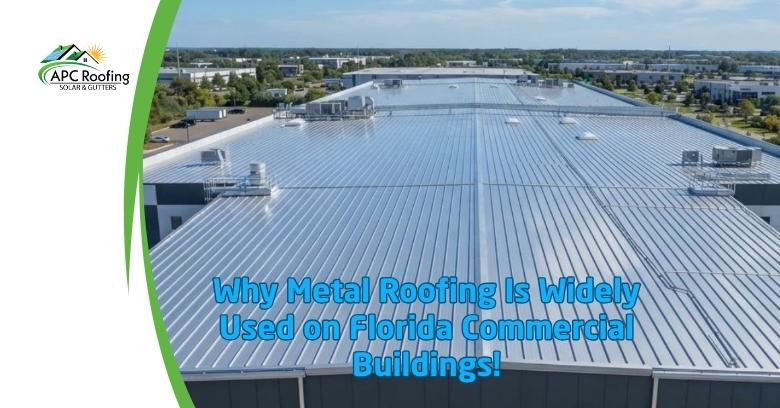
Metal roofing handles wind, heavy rain and heat well, and standing seam keeps fasteners out of the weather. Learn more on our Daytona Beach metal roofing page.
Concrete and clay tile suit many Florida homes and last a long time when the underlayment beneath is done right. See our tile roofing page.
Flat and low-slope sections over porches, additions and Florida rooms need a membrane, not shingles. They get replaced along with the main roof so the whole house is covered properly.
What a Florida re-roof should include
Most of what makes a roof replacement last ends up hidden. Here’s what to look for in any estimate:
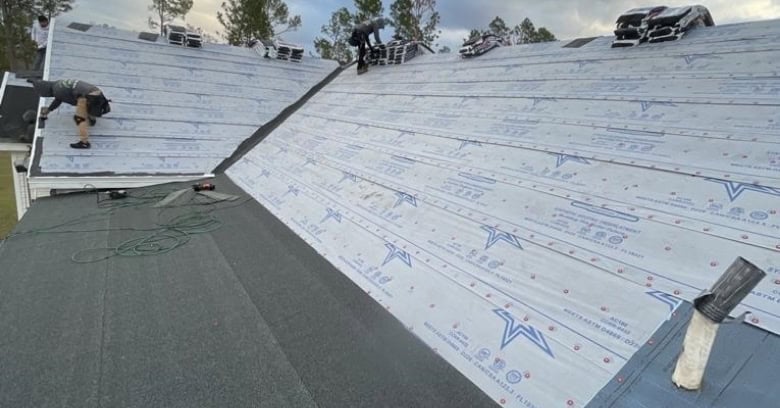
Full tear-off and deck repair. The old roof comes off down to the wood so soft or rotted decking can be found and replaced.
Deck fastening and underlayment to code. Florida’s building code sets requirements for how the deck is fastened and what goes under the roofing, because that’s what keeps water out if wind strips the surface in a hurricane.
New flashing. Step flashing at walls, chimney flashing, valley metal and drip edge should be replaced, not reused. Old metal is often rusted or bent from the last roof.
New pipe boots and vents. Sun-baked rubber boots are one of the most common leak sources, and replacement is the time to swap them all.
Ventilation. A Florida attic gets very hot. Balanced intake and exhaust venting helps the new roof and keeps attic heat down.
A permit and inspection. A re-roof in Florida requires a building permit and a final inspection. The licensed contractor should pull it.
Built for hurricane season
On the Atlantic coast, wind is what a roof has to stand up to. That means shingles and panels rated for high wind, more fasteners placed where the manufacturer’s tested pattern calls for them, and edges sealed down tight at the eaves and rakes, where wind gets its first grip. No roof is storm-proof, but these details make the difference between a roof that loses a few shingles and one that loses a whole slope.
Your insurance and your new roof
If a storm damaged your roof, you file your own insurance claim and pay your own deductible. We document the damage with photos, write the estimate and work with your adjuster. Be wary of anyone who offers to waive or cover your deductible.
What replacement day looks like
Many residential roofs are replaced in a single day. Larger roofs, tile roofs and metal roofs often take longer, and your estimate includes a realistic timeline. Move cars out of the driveway, take down wall hangings on the top floor, and keep pets inside. The crew cleans up before leaving.
How it works
- Book your free inspection. Call 386-259-8425 or request your estimate online.
- Get a clear, honest assessment and estimate. You’ll see photos, hear whether it’s a repair or a replacement, and get a written estimate that lists each part of the job. Financing is available through Aqua Finance, Fortifi, Hearth and Home Run Finance; see our roof financing page.
- Your roof gets done and the site gets cleaned up. Your new roof goes on, and the crew leaves the property clean.
Roof replacement questions from Daytona Beach homeowners
How do I know if I need a repair or a replacement?
If the damage is limited and the rest of the roof is sound, a repair usually makes sense. If leaks keep coming back, the shingles are worn out across the roof or the deck is soft, replacement is the better long-term choice. An inspection with photos settles it.
How long does a roof replacement take?
Many shingle roofs are done in one day. Tile and metal roofs, and larger or more complex homes, take longer.
Do I need a permit to replace my roof in Florida?
Yes. A re-roof requires a building permit and inspection from your city or county. Your licensed roofing contractor should handle the permit.
Can I finance a new roof?
Yes. Financing is available through Aqua Finance, Fortifi, Hearth and Home Run Finance, subject to approval.
Talk to a Daytona Beach roofing company you can trust
Call 386-259-8425 or start your free estimate online.
The next insurance renewal and the next storm warning shouldn’t put a knot in your stomach. The goal is a sound roof, a dry house, no surprise bill and the confidence that you made the right call.