Trying to Find Roof Repair for a House in Sanford Florida?
APC Roofing seals the gaps that let rain indoors, working at the flashing, the valleys and the vent pipes.
Dial 407-270-1129 to set up a visit from a roofer.
Sources of a Leak: Where to Look
The broad plane of a pitched roof rarely lets rain through, because overlapping courses carry water downhill. Trouble gathers wherever something breaks the pattern, such as a chimney, a skylight, a stack or a valley.
The mark on the drywall usually lies well downhill of the source, because rafters steer the trickle sideways. Measuring from inside without following the track leads a repair astray, so the trouble returns with the next heavy rain.
Roof-to-Wall Junctions: Where the Water Gets Behind
The stepped metal is laid in a piece at a time, alternating with the rows; an upper strip is turned down over the full length. If rust eats a hole through the bend, water gets in behind the siding and runs down inside the wall.
A proper fix calls for fresh metal installed properly, with the neighboring shingles lifted and relaid. A bead of sealant across the opening is a stopgap, because heat and cold moving the joint crack any surface seal.
Pipe Penetrations: Splits and Replacements
A drain stack is made watertight with a rubber collar and a flanged base, and years of ultraviolet light leave the material hard. Eventually a crack forms right around the pipe, and the leak lands in whatever room lies beneath.
Replacement involves loosening the rows above and sliding new hardware into place, while a rusted metal plate means the entire thing comes out. A heavier boot resists cracking much better, and suits a newer covering.
Valleys: the Wear Points
The crease between neighboring planes collects the drainage from each, and during a hard rain the water rushes along. Valley shingles go bare well before the rest, and an install with no underlayment gives way once the granules are gone.
Seed pods and needles lodge in the channel, so water ponds and creeps beneath the laps. A valley that has failed is rebuilt from the deck up, as a surface patch cannot survive a fast stream.
Nail Pops: Small Holes, Steady Drips
A wooden deck swells in damp spells and shrinks in dry ones, and each cycle eases the shanks upward a fraction. A climbing nail forces a blister into the tab on top, which can leave a pinhole for the next storm.
Knocking the loose steel flush again buys only a season, since the same loosened spot simply lets go again. The right approach is extraction, a dab of sealant and a replacement nail nearby, and a torn shingle is swapped out.
Metal Sheets on a House: Where Water Gets Through
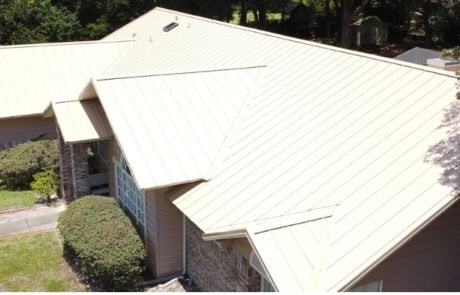
On screw-down steel, every fastener goes straight through the exposed face, and a sealing washer beneath the head closes each opening. Heat and ultraviolet light harden the small rings until cracks form, and overdriving hastens the damage.
The fix is to swap each worn fastener for a new screw and seal, and where the hole has widened, a thicker size is used. Adjoining laps and trim are gone over at the same time, as the whole batch has had the same sun.
Tabs the Wind Has Raised: What a Gust Leaves Behind
An asphalt course is held partly by nails and partly by a band of adhesive, but heavy weather can tear the bond free. A tab that flips back is left with a crease across the tab, and a sideways downpour finds the gap.
An undamaged piece that only lost the bond is resealed with hand-applied cement, but a split shingle is taken off and replaced. With a tab missing, the nails of the lower layer face the elements, so the next storm finds a way in.
The Ridge: Where Driven Rain Gets In
At the apex, every finishing shingle is folded down both sides, and time splits the top down the middle. The deck under a ridge vent has a strip removed on purpose, and the cap above does all the work of keeping weather out.
Nails that have risen let gusts drive spray inside, so the framing right under the apex turns dark. A ridge repair replaces cracked caps and resecures the vent together, as one neglected component undoes the rest.
Ice at the Eaves – Backing Up Under the Shingles
In the snowier part of our territory, a roof with nothing wrong can still get wet, as warmth rising through the ceiling thaws the snowpack from underneath. Down at the eave, beyond the rooms below, the trickle sets hard, and a ridge of ice grows along the gutter line.
Upslope of the blockage, standing melt spreads out, and lapped courses cannot keep out water that sits. The real fix is a cold deck, which means a sealed, well-vented attic, and a self-adhering membrane along the eaves limits the harm meanwhile.
Sunroom and Porch Roofs – Membranes and Transitions
Lots of houses include a stretch that barely tilts, and the near-flat portion frequently gets the material meant for the rest of the house. Lapped courses depend on water draining off quickly, and slow drainage lets water wick back toward the nails.
A sound fix swaps in a roll membrane designed for near-level roofs, run up beneath the roofing on the section uphill.
Tracing a Leak From Inside: Marks and Measurements
Every drip that travels the underside of the deck darkens the lumber along the way, and the color change survives a long dry spell. The stain’s upper limit lies right under the fault, so a tape run to the peak and to an end wall locates the spot from the roof.
Pushing a long nail up through the boards leaves a marker poking through, unless a finished ceiling blocks the way, in which case the search happens outdoors. Compressed, discolored insulation sits under the drip, and a layer in that state is replaced, not dried out.
When the Attic Sweats: A Seasonal Pattern
Wet wood with no trail back to a single spot is a sign of something else, since humid air escaping the living space turns to droplets up there. At the snowy end of our range, frost coating each nail point forms the same way, so the next thaw sends drops onto the insulation.
Nothing done to the covering dries a sweating deck, as the answer is moving the humid air out and keeping more from rising. You hear from us whether rain or household vapor wet the wood, which spares a homeowner the wrong repair.
The Chimney Detail: What Fails and Where
A broad apron closes the lower face, and step flashing is woven up both sides; counterflashing, sawn into the joints, is folded down over the lot. Behind a big chimney belongs a small peaked saddle called a cricket, which divides the flow and sends the water past.
Without a raised wedge to shed rainwater, the uphill face holds leaves and water every storm, so the joints at the top corners open up. Worn mortar pulls rain into the masonry higher up, so a mason may be needed alongside the roofer.
Skylights and Skylight Wells: the High Side
Sealed double panes rarely admit rain, while the curb flashing often lets go. Runoff from above piles into the upper end, and leaves lodge in a heap.
Reflashing keeps the existing unit in place, unless the skylight is simply worn out. Droplets forming on the cold interior can run down the well, and an exhaust fan or better ventilation cures the problem.
The Eave Line: Overflow and Backup
Dampness at the top of an exterior wall frequently traces back to drainage, as a trough that tips the wrong way sends runoff behind the trim board. Where no drip edge was installed, rain clings to the shingle edge and curls beneath, which leaves the fascia and sheathing rotting.
Often a gutter only needs rehanging so the water drains steadily to the outlet, and a hanger screwed into solid wood stays put. Drip edge that stops short is a roofer’s mistake, and the answer is one unbroken piece along the lower edge.
Attachments on the Roof: What Removal Leaves Behind
Solar lights, receivers and similar gear are usually screwed into the deck, with nothing but a ring of caulk around each shank. Within a few years the goop hardens and lets go, and every penetration starts to let rain in.
A dish unbolted and hauled away does not take the bolt holes along, and grime and grit often hide the openings from view. The fix is sealant packed into each penetration under replacement shingles, while a fixture that stays is remounted on real flashing.
A Spongy Deck: Replacing the Boards
Months of seepage saturate the plywood beneath the roofing, until mold and decay set in. From above, the bad area feels spongy when stepped on, and in the attic the panels visibly dip between rafters.
Weakened plywood is cut out until only solid wood remains around the opening, and fresh sheets are nailed down across the supports. Underlayment and shingles then go back on top, and whatever let the water in is repaired as part of the job.
Covers After a Storm – Battens, Not Bricks
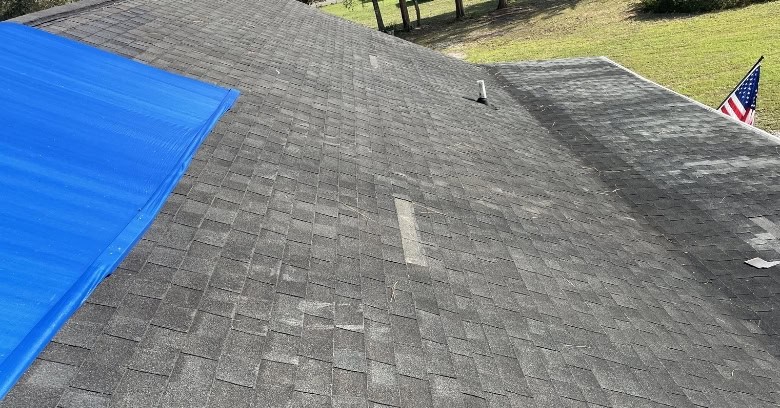
A tarp keeps the rooms dry, though the fault underneath is untouched. A well-anchored sheet runs over the ridge with boards fixed along the edges, while bricks alone let the cover blow loose in the next gale.
A row of nails is driven through the courses below, with the spacing kept no closer than needed. A tarp kept in place for a season bakes what lies beneath, and the granules start to suffer.
Documenting the Work: Seen at the Time
After the replacement goes on, whatever gave way is gone from view, and the cause is often a detail no bigger than a hand. Pictures capture the gap and the ruined component before anything comes off, and matching shots follow when the work is finished.
The homeowner receives all the images, so anyone who asks later can see the history. A written note names what failed and why, together with each step of the repair.
The Replacement Question – Deciding Honestly
A leak at one detail on an otherwise sound surface is simply mended, because rubber and metal parts tend to age ahead of the asphalt. Replacement comes into the conversation when the tabs are brittle and bare on every slope, or when trouble keeps appearing in fresh spots.
Mending a leak on an aging roof buys time, though nothing is restored to the shingles around the spot. You hear which way we lean and why, and you make the call.
Color and Profile: What Is Still Made
A just-installed piece reads darker and crisper than the neighboring courses, as the originals have dulled with exposure. We match the profile, the size and the nearest color still made, and time takes much of the edge off the contrast.
A shingle the maker has dropped cannot be copied exactly, so either a near substitute goes in or the work runs to a natural break. A sample held against the actual roof shows how close the match is, as a small chip misses the blend of granules in a full tab.
Signs of a Leak: Inside and From the Yard
- A water ring overhead that darkens with every downpour, usually below the attic.
- A stale smell upstairs, which hangs around for days.
- Sky visible through the deck, seen from the attic.
- Stained, darkened wood along a rafter, often with a musty smell.
- A gap between a pipe and the pipe seal, visible with binoculars from the yard.
- Heavy grit piling up in the gutters, returning after every cleaning.
- A bare patch where a tab used to be, anywhere on the house.
- Flashing bent away at the edge, wherever brick or trim rises through.
How APC Roofing Approaches Roof Repair in Sanford Florida – Our Method
The search starts inside, in the attic, and the top of any wet track there is measured to a place on the shingles. What let the water in is repaired the lasting way, and similar details elsewhere get checked on the same trip.
Every stage is photographed, from the problem to the finish, and you get a short report in writing. Where replacement is the honest answer, we tell you, and you decide from there.
Roof Repair Across Sanford Florida – Help From People Who Know Roofs
Call us at 407-270-1129 to book a look at the damage.
Rigging and Weather: Heat, Cold and Adhesives
A cover goes on even with moisture around, but the real repair waits for everything to dry. Self-sealing strips stay inert until the temperature climbs, so cooler weather calls for hand-sealing.
Tall or steep houses get safety lines and brackets, because a tumble off the roof is serious. Summer heat leaves shingles tender and easy to scar, and granules knocked loose there do not grow back.
Worn-Out Roofs – Honest About the Limits
Weathered asphalt hardens and loses all give, and bending a course up to pull a nail can break the shingle. Shingles ruined on the way in are added to the repair, and the patch can end up larger than the leak.
If the asphalt is past the point of handling, you are told up front, with pictures that make the case. A modest fix on a tired roof is fair to ask for, so long as the fix is seen as a bridge, not a cure.
For help with Roof Repair in Sanford Florida, contact APC Roofing at 407-270-1129. The fault is located and repaired the lasting way, and you keep the photos.
« All Services in Sanford Florida