Trying to Find Roof Repair Near Holly Hill Florida?
APC Roofing closes up the places where rain is getting in and tracks down the opening behind the water.
Phone 386-356-2111 and a roofer will come out to the house.
How Leaks Get Started – Why a Stain Misleads
Across the unbroken middle of a slope, shingles seldom fail, since gravity pulls the runoff over row after row. Trouble gathers wherever something breaks the pattern; think of vent pipes, chimneys, skylights and walls.
A spot on the ceiling paint shows where the drip fell, not where rain got in, since a run of wood can guide the flow several feet. Work done only on the area straight overhead tends to miss the fault, so the trouble returns with the next heavy rain.
Where Siding Meets the Roof: Trouble Spots
Every row of shingles gets a separate bent flashing piece, and a counterflashing laps down to cover the top. Once the joint under the trim opens, runoff slips behind the siding into the framing.
The real cure is flashing rebuilt to the standard detail, which means lifting several courses beside the junction. Tar smeared over the gap is no substitute, because movement in the joint splits a surface seal.
Pipe Penetrations: Small Part, Damp Ceiling
Every drain vent that pokes through is closed around by a neoprene gasket on a plate, and every summer of sun makes the material more brittle. Given long enough, the fit around the pipe fails, and water tracks down into the ceiling or wall below.
The fix is a new collar, slipped under the raised shingles upslope, and a rusted base means the whole assembly goes. A boot in lead or high-grade silicone is an option worth considering, when the surrounding roof is far from worn.
Valleys – Rebuild or Patch
The low crease between adjoining planes carries the water shed by both planes, and a heavy shower brings a torrent through. Whatever covers the valley erodes faster than the surrounding roofing, and where nothing protective was put below, moisture soon gets through.
Fallen debris builds into little dams in the crease, so rain is held back and forced sideways. A leaking valley is stripped to the wood and redone, because tar on top wears away in a season or two.
Raised Nails – a Pinhole Leak
A wooden deck swells in damp spells and shrinks in dry ones, which slowly eases the shanks back out. A popped nail presses up under the course above, letting runoff trickle in around the high point.
Sinking the loose metal home again gets undone, since the same loosened spot simply lets go again. The proper repair pulls the nail out, seals the hole and drives a new nail an inch away, and a shingle that was pierced gets replaced.
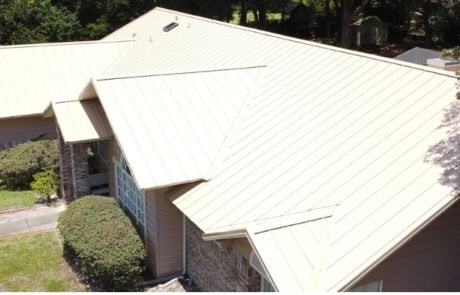
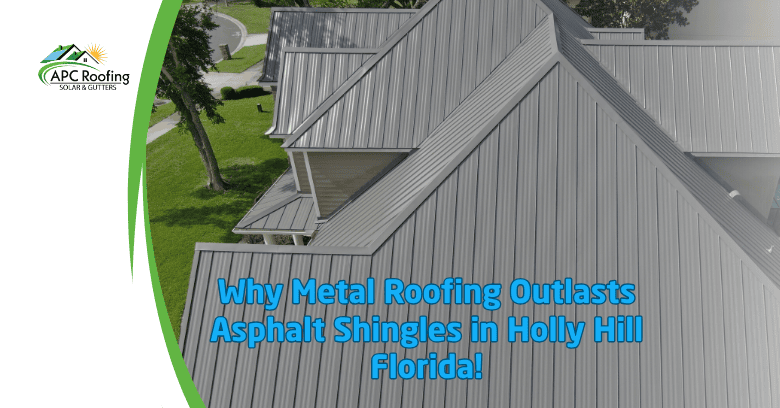
Metal Sheets on a House: What Gets Replaced
Exposed-fastener steel is attached with screws through the flat areas, and a sealing washer beneath the head closes each opening. Over the years the small rings shrink and split, while driving too shallow never pressed down far enough.
Every tired fastener is backed out and a replacement with a fresh gasket goes in, and where the hole has widened, a thicker size is used. Seams and trim nearby deserve a close look as well, because everything installed alongside has faced the same weather.
Wind-Lifted Shingles: Checking the Damage
A course is nailed and then glued to the row below by a heat-activated strip, and a hard squall can pry the lower edge up. A tab that flips back is left with a crease across the tab, and a sideways downpour finds the gap.
An undamaged piece that only lost the bond is resealed with hand-applied cement, while a tab that tore or split is replaced. A blown-away tab exposes the fasteners in the layer below, and rain soon trickles down the shanks.
The Ridge: What Wind Does
Shingles that finish the apex straddle a sharp bend, so years of sun leave splits on top. A vented ridge has a slot sawn through the deck along the full ridge, so the housing on top is all that stops water getting in.
Missing end plugs leave an open door for wind-blown spray, and indoors a damp streak shows along the apex. Ridge work covers the cap shingles, the vent and the vent fastening in one job, since leaving any part undone invites the same trouble.
Ice at the Eaves: a Leak From Below
In the snowier part of our territory, a roof with nothing wrong can still get wet, as warmth rising through the ceiling thaws the snowpack from underneath. Out over the soffit, the runoff turns solid again, so a thick band of ice forms at the edge.
Behind the obstruction, melted snow gathers with nowhere to drain, and the still water creeps up under the laps. Insulation and airflow in the attic end the problem at the source, with an ice barrier beneath the bottom rows as the safety net.
Covered Porch Roofs – Why Shingles Struggle There
Some homes have a low-pitched area off the back, and the flat portion is often finished with the same asphalt as the main structure. Shingles work only as long as gravity hurries the water along, and slow drainage lets water wick back toward the nails.
A sound fix swaps in a roll membrane designed for near-level roofs, run up beneath the roofing on the section uphill.
Evidence in the Attic: Following the Trail
Water running along the framing leaves a dark streak on the boards, and the tint holds long after the rain. The top of the mark lies just below where the leak gets in, and distances to the ridge and the gable find the same spot up top.
A nail driven up through the decking can flag the location for the crew overhead, unless a finished ceiling blocks the way, in which case the search happens outdoors. Soggy batts pinpoint where the water falls, and material that wet has to be replaced rather than dried.
Sweating Decks – Airflow and Exhaust Fans
Moisture spread uniformly over the boards has little to do with the covering, since vapor rising from the rooms settles on chilly lumber. In our colder towns, frost on the nail ends comes about the same way, and drops fall once the sun reaches the deck.
A new covering would not stop the droplets at all, because the remedy is attic airflow, sealed gaps around light fixtures and bath fans ducted outdoors. We say plainly whether the wet wood came from rain or from the rooms, so the right trade does the job.
Where a Chimney Meets the Shingles: Leaks at the Base
Along the front runs an apron, and short stepped pieces go up each flank; higher up, counterflashing let into the joints laps down over everything. A large chimney should have a cricket at the rear, which turns the flow aside around the stack.
If the builder never framed a water-shedding wedge, needles and standing water settle on the uphill face, and the upper corners are soon soaked. Crumbling mortar lets rain into the brick above the metal, so a mason may be needed alongside the roofer.
Skylights and Skylight Wells: Keeping the Unit
The glass is seldom the part that lets rain in, and the flashing at the curb is the usual culprit. The uphill edge collects all the runoff from above, and twigs trap small puddles.
New flashing goes on around the unit already there, as long as the seal between the panes has not failed. Droplets forming on the cold interior can run down the well, and the fix is airflow rather than roofing.
Along the Eaves – Soft Fascia
Dampness at the top of an exterior wall frequently traces back to drainage, since a blocked run spills backward toward the house. Without a drip edge, rain wraps around the shingle lip and underneath, which leaves the fascia and sheathing rotting.
Sometimes the gutter just needs clearing and rehanging at the proper angle, and a hanger screwed into solid wood stays put. An edge strip cut too short is a fault in the installation, and the correction means metal along the full bottom of the roof.
Attachments on the Roof: Leaks Years Later
Most rooftop hardware, from receivers to lights, is anchored with lag bolts into the deck, and a smear of caulk is often all that keeps rain out. Within a few years the goop hardens and lets go, and each attachment becomes an entry for water.
Taking the equipment down leaves the bolt holes open, and grime and grit often hide the openings from view. Every penetration is sealed and patched with fresh shingles, while a fixture that stays is remounted on real flashing.
Wood Damage From Old Leaks – What Years of Drips Do
A trickle that goes on unnoticed waterlogs the plywood below, until the veneers separate and turn mushy. On top, the area feels springy under a boot, and in the attic the panels visibly dip between rafters.
Crews cut the failed decking out to solid wood again, and matching sheets go in, nailed along each truss. Underlayment and shingles then go back on top, while the source of the water is closed off at the same time.
Plastic Over the Damage: Done Properly
A heavy tarp keeps the interior dry, but no repair has been made. A poly sheet that rides out gusts is draped over the peak and pinned with battens, while cinder blocks on a flapping corner are soon shaken off.
A row of nails is driven through the courses below, and every hole is sealed during the permanent repair. A tarp kept in place for a season bakes what lies beneath, so the material underneath softens and ages early.
What You Are Given: For Your Files
With fresh material installed, the broken piece disappears, though the flaw may have been only a hairline crack. The camera captures the entry point and the worn component ahead of removal, and the finished result is shot as well.
Copies of the images are handed over, so anyone who asks later can see the history. Alongside the pictures comes a short write-up of the fault, together with each step of the repair.
The Replacement Question: Weighing the Options
Where the shingles are healthy, a failed boot or flashing is dealt with as a separate job, because rubber and metal parts tend to age ahead of the asphalt. A new covering makes sense once granules are gone across the whole house, or when water keeps finding different ways in.
A small repair on tired material can protect the rooms for now, but the repair cannot add years to the rest of the roof. We give our view and the reasons behind the view, and what happens next is up to you.
Blending a Repair: Finding the Right Product
A just-installed piece reads darker and crisper than the neighboring courses, because years outdoors have bleached the granules on the rest. The product line, the cut and the closest shade in production are chosen to fit, and the gap closes as the new material weathers.
Discontinued shingles have no exact twin, which leaves a stand-in or a larger section rebuilt to a natural break. Candidates compared in daylight against the old material reveal how well each candidate fits, since catalog pictures seldom print the tones true.
Signs Worth a Call: Catching Trouble Early
- A brown ring on the drywall that gets larger each storm, most often near a wall or a chimney.
- A moldy odor in a closet under the eaves, which comes and goes with the seasons.
- Light peeking between boards, at a pipe, a vent or a valley.
- A damp stripe down a truss, or nails furred with rust.
- A gap between a pipe and the pipe seal, sometimes in plain sight from the street.
- Heavy grit piling up in the gutters, returning after every cleaning.
- A course that has worked loose, anywhere on the house.
- A rust stain streaking down from a flashing, where an addition joins the main structure.
APC Roofing and Roof Repair in Holly Hill Florida – What We Do on Site
Our look begins in the attic, not on the ladder, and any wet track there leads a roofer to the spot on the slope above. The part that failed is mended with the material that belongs there, and the neighboring flashings get a check too.
Photographs are taken of the problem and of the finished job, and a written account comes with the set. Where replacement is the honest answer, we tell you, and what happens next is your decision.
Roof Repair in Holly Hill Florida: a Roofer Who Finds the Way In
Call 386-356-2111 to have someone come out.
Working With the Weather – Planning the Equipment
Plastic can be fastened down on a still-damp deck, but the real repair waits for everything to dry. Adhesive strips on new tabs bond once the sun warms the shingles, so a job in the cold includes sealing by hand.
A high ridge demands anchored harnesses and roof jacks, since a slip there rarely stops short of the edge. Tabs softened by afternoon heat mar easily when walked on, and granules knocked loose there do not grow back.
Older Roofs: What a Repair Can Still Do
With enough years, the mat goes stiff and dry, so prying a course up to get at the fasteners snaps the shingle. Whatever gets damaged along the way has to be swapped out too, so the section being fixed can grow as things proceed.
Before any tool comes out, we say whether the material is too fragile, with photos showing what we mean. A modest fix on a tired roof is fair to ask for, as long as nobody mistakes the work for years added.
For help with Roof Repair in Holly Hill Florida, contact APC Roofing at 386-356-2111. We track down the entry point and rebuild the detail, with photographs handed over.
Verified

Verified
Verified
Verified