Your tile roof looks as good as the day it went on, yet there’s a water stain spreading across the ceiling. Or you’re thinking about tile for your next roof and want to know if it’s worth the weight and the cost. Either way, tile roofing works a little differently than most people expect, and knowing how it works makes every decision easier.
It’s frustrating to have a leak when nothing looks broken, and it’s hard to judge a tile quote when the most important parts are hidden under the tile. You deserve a straight explanation before you spend anything.
APC Roofing has installed and repaired tile roofs since 2017. We’re GAF Certified, licensed and insured, and we serve Central Florida, the Daytona Beach area, the Kansas City metro and Springfield, Missouri. Your inspection is free. Call 866-995-0704 to book it.
How tile roofing keeps water out
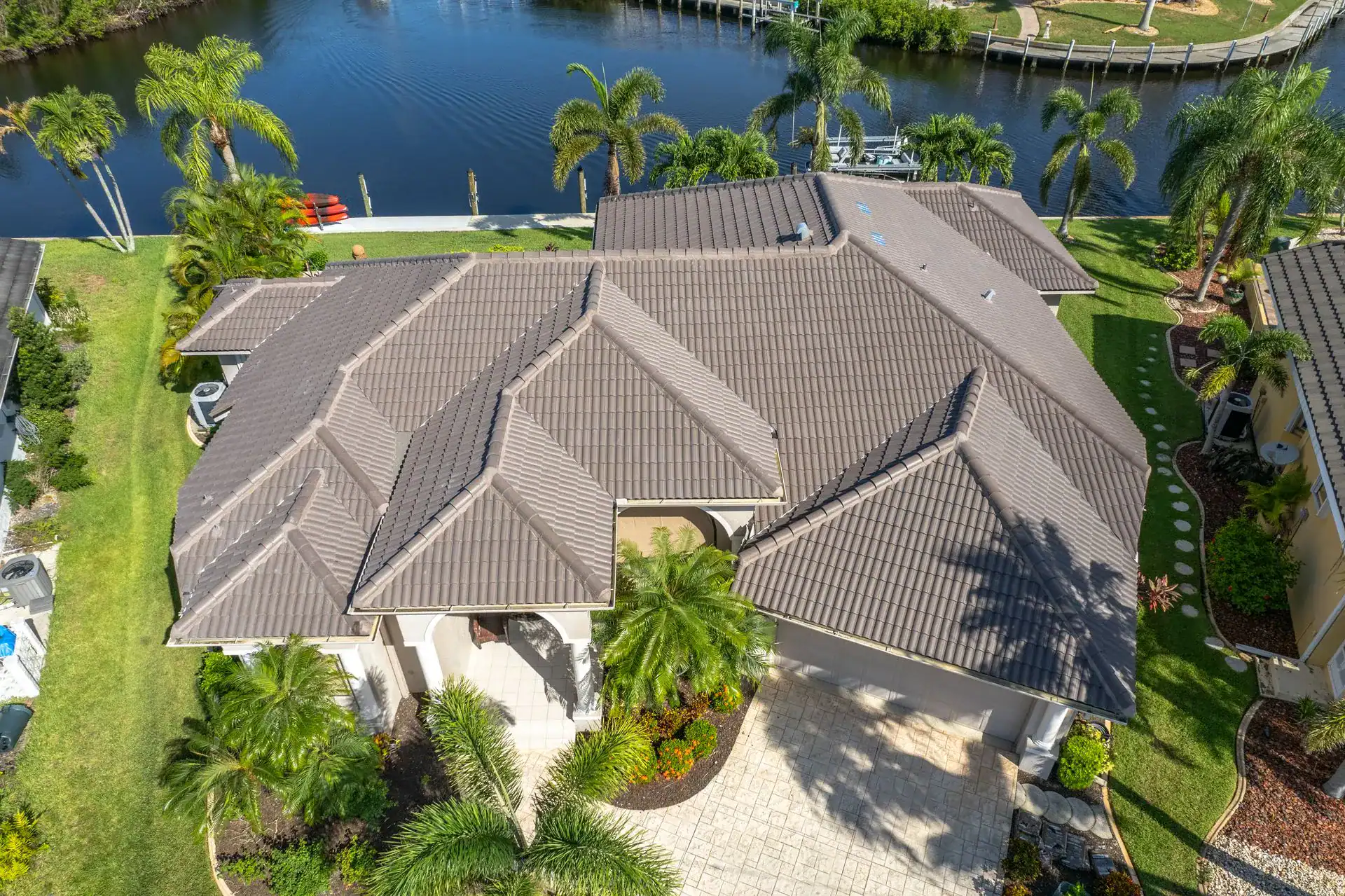
Think of the tiles as armor. Clay and concrete tiles shed most of the rain and take the sun, the hail and the flying debris. What actually seals your house is the waterproof underlayment fastened to the roof deck beneath them.
Rain that blows sideways under a tile, or runs down a hip in a heavy storm, lands on that underlayment and gets carried down to the edge of the roof. So the underlayment, not the tile, usually decides how long a tile roof stays dry. The tiles can last for decades, and they often outlast the underlayment underneath them. That’s why a leak on a roof with perfect-looking tiles is so common, and why the most useful question about any tile roof is how old the layer you can’t see is.
Clay or concrete tile
From the street the two look alike, but they behave differently.
Clay tile is fired earth with color that runs all the way through, so it doesn’t fade, and a chipped edge shows the same color as the face. It’s generally lighter than concrete and holds its looks longer, but it costs more. Our clay tile roofing page goes into more detail.
Concrete tile is cast from sand and cement, usually with surface color over a gray body. It comes in more shapes, including flat tiles that look like slate. It’s generally less expensive and heavier. See concrete tile roofing.
Tile roofing in Florida
In Central Florida and the Daytona Beach area, tile is an everyday roof. It handles the heat well, and curved profiles leave an air gap that helps heat escape before it reaches the attic.
The challenges here are sun and wind. Year-round UV and heat wear on the underlayment. Hurricane-force wind pulls hardest at the edges, hips and ridges, so how each tile is fastened in those spots decides how well the roof holds up. After a strong storm, the usual damage is cracked, slipped or missing tiles along the perimeter, plus water getting in where flashing has worn.
Tile roofing in Kansas City and Springfield
Tile is less common around Kansas City and Springfield, and it shows up on individual homes rather than whole streets. It can work well here, with two extra checks.
The first is freezing. Tile is porous, and water soaked into a tile expands about 9 percent when it freezes. Tile has to be rated for frost, or it can flake and crack within a few winters. For clay tile, that means Grade 1 under a standard called ASTM C1167.
The second is hail. Tile handles ordinary hail well, but large hail can still crack it. After a big hailstorm, expect to replace some broken pieces.
Weight comes first
Tile is many times heavier than asphalt shingles. If you’re switching from shingles to tile, the first step is confirming your roof framing can carry the load. That question comes before colors, not halfway through the job.
Repair, relay or replace
A tile roof that leaks doesn’t always need a whole new roof:
- Repair works when a few tiles are cracked or slipped, or one flashing has failed.
- Relay means lifting the tiles, replacing the worn underlayment and setting the same tiles back down, with new ones where pieces have broken. It often makes sense when the tiles are sound but the underlayment is worn out.
- Replace makes sense when the tiles themselves are failing or you want a different roof.
Our tile roof repair page covers fixes, and tile roof installation covers new tile roofs.
Taking care of a tile roof
Tile asks for little, but it does ask. Keep valleys and gutters clear so water keeps moving. Replace cracked or slipped tiles when you spot them rather than waiting for the next storm. Keep foot traffic off the roof, since satellite installers and pressure washers break more tiles than the weather does. And keep a few spare tiles in the garage, because older colors and shapes can be hard to match later.
How it works with APC Roofing
- Book your free inspection. Call 866-995-0704 or request a free online estimate.
- Get a clear, honest assessment and estimate. You’ll see photos of the tiles, the flashing and, where possible, the underlayment, plus a straight answer on repair, relay or replacement.
- The work gets done and the site gets cleaned up. Tile projects take longer than shingle roofs, and you’ll get a realistic timeline with your estimate.
Financing is available through Aqua Finance, Fortifi, Hearth and Home Run Finance.
Tile roofing questions
Why is my tile roof leaking if no tiles are broken?
Most likely the underlayment beneath the tiles has worn out, or a flashing has failed. The tiles shed most of the water, but the underlayment does the sealing.
Can I walk on my tile roof?
It’s best not to. Tiles crack easily under a foot placed in the wrong spot, and the crack may not show right away.
Is tile a good roof for Kansas City or Springfield?
It can be, as long as the tile is rated for freeze-thaw and the framing can carry the weight. Hail can still break pieces, so plan on occasional repairs.
A tile roof you don’t have to worry about
A worn underlayment doesn’t fix itself, and a slow leak can soften the roof deck for a long time before a stain shows. Knowing what’s under your tile lets you plan instead of react.
Picture a dry house, a roof that still turns heads and a clear plan for the years ahead. Call 866-995-0704 to book your free inspection.