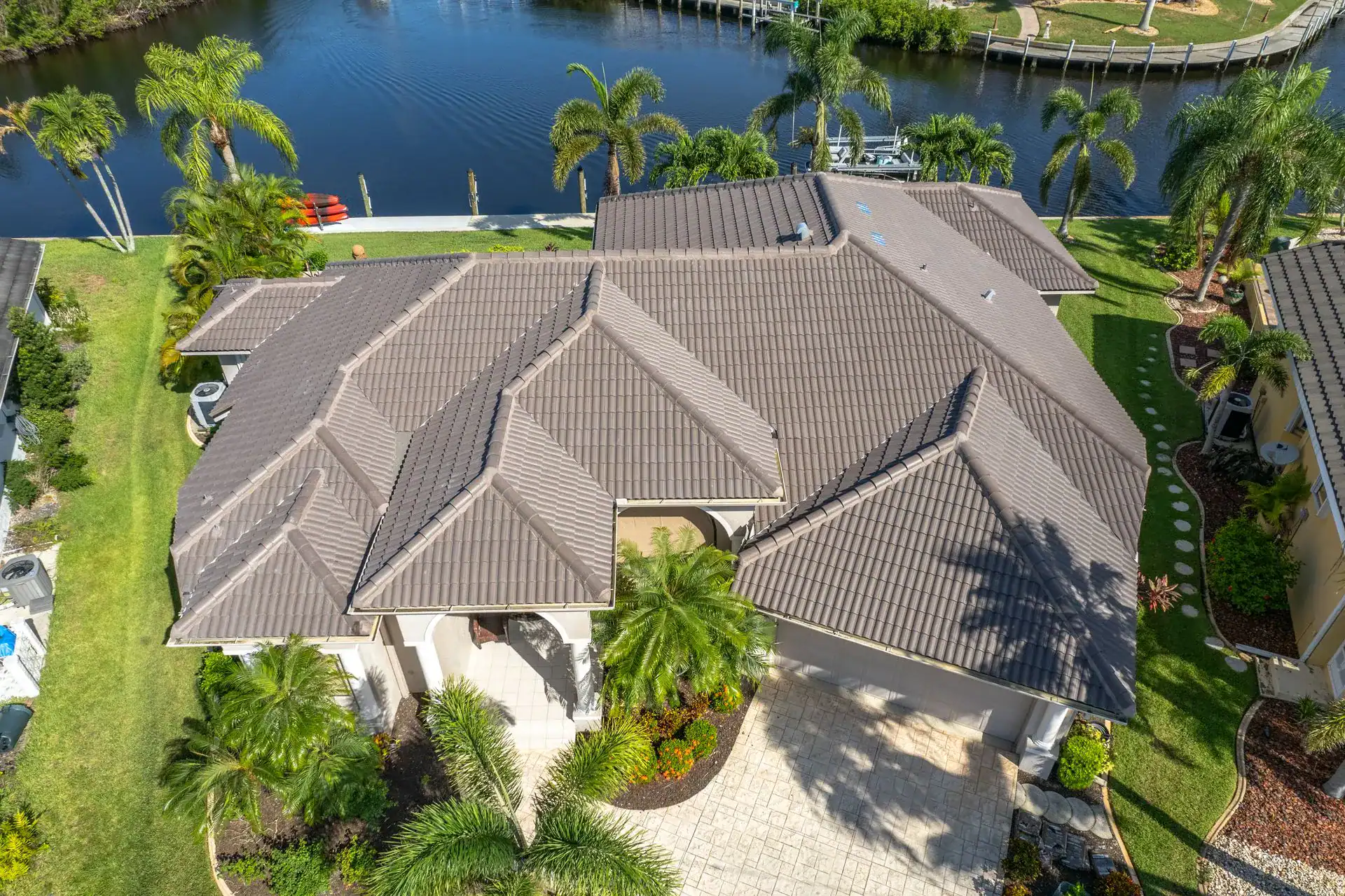
You picked a tile roof, or bought a house with one, because tile is supposed to last. So it’s confusing when a ceiling stain shows up and the tiles all look fine from the yard. Tile roofing in Palm Coast holds up well against sun and salt air, but the parts you can’t see wear out on their own schedule.
It’s easy to feel stuck. A tile roof is a big investment, and you’ve heard stories about roofers who broke more tiles than they fixed or pushed a full replacement when a repair would have done. You want someone who knows tile to tell you what’s really going on.
APC Roofing is GAF Certified, licensed in Florida (CCC1337030) and insured. We repair and replace clay and concrete tile roofs in Palm Coast, and the inspection is free. Call 386-259-8425.
How tile roofing in Palm Coast actually keeps water out
Most people are surprised to learn that the tile isn’t the main waterproofing layer. Tile sheds most of the rain and shields what’s beneath it from the sun. The real water barrier is the underlayment, the layer between the tile and the roof deck.
The tile itself can stay in good shape for decades. The underlayment ages faster, especially in Florida, where heat builds up under the tile all summer. When it gets brittle or cracked, water that slips past the tiles during a heavy, wind-driven rain reaches the deck. That’s why a tile roof can look perfect and still leak.
Clay or concrete tile?
Most tile roofs around Palm Coast are one of two materials.
Clay tile is fired in a kiln, so its color goes all the way through and holds up in the sun. It’s lighter than concrete in many profiles, but more brittle, and it usually costs more.
Concrete tile is the more common choice on Florida homes. It comes in a wide range of shapes and colors, it’s very durable, and it’s usually the less expensive of the two. It’s heavier, and surface-colored concrete tile can fade over time.
Both come in barrel (curved), S-shaped and flat profiles. The shape you choose affects the look, how water drains and how the tile is fastened.
Tile, wind and Florida code
A properly attached tile roof does well in high wind. A loose tile in a hurricane, though, can turn into flying debris. Florida’s building code sets strict rules for how tile is fastened, whether with screws, nails, approved foam adhesive or a combination. Ridge and hip tiles, which used to be set in mortar alone, are now usually attached to a raised wood or metal support along the ridge.
If your tile roof is older, its attachment methods may not match current code. That matters when you’re deciding between a repair and a full re-roof.
Common tile roof problems around Palm Coast
- Cracked or broken tiles from storm debris, falling branches or someone walking on the roof the wrong way
- Slipped tiles that have shifted out of position and opened a gap
- Cracked ridge and hip mortar on older roofs, which lets water in at the peak
- Clogged valleys full of leaves and pine needles, which back water up under the tile
- Worn underlayment, the most common cause of leaks on tile roofs that are 20 years old or more
- Corroded flashing near the coast, where salt air eats at exposed metal
Repair, re-underlay or replace
Many tile problems are repairs. Cracked tiles can be swapped out one at a time, slipped tiles reset, and ridge work redone. Our tile roof repair in Palm Coast page covers those fixes in detail.
When the underlayment is worn out across the roof, the fix is bigger. The tiles come off, a new underlayment goes down and the sound tiles go back on, with replacements for any that broke. If the tiles themselves are failing, or if matching tile can’t be found for an older roof, a full replacement may be the better long-term choice.
Weight is something to think about if you’re switching to tile from shingles. Tile is much heavier, so the roof framing has to be checked to make sure it can carry the load.
How it works
- Book your free inspection. Call 386-259-8425 or request a free online estimate.
- Get a clear, honest assessment and estimate. You’ll see photos of the tile, the flashing and, where we can get to it, the underlayment, plus a written estimate. Financing is available through Aqua Finance, Fortifi, Hearth and Home Run Finance.
- Your roof gets done and the site gets cleaned up. Tile work takes longer than a shingle job, and you’ll get a realistic timeline up front.
A slow leak under tile is easy to miss. Water can soak the deck for a long while before a stain appears inside, so it pays to have a tile roof checked once it starts showing its age.
Tile roofing questions from Palm Coast homeowners
How long does a tile roof last?
The tile itself often lasts much longer than the underlayment beneath it. Expect the underlayment to need attention well before the tile does, especially in Florida heat.
Can I walk on my tile roof?
It’s better not to. Tile cracks when weight lands in the wrong spot. Roofers know where to step and use padding or boards to spread the load.
Is a tile roof good for hurricanes?
When it’s attached to current code, yes, tile performs well in wind. Older roofs with weaker attachment are worth having checked before storm season.
Can I switch from shingles to tile?
Often, but the roof structure has to be able to carry the extra weight. That gets checked before anything else.
A tile roof you can count on
Call 386-259-8425 or book your free tile roof inspection online. You’ll get an honest read on your tile, a fair plan for what it needs and a roof that keeps your house dry for years to come. See our other services on the Palm Coast roofing page.