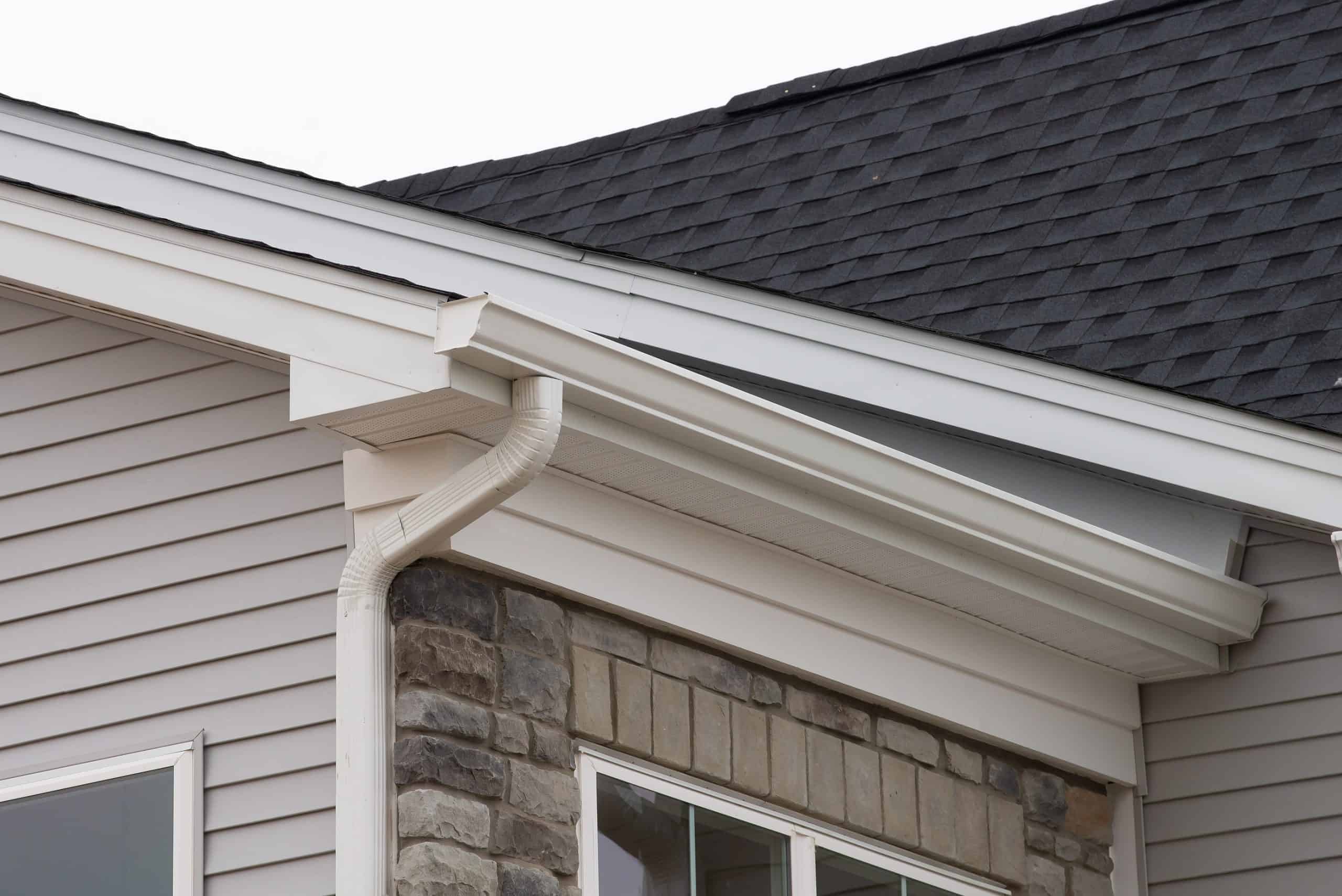
Gutter Installation
The difference between a five-inch gutter and a six-inch one is roughly forty percent more water carried, for a few dollars a foot. The difference between a two-by-three downspout and a three-by-four is about double the outlet capacity. Those two decisions, made in an hour on the day of the estimate, settle whether the system works in the storms that matter or only in the ones that do not.
Sizing is arithmetic, not habit
Capacity is set by three things together: the width and profile of the trough, the size of the downspouts, and how many there are. What it has to handle depends on the roof area draining into the run, the steepness of that roof, and how hard it rains where the building stands. A long or steep plane, or a valley funnelling two planes into one run, delivers more than a standard trough will hold. As a working figure, plan one downspout for every thirty to forty feet of run, and add outlets before adding regret.
Fascia first, always
Gutters hang on wood, and wood that has been soaked for years will not hold them. The fascia and the roof edge behind it get checked before anything goes up, and whatever has gone soft gets replaced. This is the most common shortcut in the trade: new metal screwed to a rotten board looks flawless on the day and sags within a season. If your old gutters failed by pulling away from the house, the fascia is where that story began.
Pitch you cannot see
A run needs a gentle fall toward its outlet — about a quarter inch over ten feet is the usual target. Enough to keep water moving, little enough that the line still reads as level from the yard. A dead-level gutter is a long narrow pond that breeds mosquitoes and strains its own hangers.
Hangers and corners
Hidden hangers screwed into solid wood hold far better than the old spike-and-ferrule method, and they go in closer together where snow and ice load the eave. Corners are the other pressure point: mitres are where most future leaks start, so they get formed and sealed with care rather than assembled quickly and caulked heavily.
Where the water goes after it leaves
This is the half of the job most estimates ignore. Water dumped at the base of a wall has simply been moved from the roof to the foundation. Extensions, splash blocks, buried lines and drywells all have their place, and so does directing runoff toward planting rather than pavement — the Environmental Protection Agency collects practical guidance on handling roof runoff at the property. Walk the ground and settle this before the first hanger goes in.
Do it with the roof if you can
Gutters and roofs are usually one job at APC Roofing rather than two, and there is a practical reason beyond having the crew already on site. Drip edge, roof edge and trough are a single detail that has to work together: without proper drip edge, water can curl back behind a brand-new gutter and never enter it at all. Replacing the roof and leaving the old gutters is how that detail gets missed.