
You’ve got two gutter quotes on the kitchen counter, and they’re far apart for what sounds like the same job. One lists a price per foot and nothing else. The other mentions sizes and downspouts you’ve never thought about. If you’re planning gutter installation in Blue Springs, you want to know what you’re actually paying for and whether the new gutters will handle the next spring downpour any better than the old ones.
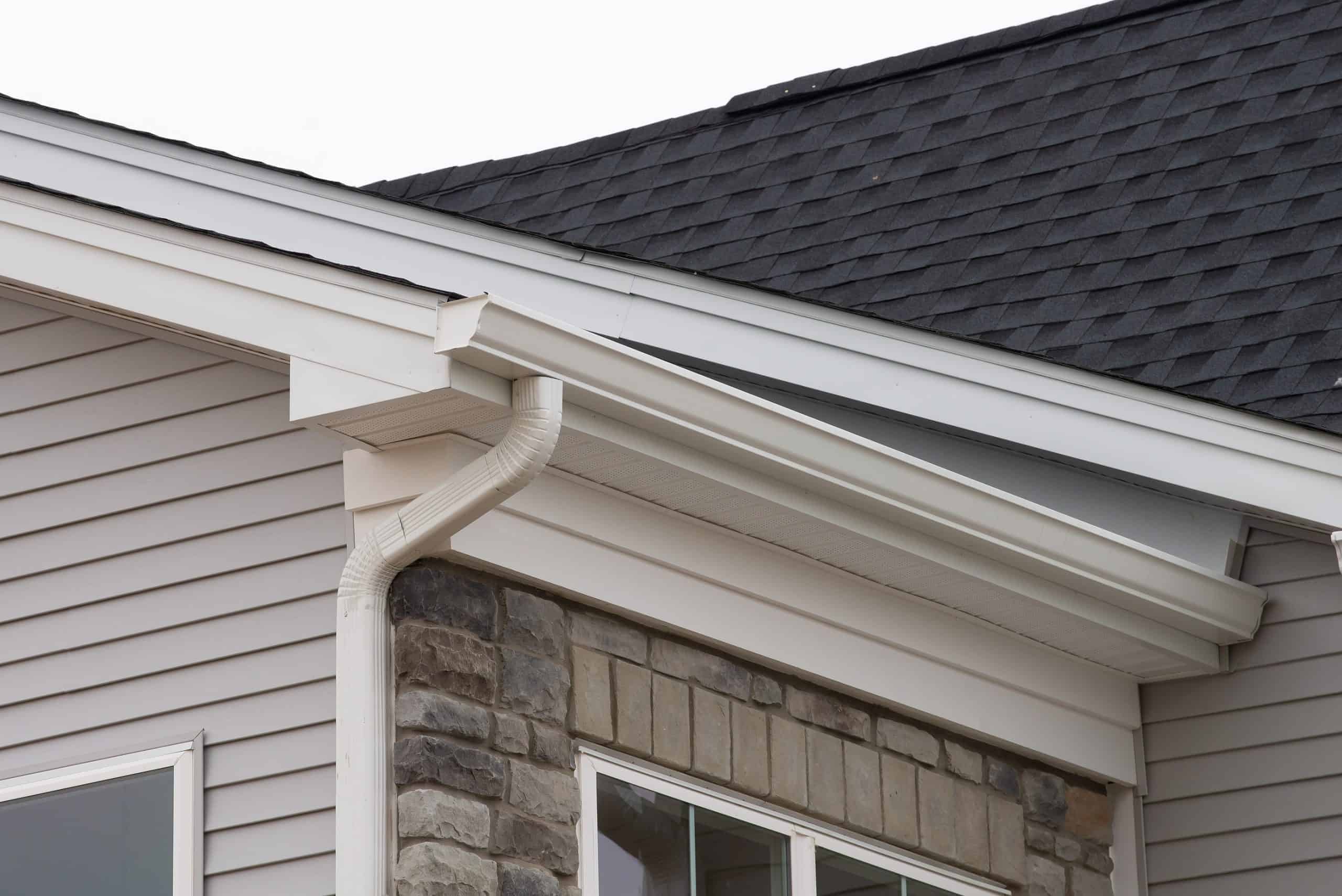
That’s a smart question to ask before anyone climbs a ladder. Gutters that look the same from the street can perform very differently, and most of the difference comes down to sizing and installation details that are easy to skip.
APC Roofing installs custom seamless rain gutters on homes across Blue Springs and the Kansas City area. Our crews are roofers, so the roof edge, drip edge and fascia get checked along with the gutters. We’ve been in business since 2017, we’re licensed, insured and GAF Certified, and the estimate costs you nothing. Call 913-398-5020 to set up a time.
Gutter installation starts with a measurement
A good gutter estimate starts on your roof, not in a catalog. Before anyone picks a gutter size, someone should figure out how much roof drains into each run, how steep the roof is and where the downspouts can realistically go. Those few numbers tell you what your house needs.
That matters because a gutter is a drain with a specific workload. A short run under a small roof section does fine with a standard gutter and one downspout. A long run under a big, steep roof in a Kansas City thunderstorm needs more capacity, and a wider gutter alone won’t fix an outlet that’s too small.
Gutter and downspout sizing
Most homes in the area use 5-inch K-style gutters. On larger or steeper roofs, 6-inch gutters carry a good deal more water and can be the difference between a dry walkway and a waterfall.
Downspouts matter just as much. Many older homes have small 2×3-inch downspouts. Stepping up to 3×4-inch downspouts moves far more water and is one of the simplest upgrades on the job. Long runs usually need a downspout at each end, and any spot where a roof valley dumps water onto the gutter should have a downspout nearby.
If water from an upper roof drains onto a lower roof through a downspout, that’s worth a second look too. It concentrates a lot of water on one spot of the lower roof. Running that downspout to the ground or into the lower gutter in the right place can protect both the roof and the gutter below it.
The details that make gutters last
Once the size is right, how the gutters are hung decides how long they work.
Slope. Gutters should look level from the ground but have a slight fall toward each downspout, often about a quarter inch for every ten feet. Hung dead level, they hold standing water and debris. Hung too steep, they look crooked and water can overshoot the outlet.
Hangers. Hidden hangers screwed into the fascia hold far better than old spike-and-ferrule hangers. In a climate with snow and ice, hangers should be spaced closely enough to carry the weight of ice sitting in the gutter for days.
Expansion. Long aluminum runs grow and shrink with the seasons. A gutter that’s pinned too tightly can buckle or pull its seams apart after a few years.
The roof edge. Water can curl back under the shingle edge and run down behind the gutter, staining the fascia. A drip edge or gutter apron that laps into the gutter closes that gap.
Where the water lands. A downspout should empty onto ground that slopes away from the house, with an extension or drain line moving water well clear of the foundation.
Checking the fascia first
New gutters need a solid board to hang on. If old gutters have been overflowing for years, the fascia behind them may be soft or rotted, and hangers screwed into bad wood won’t hold for long. The fascia should be checked before installation, and damaged sections replaced first. APC Roofing works on fascia and soffits, so that can be handled as part of the same project instead of a separate contractor.
New gutters and a new roof
If your roof is also near the end of its life, it often makes sense to plan the two together. The gutters can be fitted to the new roof edge and drip edge, and the fascia is easy to check while the edge is exposed. If you’ve recently had hail damage, dented gutters can also be part of what’s documented for your insurance claim. You file the claim and pay your own deductible, and we document the damage and work with your adjuster. See our roof replacement in Blue Springs page if both are on your list.
How to compare gutter estimates
When two quotes are far apart, the difference is usually in what’s included. A clear estimate should tell you:
- The gutter size and material
- How many downspouts, and what size
- What type of hangers and how far apart
- Whether drip edge or gutter apron is included
- Where each downspout will drain
- Whether any fascia repair is needed and what it costs
If one estimate leaves those out, ask. A price per foot without the details doesn’t give you anything to compare.
How it works
- Book your free estimate. Call 913-398-5020 or request a free estimate online.
- Get a clear, honest assessment and estimate. We measure your roof and rooflines, check the fascia and downspout locations, and give you a written estimate with sizes spelled out.
- Your gutters go up and the site gets cleaned up. Old gutters and debris are hauled away.
Waiting through another season of overflow means more water against the foundation and more rot in the fascia. Getting it done before the spring storms keeps those repairs off your list.
Gutter installation questions
How long does gutter installation take?
On a typical house, gutter installation is a fairly short project. Fascia repairs, a large or complex roofline and the weather can stretch it, and you’ll get a realistic timeline with your estimate.
Are seamless gutters worth it?
For most homes, yes. With no seams along the straight runs, there are fewer places to leak or sag. Read more on our seamless gutters in Blue Springs page.
Can gutters be installed in winter?
Often, yes, as long as the weather is dry enough to work safely and seal the joints properly. Rain, ice and wind can push a date back.
Will new gutters stop ice dams?
No. Ice dams come from heat escaping into the attic and melting snow on the roof. Good gutters drain the melt and hold up under the ice, but the fix for ice dams is in the attic: better insulation and sealing the gaps where warm air leaks up.
Book gutter installation in Blue Springs
You shouldn’t have to guess which quote is the right one. Call 913-398-5020 or start your free estimate online, and we’ll start by measuring your roof.
When the work is done, heavy rain runs off the roof, into the gutters and away from your foundation, and you can stop worrying about the next storm. For an overview of everything gutter-related, see our gutters in Blue Springs page.


















