You’ve decided the old gutters have to go. Maybe they sag, leak at every corner or overflow in every hard rain, and now you’re comparing quotes for gutter installation in Kansas City, MO. The trouble is that most quotes look alike: a length, a color and a total. They rarely tell you whether the new system will keep up with a Kansas City thunderstorm.
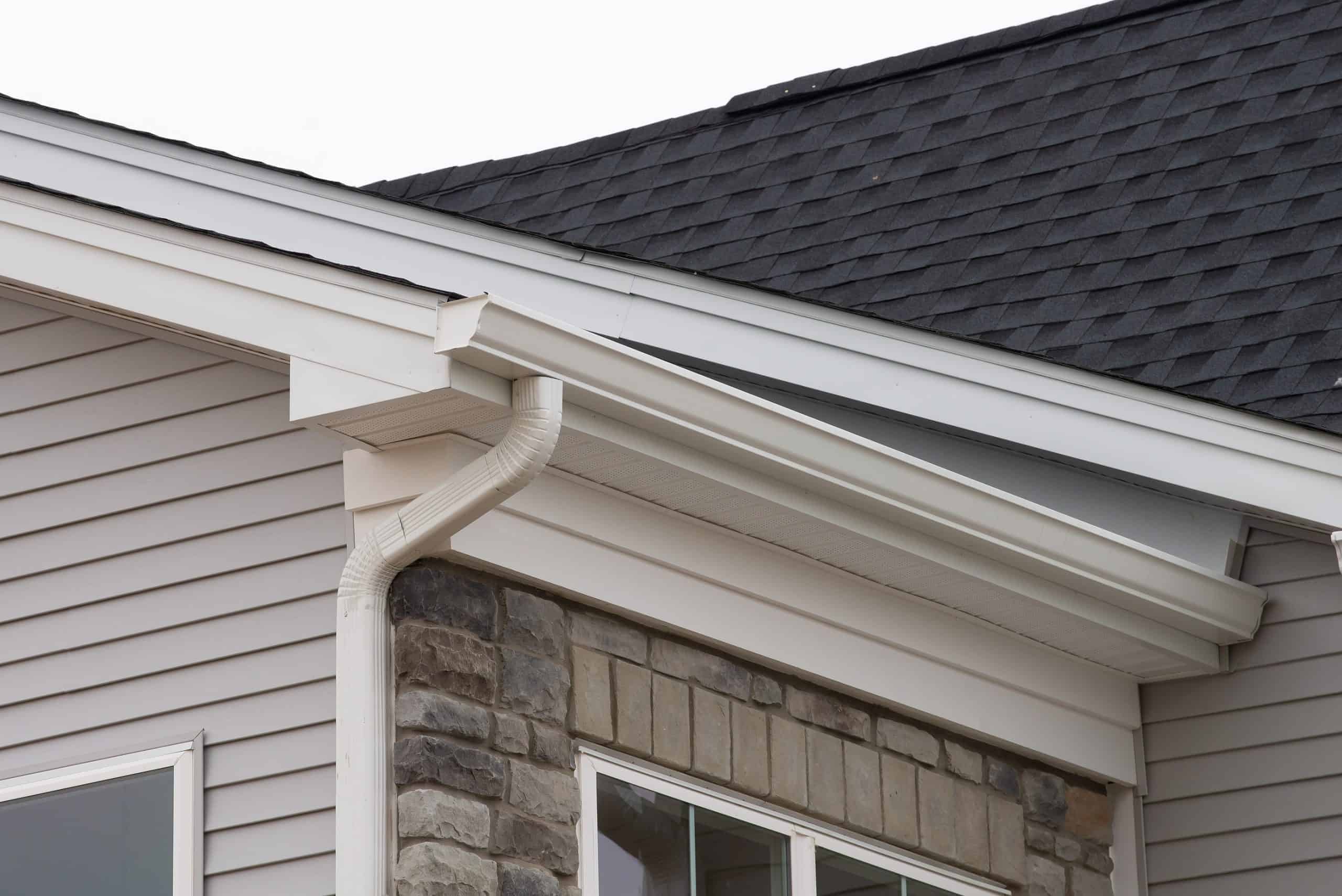
That’s the part worth paying attention to. A gutter is a drain, and it has to be sized for the roof above it. Get that wrong and brand-new gutters overflow just like the old ones did.
APC Roofing installs custom rain gutters on Kansas City homes. We’re GAF Certified, licensed and insured, in business since 2017, and your estimate is free. Call 913-398-5020.
Gutter installation in Kansas City, MO starts with the roof
Two things decide how much water a gutter has to handle: how much roof drains into it, and how hard it rains. For the second one, the yearly rainfall total isn’t the number that matters. It’s the heaviest few minutes of a storm, and our spring and summer thunderstorms can be intense.
So a proper quote starts with measuring. Each run of gutter is matched to the roof area that drains into it, and steeper roofs count for more because they shed water faster. A long, steep back roof feeding one run needs far more capacity than a short porch roof.
Gutter size and downspouts
Gutter width. Most homes get 5-inch or 6-inch K-style gutters. The 6-inch size carries noticeably more water, and on a large or steep roof that can be the difference between a dry wall and a soaked one.
Downspout size. This is the part most quotes skip. The narrow 2×3-inch downspouts on many older homes carry roughly half what a 3×4-inch downspout does. Upgrading the downspouts often fixes overflow without changing anything else.
Number and placement. A long run may need a downspout at each end, or more. Downspouts work best where water can be carried off and away, not over a patio, a walkway or a basement window well.
What goes into a solid installation
Seamless aluminum gutters are formed on site from a coil to the exact length of each wall. The only joints are at corners and downspouts, so there are far fewer places for a leak to start.
Gutters need a slight pitch toward each downspout so water drains instead of sitting. Too little and water pools, then freezes in January. Too much and the gutter looks crooked from the street and can overflow at the low end.
Hidden hangers screwed into the fascia hold the gutter up. Spacing them closer gives it the strength to carry wet leaves, snow and ice without sagging, which matters a lot in a Kansas City winter. Corners and end caps are the usual leak points on any gutter, so they get sealed with care.
Then there’s the roof edge. The drip edge at the bottom of your roof should send water into the gutter, not behind it. If water has been running behind your old gutters, that’s often why the fascia is stained or soft.
Getting water away from the house
A gutter system only helps if the water ends up somewhere other than your foundation. Downspouts that empty at the base of the wall just move the problem a few feet. Extensions, splash blocks or a buried drain line carry water away, and the ground around the house should slope away too. With so many Kansas City homes built over basements, this step is often the one that keeps the basement dry.
Before the gutters go up
New gutters need solid wood to hang on. If the fascia behind your old gutters is rotted, it gets replaced first. APC handles fascia and soffits too, so you’re not coordinating two crews.
If your roof is near the end of its life, think about replacing it first or at the same time. Gutters installed just before a roof replacement may have to come down during the roofing work. Our roof replacement in Kansas City page covers that side.
How it works with APC Roofing
- Book your free estimate. Call 913-398-5020 or request it online.
- Get a clear, honest assessment and estimate. We measure your roof, check the fascia and look at where water should go, then give you a written estimate that spells out gutter size, downspout size and how many downspouts. Financing is available through Aqua Finance, Fortifi, Hearth and Home Run Finance.
- Your gutters go up and the site gets cleaned up.
Gutters that overflow every storm keep soaking the soil by your foundation. The sooner that water gets moved away from the house, the less it costs you down the road.
Gutter installation questions
Do I need bigger downspouts?
If your gutters overflow even when they’re clean, undersized downspouts are a likely cause. A 3×4-inch downspout carries about twice what a 2×3-inch one does.
Can new gutters fix my wet basement?
They can help a lot if the water is coming off the roof. Downspouts that carry water well away from the foundation, plus soil that slopes away from the house, solve many wet-basement problems. Water seeping up through the floor from groundwater is a different issue.
Should I replace my gutters and roof at the same time?
It often makes sense. The drip edge and gutters work together, and gutters may have to come off for the roofing work anyway.
How long does gutter installation take?
For most homes it’s a short job, since seamless runs are formed right on site. Fascia repairs or a long, complicated roofline add time, and you’ll get a timeline with your estimate.
Get a gutter quote that starts with the roof
Call 913-398-5020 or book your free estimate online. For the bigger picture, see our Kansas City gutters page or everything else we do on the Kansas City roofing page.
Done right, your new gutters keep up with the heaviest storm of the year, the water lands well away from the house and the basement stays dry.