You’ve got a detached garage, a workshop or a pole barn with a roof that’s done. Or maybe you like the farmhouse look and you’re wondering if those wavy panels could work on the house itself. Corrugated metal is tough and goes up quickly, but you’ve also heard the screws leak eventually, and you want to know how true that is before you spend the money.
Corrugated metal roofing in Blue Springs is a practical choice for a lot of buildings. It’s also a roof with a known maintenance schedule, and you should hear about that up front.
APC Roofing is GAF Certified, licensed and insured, and has been in business since 2017. We install and repair metal roofs on homes, garages, porches and outbuildings, and your inspection is free. Call 913-398-5020 to talk it over.
What counts as corrugated metal roofing
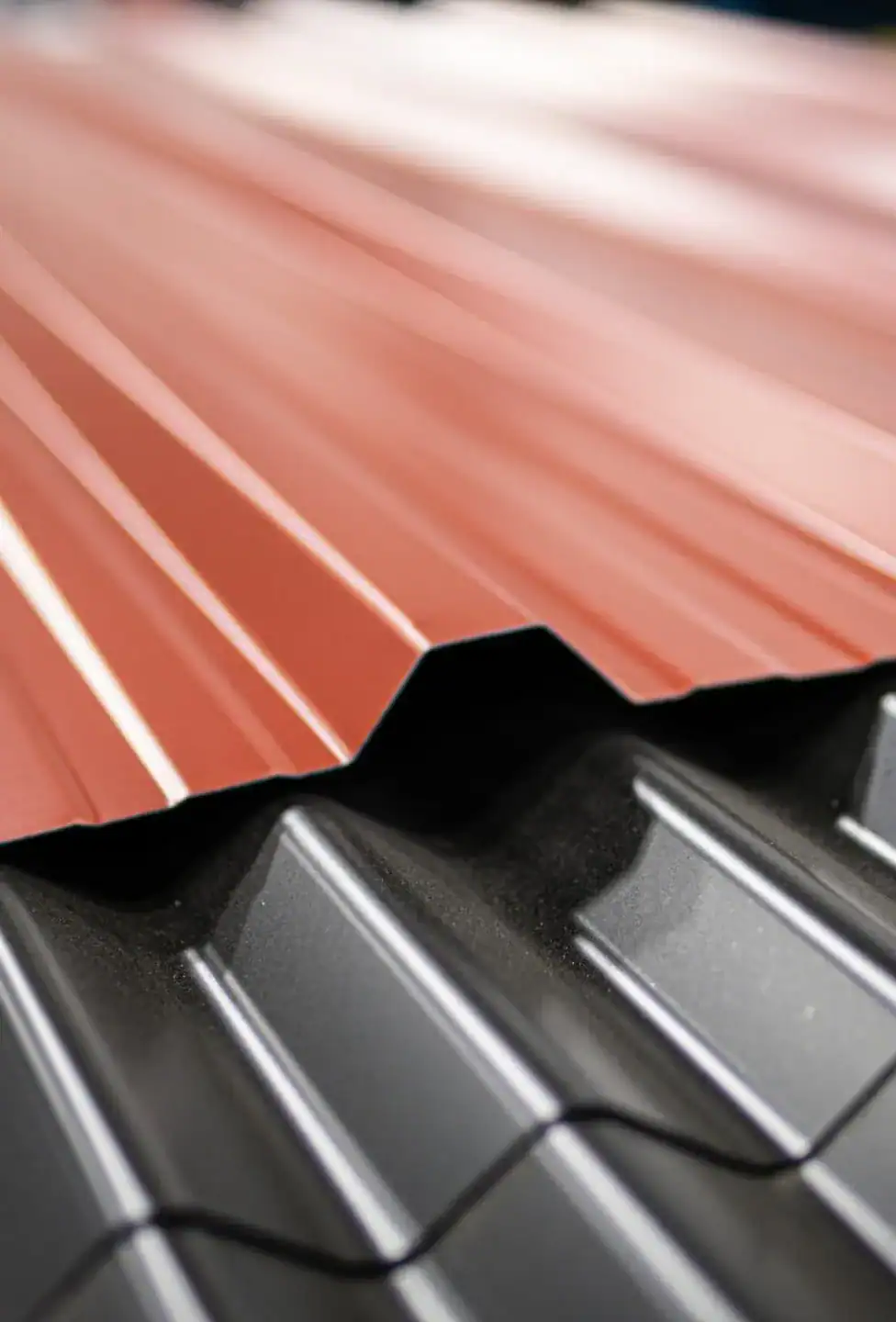
People use “corrugated” for two kinds of panel. The classic one has rounded, wavy ridges. The other, often called ribbed or R-panel, has squared-off ribs with flat sections between them. Both are exposed-fastener panels: the screws go straight through the face of the metal into the wood or framing underneath, and each screw has a rubber washer that seals the hole.
Most panels sold for buildings in this area are steel with a zinc or aluminum-zinc coating under a baked-on paint finish. Our steel roofing page covers those coatings and finishes in more detail.
Where corrugated metal makes sense in Blue Springs
Shops, barns and outbuildings
This is where corrugated panels shine. They span between purlins without a solid deck underneath, so they work on open-framed buildings. They shed snow well, they don’t care about leaves, and hail that would shred a shingle roof usually just leaves dents.
Garages, porches and lean-tos
A covered porch or a carport with a decent pitch is a good fit, and the look pairs well with a farmhouse or rustic style.
Homes
Corrugated metal can go on a house, and some homeowners love the look. For a main living space, though, most people end up comparing it to standing seam metal roofing, which hides its fasteners and needs less upkeep. You’ll get a straight comparison of the two for your house.
The honest trade-off: exposed screws
Every screw on a corrugated roof is a small hole sealed by a rubber washer. Those washers sit in the sun all year, and Missouri summers and winters work them hard. Metal panels also grow and shrink with temperature every day, which slowly works the screws back and forth in their holes.
Over the years, washers harden and crack, and some screws back out a little. That’s where most leaks on corrugated roofs start. The fix is routine: tighten or replace the worn fasteners, often with a slightly larger screw where the old hole has widened. It’s normal maintenance, not a sign the roof was a mistake.
Installation makes a big difference here. Screws driven straight and snug, not crooked or overdriven, keep their seals much longer. Fasteners belong in the right place on the panel for the profile, and enough of them go in to hold the roof in a strong spring wind.
Condensation in unheated buildings
On a cold night, the underside of a bare metal roof can drip like a glass of ice water on a summer day. In a shop or barn, that can mean water on tools, vehicles or hay. A vapor barrier, insulation or a liner under the panels keeps warm, damp air from touching the cold metal. If your building is used for storage or work, it’s worth planning for this before the panels go up.
How corrugated metal handles Blue Springs weather
Hail. Corrugated panels dent in a big hailstorm, especially thinner ones, but a dent usually doesn’t mean a leak. Thicker panels hold up better.
Wind. Strong gusts pull hardest at edges, corners and the ridge. Proper fastener spacing at those areas, along with secure trim, keeps panels in place.
Snow and ice. Metal sheds snow quickly. Over a doorway or a walkway, snow guards help keep it from coming down all at once.
Freeze-thaw. Panels expand and contract with every swing in temperature, which is why the screws need attention over the years.
Repairing an existing corrugated roof
Plenty of older shops and barns around Blue Springs have corrugated roofs that leak at a few screws, along a lap or at the ridge cap. Many of those can be repaired rather than replaced. Rust that has eaten through a panel, widespread loose fasteners or rotten purlins underneath are signs it may be time for a new roof. Our metal roof repair in Blue Springs page goes deeper on what’s fixable.
How it works with APC Roofing
- Book your free inspection. Call 913-398-5020 or request a free estimate online.
- Get a clear, honest assessment and estimate. You’ll hear which panel and gauge fit your building, what it’ll need for upkeep and how it compares to other metal options, with photos and a written estimate.
- The roof goes on and the site gets cleaned up. Old material and scrap leave with the crew.
Financing is available through Aqua Finance, Fortifi, Hearth and Home Run Finance.
Corrugated metal roofing questions
Is corrugated metal loud in the rain?
On an open-framed barn, yes, you’ll hear it. Over a solid deck with underlayment, or with insulation under the panels, it’s much quieter.
How often do the screws need attention?
It varies with the sun exposure and how well the roof was installed. A check every few years, and after big storms, catches loose or worn fasteners before they leak.
Do you tear off the old shingle roof first?
Yes. We tear the old roof off down to the deck before any metal goes on, so we can see and fix the wood first.
Is corrugated the same as R-panel?
They’re close cousins. Both are exposed-fastener panels. Corrugated has rounded waves, while R-panel has taller, squared ribs that span a bit farther.
A roof you can count on for the shop or the house
A few leaky screws on a barn roof don’t seem urgent, but steady drips can rust tools, soak stored items and rot the framing over time.
Get the right panel installed the right way, and you’ll have a roof that sheds rain, snow and hail with very little fuss. Call 913-398-5020 or start your estimate online. To compare all your options, see our Blue Springs metal roofing overview.