Commercial property owners along the Halifax River corridor tend to start the same way: a leak at a curb, a roofer’s card left at the front counter, and three quotes that look nothing alike. One proposes a mechanically seamed panel, another an exposed-fastener R-panel, and a third says the building should not get metal at all. For anyone comparing metal roofing options in Holly Hill, Florida, and nearby Palm Coast, that spread is confusing enough to stall a decision for a full season – usually the wrong season to be stalling.
The timing matters. Hurricane season runs June 1 through November 30, with the peak window from mid-August into early October, and storms like Ian and Nicole in 2022 drove a wave of Volusia County roof claims that exposed how many older low-slope decks were never detailed for uplift. Holly Hill also sits roughly one to two miles from open ocean, which means salt aerosol reaches every commercial strip in the city, not just the beachside blocks. A metal roof specified for an inland warehouse can start failing at its cut edges here in a fraction of its advertised life.
This article walks through what actually decides a good commercial metal roofing choice in Holly Hill, Florida, and along the Volusia coast: roof slope, panel family, substrate and coating, wind-uplift documentation under Florida code, what drives installed cost, retrofit versus tear-off, and how to compare bids without guessing.
Slope Decides the System Before Anything Else
Before color charts or panel profiles, the roof’s pitch narrows the field. Most commercial buildings on the US-1/Ridgewood and Mason Avenue strips were built between the 1960s and 1980s with low-slope decks, and slope quietly eliminates several products.
The Pitch Thresholds That Matter
Mechanically field-seamed standing seam, with in-seam sealant and a 180-degree or double-lock fold, is generally approved down to a 1/4:12 pitch. Snap-lock standing seam typically needs a minimum of 3:12. Exposed-fastener structural panels usually want 3:12 as well, though some approvals extend to 1/2:12 with specific detailing.
Below those thresholds, the honest answer is not metal at all. A dead-flat 1960s deck belongs under a membrane such as TPO, EPDM, or modified bitumen and any bidder who proposes panels on a 1/8:12 roof is either misreading the slope or ignoring the approval. Reliable roofing companies will measure pitch on site rather than assume it from a drawing.
When a Hybrid Approach Works
Many Holly Hill buildings have both conditions: a low-slope main field with a sloped mansard or street-facing section. Splitting the assembly – membrane on the flat, a standing seam metal roof where pitch allows – is common and code-compliant, provided the transition detail is designed rather than improvised. The same mixed approach shows up frequently on retail and office properties in Palm Coast, Florida, where architectural fronts sit against flat rear fields.
The Two Panel Families, Honestly Compared
Nearly every commercial metal roofing bid falls into one of two categories, and they are not interchangeable.
Concealed-Fastener Standing Seam
Standing seam carries its fasteners under the seam, where weather never touches them. Clips allow the panel to move with temperature, and on runs longer than about 30 feet, floating clips and expansion detailing are mandatory. Fixed clips on a long run produce oil canning, seam distortion, and fastener back-out within a few summers. Installed pricing is driven by gauge, panel length, curb count, and whether the deck needs repair.
Exposed-Fastener Structural Panels
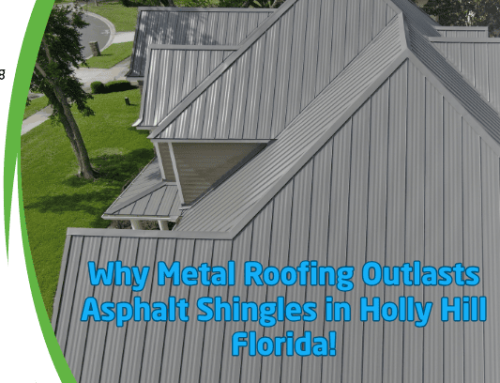
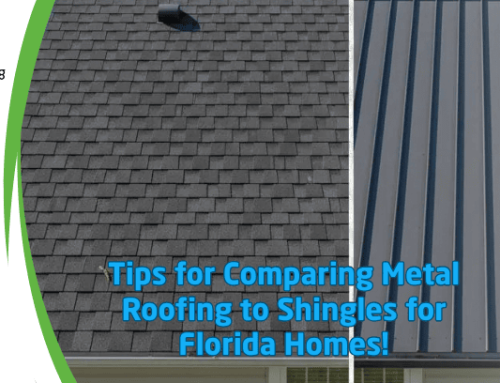
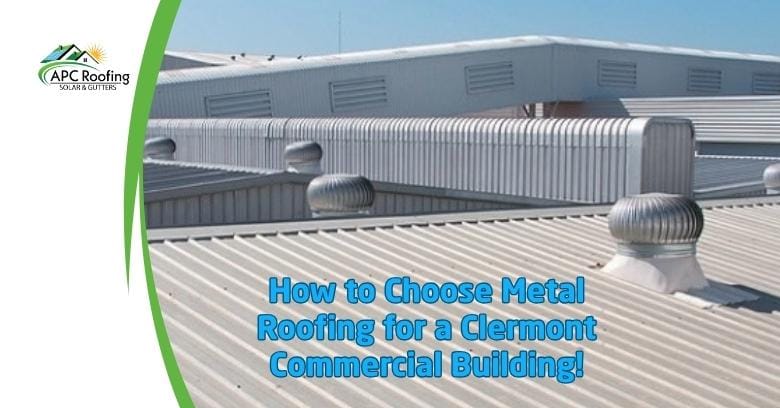
PBR and R-panel, 5V crimp, and corrugated profiles screw straight through the face. They cost less installed in 26 or 24 gauge, and they install faster. The tradeoff is maintenance: the EPDM washers under the screw heads degrade at roughly 15 to 20 years, so the assembly needs re-screwing to reach its practical 25- to 35-year service life. For a self-storage row or a light-industrial building with easy access, that is a reasonable trade. For a metal roof over occupied retail space, many owners prefer the concealed system.
A Quick Comparison
- Longest service life: standing seam in Galvalume runs 40 to 60 years; coastal aluminum often exceeds 50.
- Lowest first cost: exposed-fastener panels, at the price of scheduled re-screwing.
- Lowest slope tolerance: mechanically seamed standing seam, down to 1/4:12.
- Simplest retrofit: sub-purlin framing over an existing metal roof, which adds to the per-square-foot price.
- Best low-slope alternative: a TPO or EPDM reroof.
Substrate and Coating Matter More Than Color
This is where coastal buildings are won or lost. A panel’s paint color is a 20-minute decision; its metallurgy determines whether the roof looks acceptable at year fifteen.
Steel Versus Aluminum Near Saltwater
Common substrates are G90 galvanized, Galvalume in AZ50 or AZ55, and aluminum in .032 or .040 inch. Most steel finish warranties are voided or sharply reduced within about 1,500 feet of saltwater, which puts a meaningful share of Holly Hill, Florida properties in the penalty zone. Aluminum is the practical coastal default, and the same logic applies to oceanfront and Intracoastal properties around Palm Coast. Salt-driven failure on coastal metal roofs shows up first at cut edges, panel laps, fastener heads, and gutter and drip lines, the places a walk-through inspection should check first.
Paint Systems and Fasteners
PVDF finishes which are sold as Kynar 500 or Hylar 5000 resist chalking and fade far better than SMP, which is the cheaper builder-grade option. On a building where appearance drives tenant impressions, PVDF is worth the upcharge. Fasteners deserve the same scrutiny: 300-series stainless in coastal air, with no copper-to-steel contact and no panel bearing directly on ACQ-treated wood, both of which set up galvanic corrosion.
Gauge and width round out the spec. Twenty-two gauge is the heaviest commercial option, 24 gauge is the standing seam standard, and 26 gauge is economy or agricultural grade. Panel widths of 12 to 18 inches are typical, with narrower panels reading flatter and costing more because they require more clips. Underneath, a high-temperature peel-and-stick underlayment rated to roughly 250 degrees is required as standard synthetic underlayment fails under metal.
Florida Code, Product Approval, and Permits
Documentation is not paperwork theater in Volusia County; it is the difference between an insurable roof and a liability.
What the Approval Actually Covers
Work falls under the Florida Building Code, 8th Edition (2023), with wind loads calculated per ASCE 7-16 or 7-22. Every panel system needs a Florida Product Approval number or a Miami-Dade Notice of Acceptance, and that approval covers the entire assembly including deck type, underlayment, clip spacing, and fastener specification. Changing any one component off-spec voids it. Volusia is not a High-Velocity Hurricane Zone (Miami-Dade and Broward), so testing and documentation differ, but uplift requirements remain stringent. Coastal Volusia ultimate design wind speed typically falls in the 130 to 140 mph range for Risk Category II buildings; confirm the figure per site.
A competent specification cites its test standards: UL 580 and UL 1897 for Class 90 uplift, FM 4471, ASTM E1592, and TAS 125. If a proposal names no standard, it has not been engineered.
The 25% Rule and the Permit Path
Under the FBC 25% rule, repairs or replacement exceeding 25 percent of a roof section within any 12 months trigger full code compliance for that section. Owners who patch storm damage piecemeal often cross the threshold without realizing it. Commercial reroof permits go through the City of Holly Hill building division, with plan review and Florida Product Approval documentation expected; a Notice of Commencement is required for work over $2,500. Roofing companies that regularly handle Volusia and Flagler work, including jobs in Palm Coast and Holly Hill Florida, will assemble the submittal package before signing the contract.
Budget, Retrofit, and Scheduling
Retrofit Over Tear-Off
Many older Holly Hill commercial buildings already carry a membrane or mechanically attached system. Framing sub-purlins over an existing metal roof is often cheaper than a full tear-off, keeps the building dry during construction, and adds insulation space. It is not universally allowed as deck condition, existing layers, and load capacity govern, so it requires verification, not assumption.
Timing the Work
June through September afternoon thunderstorms shrink dry-in windows to a few hours, which is why November through April is the practical install season on this coast. Owners planning a 2026 project should be collecting proposals during hurricane season, not after it. Cool-roof performance is worth specifying while the decision is open: ENERGY STAR calls for an initial solar reflectance of at least 0.25 on low-slope roofs and 0.15 on steep-slope roofs.
Choosing Among Bidders
A comparable bid names the substrate and gauge, the coating system, the FL approval number, the clip type, the underlayment temperature rating, and the fastener alloy. APC Roofing, a BBB-accredited contractor serving Central Florida and both coasts, provides free estimates and financing options, and holds GAF Certified status alongside its commercial work. Whichever roofing company an owner selects, the specification and not the sales pitch should be the basis of comparison.
Wrapping Up
Selecting a commercial metal roof on the Volusia coast comes down to four decisions made in order: confirm the slope, choose the panel family that suits it, specify a substrate and coating that survive salt air, and verify the Florida Product Approval covers the full assembly as installed. Holly Hill and Palm Coast property owners who skip straight to price comparison almost always end up comparing incompatible systems.
The next step is a slope measurement and a condition survey of cut edges, laps, and fastener lines, followed by a written specification that competing roofing company bids must be priced the same way. Doing that during the November through April window means the work is finished and documented before the next hurricane season and a documented, code-compliant assembly is far easier to insure and far less likely to generate a claim.
Key Takeaways
- Roof slope eliminates most panel options first: below roughly 1/4:12, a membrane system is the correct answer rather than metal.
- Within about 1,500 feet of saltwater, aluminum panels are the safer substrate because most steel finish warranties are reduced or voided in that zone.
- Exposed-fastener systems cost less up front but need re-screwing at roughly 15 to 20 years as the washers degrade.
- Every commercial panel assembly in Volusia County requires a Florida Product Approval covering the deck, underlayment, clips, and fasteners as a complete system.
- Repairs exceeding 25 percent of a roof section within 12 months trigger full code compliance for that section under Florida rules.
Frequently Asked Questions
Is a metal roof louder in the rain?
No, noise comes from the deck, underlayment, and insulation rather than the panel itself. A metal roof over a solid deck with high-temperature peel-and-stick underlayment and insulation is typically no louder indoors than a shingle assembly.
Does metal attract lightning?
No, metal does not attract lightning strikes. If a strike occurs, a metal roof is non-combustible and disperses the energy, which is generally considered safer than a combustible roof covering.
Can a new metal roof be installed over the existing one?
Often yes, using sub-purlin retrofit framing, which usually costs less than a full tear-off. Approval depends on deck condition, existing layer count, and load capacity, all of which must be verified before permitting.
How long does a commercial metal roof last on the coast?
Galvalume standing seam typically lasts 40 to 60 years, and coastal aluminum often lasts longer than 50. Exposed-fastener assemblies run practically 25 to 35 years because the fasteners and washers, not the panels, set the limit.
What drives the cost of a commercial metal roof?
Exposed-fastener panels in 26 or 24 gauge cost less installed than standing seam. Gauge, substrate, panel length, curbs, and tear-off scope move the price.
Is Volusia County in the High-Velocity Hurricane Zone?
No, the HVHZ covers only Miami-Dade and Broward counties. Volusia still enforces stringent uplift requirements under the Florida Building Code, with coastal design wind speeds typically in the 130-140 mph range.
When is the best time of year to schedule a reroof?
November through April is the practical install season on this coast. Summer afternoon thunderstorms from June through September compress dry-in windows and raise the risk of interior water damage during construction.
What permits are required?
A commercial reroof permit through the local building division, with plan review and Florida Product Approval documentation, plus a Notice of Commencement for work over $2,500. A qualified contractor assembles and submits that package.