Thinking About Metal Roofing Within Blue Springs Missouri?
APC Roofing lays new panels and brings worn coverings back into shape, on houses, garages, porches and outbuildings.
Call us at 913-398-5020 and a roofer will look closely and explain plainly what is up there.
Sorting Out Types: Hints in Plain Sight
Screw-down panels, corrugated or ribbed, are fastened with screws through the exposed metal, whereas standing seam relies on clips that sit under locked joints. Coated steel is what the great majority of metal-roofed homes carry, though aluminum and copper have a place too.
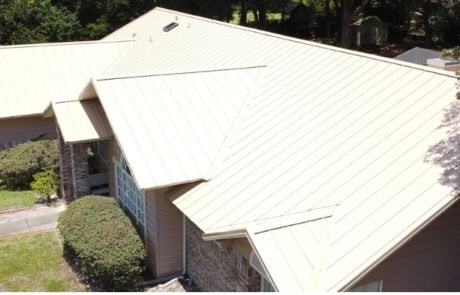
A glance from a lawn at lines of screw heads points to a through-fastened roof, and clean flats between raised joints, bare of hardware, belong to standing seam. Barns, workshops and porches often wear corrugated or ribbed sheet, and dwellings use both.
Shapes Rolled Into Steel: Which Suits a Building
Corrugated goods swell and dip in gentle, repeating arcs, while ribbed designs show angular ribs and wide flats. Adjacent lengths share a narrow side lap, and fastener placement follows a published pattern.
A squared profile resists bending and reaches further between purlins, while corrugated keeps a place on vintage buildings and farmhouse designs. On a big roof plane, taller ribs keep a downpour from spilling over side laps, and a shallow pattern is plenty for a small porch or shed.
What Keeps Sheet Down: Aging in Sunlight
A screw pulls the metal tight against a purlin or the deck, and a washer under each head keeps rain out. Sun and temperature swings dry out neoprene over time, well ahead of the painted steel nearby.
An overdriven screw squashes a washer flat, and a slack or crooked fastener leaks on one side.
Hardware Swaps – Where Help Stops
Rubber rings across a ribbed or corrugated field wear out together, and a full re-screw is an ordinary step somewhere along the way. Tired fasteners are pulled one by one, and a slightly fatter screw goes into each hole so a thread bites fresh wood or steel.
Re-fastening stops water at every head and holds down sheets that lift, but red rust, gaping laps and cracked flashing need other remedies. Thread type follows whatever support lies below, since lumber and steel purlins take different screws, and a factory color on every top suits most finishes.
Growth and Shrinkage: Why Slack Matters
Sunshine stretches steel slightly and a chilly night pulls the metal back, and a long run adds up to a measurable distance, and aluminum reaches about double. Metal screwed down with no give wears each hole into an oval, and a washer stops sealing.
Creaks as the day warms come from steel adjusting, and a careful installation suffers no damage.
Under Upright Joints – Out of Sight
Each long pan is fixed solid in one short zone, and floating clips farther along give the metal freedom to shift. At an unanchored end, trim is bent with clearance, and metal with no play winds up torn or kinked.
As a pan is laid, clips are driven into the deck along one leg, and a neighboring pan locks over every anchor.
How Seams Close: A Choice With Consequences
One kind of rib clicks shut under a firm push, and mechanical versions are turned over with a powered seamer. A double-lock grips harder against wind-driven rain, and approvals extend to flatter roofs.
Pan width and rib height vary from product to product, and a home's design and a buyer's taste guide selection. Accessories such as clips and closures fit a single system, so any repair hinges on knowing exactly which panel is installed.
Heavier and Lighter Stock: Barn or Residence
Steel is described by gauge rather than inches, and a low figure signals thick metal. Twenty-nine is a regular sight on sheds and pole barns, while houses often take twenty-six or twenty-four.
Aluminum uses decimal figures rather than gauge, and across the board thicker goods resist dents and ripple less. A light grade and a heavy grade are indistinguishable from a driveway, so a label or order sheet is what gets checked.
Rust Resistance: When Damage Matters
Coil stock is dipped in molten zinc or an aluminum-zinc alloy, and a color coat is baked on afterward. A scratch that stays within paint does no harm, while a sheared edge or a deep gouge lets rust begin.
PVDF systems keep color and gloss for decades, and polyester families fade and chalk more quickly. Lime in fresh concrete eats into an aluminum-zinc layer, so a gap or barrier separates panels from new block or stone.
Picking an Alloy – Coast and Country
An aluminum panel is light and immune to red rust, but softness means a heavier grade for equal toughness. Beside salt water at the coastal end of our range, protective layers wear away faster, so a marine-rated system often goes up near a beach.
Copper turns up chiefly on bay windows, dormers and entry roofs, and the metal is left bare to weather.
Metals That React – Matching or Separating
Copper upslope of a steel covering sends corrosive runoff over the panels, and a dark streak shows long before any hole. Aluminum on pressure-treated boards turns white and pits, and a mismatched fastener rusts quickly.
Any added flashing or trim should be the same metal as what is up there, or a separator tape sits wherever unlike metals meet.
A Frequent Complaint – Why Installation Counts
Oil canning means a slight bow in a wide stretch between seams, and faint hollows show at sunrise and fade by noon. A warped look in the metal lets no rain through, and service life is unaffected.
Thicker metal, a slimmer width and striations rolled into every pan tame rippling, and a smooth, straight base under the panels counts. Pictures of houses with and without oil canning make comparison easy, and the choice of panel is yours.
Everyday Comfort: Rattle and Warmth
A racket many recall comes from sheet over open framing, since one thin layer is all that stands between sky and interior. Metal on a home rests on a deck and underlayment, over an insulated ceiling, and indoors, few people notice more noise than under asphalt.
A light-colored panel sheds much of the sun's warmth, and the attic beneath stays cooler on a summer afternoon. Dark metal heats up like any black roof on a clear day, and vents and insulation weigh as heavily as the choice of color. Metal loses daytime warmth shortly after the sun sets, and the attic below catches up before long.
Retention Hardware – Only Where Needed
In the snowier part of our service area, a metal roof sheds snow fast, and a slab arriving all at once can injure someone or rip a gutter off. Guards break a load into small harmless chunks, and hardware sits over entries, paths and meters.
Standing seam takes clamp-on brackets that grip each rib without piercing the metal, whereas on corrugated sheet, mounts go into solid wood with gasketed fasteners, and homes where snow seldom falls go without.
Pounding From the Sky – Photographs and Measurements
At the colder end of our range, hail arrives most years, and thicker steel shows fewer dents. A crease that cracks paint exposes bare metal to rust, while a seam or trim edge pushed out of line may open.
Following a storm, our roofer takes pictures and measurements, so the extent of damage is clear.
Staying Put in a Blow: Built to a Pattern
Corners and borders see heavy suction, an open field much less, and air that gets under a loose edge can peel a sheet back. Each finishing piece is folded back and locked over a full-length cleat, leaving nothing for a storm to seize.
Fasteners go in closer together near corners and a roof's rim, according to a published schedule for how sheltered a site is. At the coastal end of our territory, hurricane country asks for more holding power still, and panels carry an uplift rating to suit.
Openings in a Covering – Flashing Done Right
A pliable-based collar is shaped to fit a panel and clamped onto a pipe, and a level stretch, not a peak, is chosen for a hole. A bigger penetration is framed with a curb and a small cricket upslope, and runoff is parted to either flank.
Caulk plays a supporting role to folded metal, since weather hardens and splits any compound long before the panels are done.
Where Slopes Meet – No Screws in the Water
Valley metal is laid before a single panel, and panels are sheared to a matching slant. Each raw end is hemmed back and hooked onto a cleat, and nothing pierces a channel that carries rain.
An endlap on a long run holds sealant between overlapping sheets, and uphill metal always goes on top, screwed through.
How Low Metal Can Go – Measured, Not Guessed
Corrugated and ribbed sheet usually needs around three inches of rise in every foot, and on a gentler slope, overlaps start to let water through. A mechanically locked seam can be installed far lower, and some products are allowed on nearly flat decks.
A barely tilted roof over a porch or addition is common on houses, and a measured angle decides what goes on, and where metal does not belong, a membrane does.
Substrate: Wood or Open Framing
A house takes panels on a solid, continuous deck, and a synthetic sheet rated for heat is sandwiched between, as asphalt felt turns brittle up there. Sheds and barns often fasten directly to purlins, and support distance dictates grade.
Once the deck is exposed, any board that gives underfoot comes out, because crumbling plywood cannot anchor a clip.
A Recover Instead of a Strip: What Has to Be True
Panels can often go on top of one shingle layer where code permits, so waste is kept out of a landfill. New steel adds well under two pounds per square foot, and ordinary framing copes without trouble. An underlayment topped with a grid of furring strips goes over existing shingles, and every fastener is sized to reach solid wood.
A second layer already in place, soft decking or stains from past leaks mean a full tear-off, since dampness sealed beneath panels goes on rotting structural lumber.
Completing the Job: Vented or Solid
Closures matching a panel shape stop up hollows under each rib at both extremes, and wind-driven rain, wasps and birds stay out. A ridge cap may be vented or sealed, and attic airflow needs are what decide.
Trim at every rake plus a drip edge over a gutter finish a roof's border, and fascia boards are kept out of runoff.
Working at Height: Where to Step
Standing seam is produced to fit each run from bottom to top, so a single piece covers eave to ridge without an endlap. A long panel needs several people to steady the metal on the way up, and a crimped or creased pan is no longer usable.
Each step should land in a flat with support right underneath, since a heel on a rib crushes a fold. A damp or dew-covered pan gives a shoe nothing to hold, so the safest place for the household is indoors.
What to Watch For – A Look From Below
- Red staining around each screw, low on a slope.
- Screws backed out of holes, by a peak.
- A rake edge torn free, facing prevailing wind.
- A collar gapping around a stack, beside a chimney.
- A sheared end streaked orange, at the bottom of a run.
- Blotchy color, where afternoon light hits.
- Spots on a ceiling in a row, in an upstairs bedroom.
- An endlap gaping, where slopes meet.
How APC Roofing Tackles Metal Roofing in Blue Springs Missouri: Our Routine
We start by identifying which panel type is installed and how the panels are held, followed by every screw or clip, edge, boot, valley and lap. Notes cover gauge, finish and every kind of hardware, and the attic is searched for stains and soft decking.
You receive a report, pictures included, and each repair is explained. Where a reseal will do, a reseal is what we propose, while a worn-out roof is named as such.
Metal Roofing in Blue Springs Missouri – Careful Assessments
Call 913-398-5020 and we will book a day that suits you.
Keeping the Roof: Weighing Choices
An individual rusted sheet can be unscrewed and exchanged, and a difference in shade stays visible. A properly resealed lap closes a drip, and a full set of screws fixes tired rubber.
Rust through sheet after sheet calls for a new covering, and a covering the wind has twisted out of shape is in the same position. Redoing one face of the house is a middle path, if everything else is sound.
Planning Ahead: Watching Details
Coated steel put on properly often gives forty years or better, and every estimate is approximate. Standing seam, with no holes through a pan, gets by on less maintenance, while corrugated and ribbed sheet calls for fresh screws in time.
Mixed metals, raw cut edges and caulk doing the job of flashing all shorten a roof's service, and an occasional walk-over catches problems promptly. Piles of leaves behind a chimney keep a patch of metal damp for days, and sweeping debris clear helps a finish.
If Metal Roofing in Blue Springs Missouri is on the table, call APC Roofing at 913-398-5020. Every detail, including how the panels are fastened, is read in person, and a written report puts options in front of you.
Verified

Verified