A leak over a sales floor, a stockroom or an office doesn’t just stain a ceiling tile. It means buckets in the aisle, wet inventory, unhappy tenants and a call you’d rather not make. If you own or manage a building and need commercial roof repair in Kansas City, MO, you want the leak found and fixed, and you want an honest read on whether the roof has more years in it.
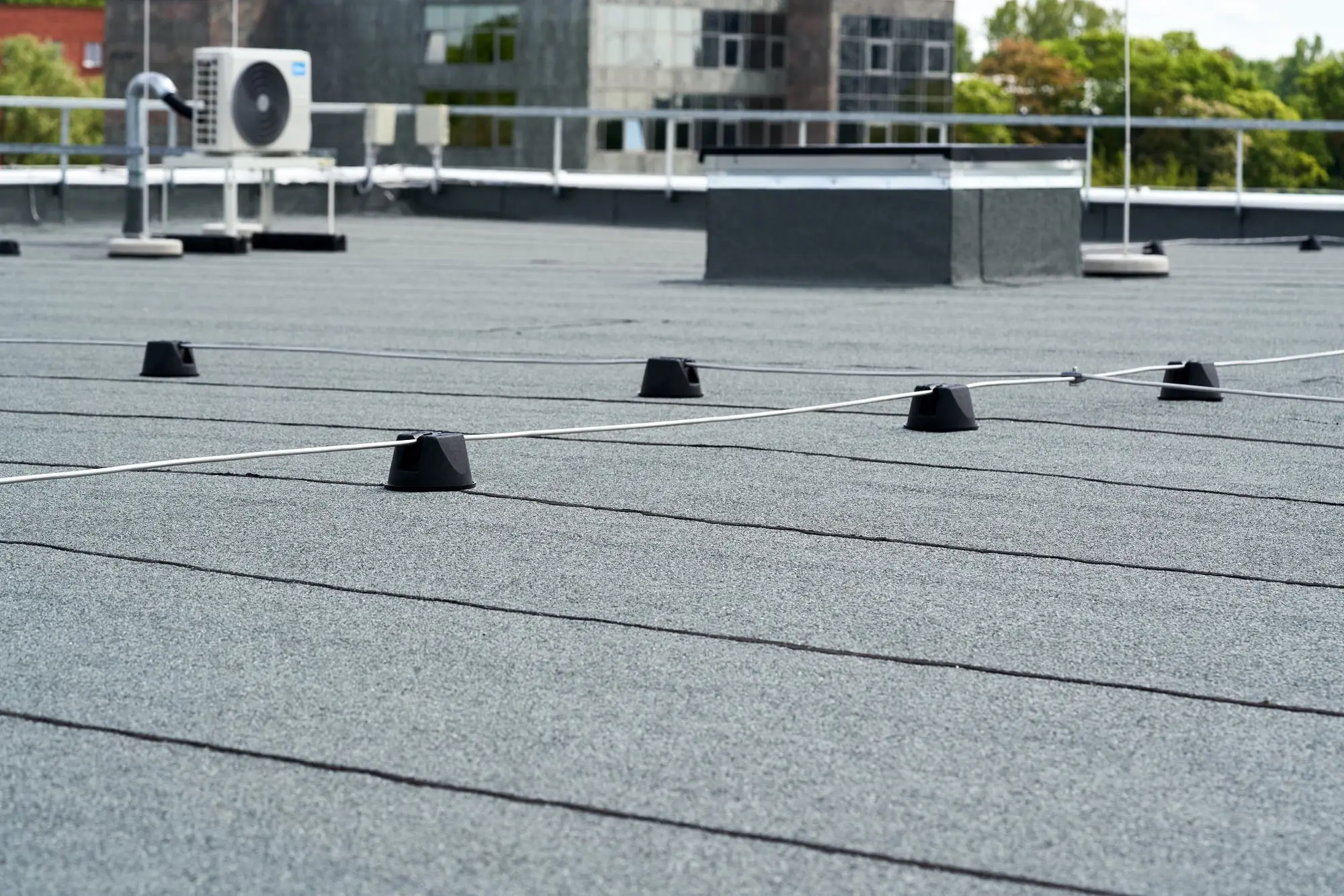
That’s harder than it sounds on a big, low-slope roof. Water can travel a long way under the membrane before it drips, so the wet spot inside is rarely right below the problem. And it can feel like every roofer has a reason the whole thing needs replacing.
APC Roofing repairs and replaces low-slope and light commercial roofs, including TPO, EPDM, built-up, modified bitumen and metal. We’re GAF Certified, licensed and insured, in business since 2017, and your inspection is free. Call 913-398-5020.
Commercial roof repair in Kansas City, MO starts with finding the leak
On a flat commercial roof, the stain inside marks where water fell, not where it got in. Water can run along a steel deck or between insulation boards for dozens of feet. Sealing whatever sits above the wet ceiling tile is a common fix, and it rarely works.
A good leak search works uphill from the stain. It checks seams, flashing at walls and curbs, drains, and every pipe and penetration in between. On stubborn leaks, a moisture survey with an infrared camera or a few small core cuts shows how far water has spread under the membrane.
That last part matters for your budget. Wet insulation stops insulating, adds weight and can rust a steel deck. A repair that patches the surface but leaves soaked insulation underneath only moves the problem.
Where commercial roofs usually leak
Most commercial leaks start at the details, not out in the open field of the roof:
- Seams. Lap seams on EPDM and older membranes can open as the adhesive ages. Heat-welded TPO seams are stronger but can still fail where a weld was thin.
- Rooftop units. HVAC curbs, ductwork and condensate lines are frequent culprits. A new unit set on an adapter curb without proper flashing is a classic.
- Parapet walls and coping. Open coping joints and cracked mortar let water into the wall, and it shows up inside looking like a roof leak.
- Drains and scuppers. A clogged strainer leaves water ponding, and standing water wears a membrane out faster.
- Pipes, conduit and pitch pans. Sealer shrinks and cracks with sun and seasons, so it needs topping up over time.
Kansas City weather on a commercial roof
Hail is the big one here. Large hail can bruise or puncture a membrane, especially over soft insulation, and dent metal panels and rooftop equipment. Damage on a flat roof often isn’t visible from the ground or even from the roof hatch, so a walk-over after a major storm is worth doing.
Winter brings its own wear. Freeze-thaw works water into open seams and cracks, snow adds weight, and ice can block drains so meltwater backs up behind them. In summer, a dark membrane bakes in the sun, and the swing between seasons stretches seams and flashing year after year.
If a storm caused the damage, you file the claim with your insurance carrier and pay your deductible. We document the damage with photos, provide a written estimate and work with your adjuster.
Repair or replace?
Plenty of commercial roofs that “need replacing” really need good repairs. If the membrane is still sound and the insulation is mostly dry, fixing seams, flashing and drains can buy years.
Replacement makes more sense when wet insulation is widespread, the membrane is brittle or shrinking across the whole roof, or you’re patching the same areas every season. If that’s where your roof is, our commercial roofing installation in Kansas City page walks through the options.
Either way, you get photos and a plain explanation, so you can make the call and explain it to an owner, a board or your tenants.
HOAs, property managers and multi-building sites
If you manage several buildings, or an HOA with shared roofs, keeping track of each roof’s condition is half the battle. Photos and written findings for each building let you plan repairs and budget for replacements in a sensible order, instead of reacting to whichever roof leaks next.
The roof types we repair
- TPO: a white single-ply membrane with heat-welded seams. More on our TPO roofing in Kansas City page.
- EPDM: black rubber with taped seams, common on older buildings.
- Built-up and modified bitumen: layered asphalt systems, often finished with gravel or granules.
- Metal: exposed-fastener and standing-seam panels on warehouses and shops.
You can see everything we do for businesses on our commercial roofing in Kansas City page.
How it works with APC Roofing
- Book your free inspection. Call 913-398-5020 or request an estimate online.
- Get a clear, honest assessment and estimate. You’ll see photos of what we found and get a written estimate that makes clear what needs fixing now and what can wait.
- The repair gets done and the site gets cleaned up.
A small commercial leak tends to grow quietly. By the time it reaches a ceiling, water has often soaked a much larger patch of insulation, and the repair is bigger than it had to be.
Commercial roof repair questions
Why does my roof keep leaking after it’s been patched?
Repeat leaks usually come from a detail that was sealed over instead of fixed, like a curb, a wall flashing or a coping joint. Working uphill from the stain and checking for wet insulation usually turns it up.
Do you repair roofs for HOAs and property managers?
Yes. We work with owners, managers and associations, and the photos make it easier to share findings with a board.
Should I repair or replace my commercial roof?
If the membrane is sound and the insulation is mostly dry, repair is often the better value. Widespread wet insulation or a membrane that’s failing everywhere usually points to replacement.
Do you work on metal commercial roofs?
Yes. Common repairs include replacing worn fasteners, resealing laps and fixing flashing at curbs and edges.
Get your commercial roof looked at
Call 913-398-5020 or request your free inspection online.
You’ll know where the water is coming from, what it takes to stop it and what the roof needs over the next few years. That’s a roof you can plan around instead of react to.