Searching for TPO Roofing in Kansas City Missouri?
APC Roofing installs and mends membrane coverings on houses, and on a residence the job tends to be a porch, a garage or a wing.
Dial 913-398-5020 and a roofer will look over the surface and report back.
Designed to Shed: Worked Out Beforehand
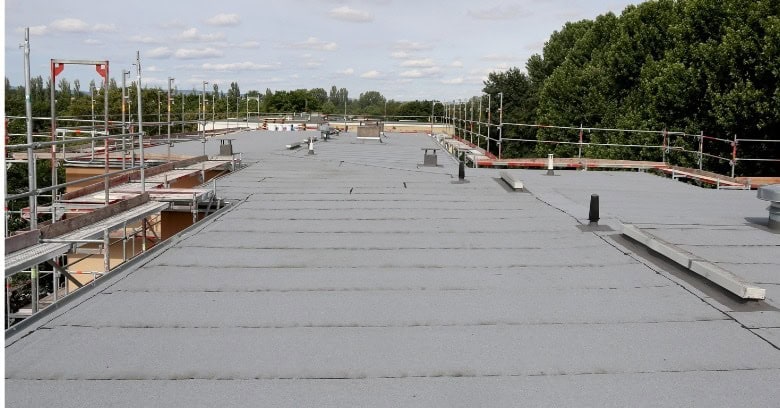
What people call a flat roof is built to fall slightly toward an outlet, and a quarter inch per horizontal foot is what codes generally require. Carpenters can set the change in height into the rafters, or tapered insulation boards can supply the difference on top of the deck.
On a steep roof a storm drains away in moments, whereas a near-flat surface takes far longer to empty, so minor defects see much more contact with water. A cricket, a little peaked saddle, steers runoff around a chimney, so no pool can build on the uphill side.
When Overlaps Fail – Reading the House
Asphalt roofing is permitted by code on two inches of rise per foot or more, and tile calls for a steeper plane still. Below the minimum, wind forces water up under every lap, and nails and decking stay damp for days.
A house can carry shingles up high and a membrane on the low garage, since the steepness under each section decides the covering. A sheet covering acts as one sealed skin from edge to edge, and slow runoff finds no opening to work through.
Materials for a Near-Flat Deck – What Each Is
TPO and EPDM arrive as wide single-ply rolls, and modified bitumen is a polymer asphalt in narrower strips, and built-up roofing alternates felt and tar under gravel. A lightweight membrane puts little load on residential framing, and a crew can check every join closely.
TPO is normally a white plastic membrane, while EPDM is a dark synthetic rubber. The framing, the drains and the equipment above guide the selection, and we say what we recommend and why, and the homeowner chooses.
How the Joins Are Made – Matched to the Material
Across the open expanse, a membrane almost never fails, and trouble gathers where two widths overlap. On TPO, a hot-air welder melts the seams into one piece, and a blunt probe drawn along the joint finds any gap.
EPDM laps are fastened with primer and adhesive tape, and moisture or grime trapped at installation leaves weak adhesion. An aged black-rubber join often curls up at a corner, and a fresh cover strip across the gap restores the barrier.
White or Black – Beyond Looks
A reflective TPO sheet sends a large share of solar heat back up, so an addition beneath stays more comfortable. Black rubber roofing absorbs radiant energy, and the deck beneath warms by evening. Reflecting sunlight helps a great deal in the hot markets we cover, and the effect is smaller at the colder end of our territory.
Gauge – Why Choices Differ
Membrane depth is stated in mils, thousandths of an inch, and 60 sits a step above 45 for house work, with heavier rolls sold for demanding service. More substance on top copes better with a stray screw, and the deeper body lasts longer in strong sunshine. A slim and a heavy grade look identical from the ground, so the written scope lists the mil rating.
Under the Top Layer – the Parts in Order
A cover board commonly lies directly under the membrane, and rigid insulation fills the next level down, and the deck, plywood on a typical house, carries the whole. A foam core cuts heat moving through the ceiling, and each extra inch adds R-value. Saturated insulation stops doing the job and grows heavy, and a watertight membrane overhead holds the dampness in for years. A meter, an infrared scan or a small core cut maps the affected zone, since the surface can look perfectly normal.
The Changeover – Order Matters
Where a porch butts a steeper roof, the membrane climbs beneath the courses, and rain sheds from above onto the membrane. The sheet's top edge is shielded from the weather, and caulk plays no part as the barrier.
A membrane run over the tabs rather than under catches water behind, and a hard storm drives moisture into the framing. Wet drywall where the porch ceiling meets the house often leads back to a reversed junction, and the proper repair redoes the detail from the eave up.
Securing the Border – Held Tight
On a low roof, suction builds at the corners and the perimeter, and a loose section can be torn back in one long piece. Bent metal grips the sheet all along the outside, and a lower lip drops rain cleanly into the gutter.
At a wall, the top of the membrane is anchored by a termination bar, and a sealant bead keeps water from getting in behind, and counterflashing overhead keeps rain off the joint. A kinked piece of trim or a backed-out nail is a repair job, because a firm perimeter keeps gusts from prying underneath.
Low Walls Around the Deck – Built to Drain
The membrane turns up the inner face as base flashing, and a counterflashing strip covers the turned-up edge. The parapet is topped with a coping, with an inward pitch that drains runoff onto the roof.
Separated joints along the crest channel rainfall into the wall, and the stain may appear well below the opening. Brick needs repointing wherever mortar has cracked, and framing under stucco depends on sealed corners and a tight top.
Drains – Clear and Working
A low roof sheds runoff by an inside outlet, a scupper through a wall or an edge gutter, and a blockage at any opening leaves water standing. A shallow sump holds the interior drain under a domed strainer, and a pipe takes the flow down through the house to the yard or a storm line.
A secondary scupper is set above the main outlet, and parapet-enclosed roofs need a second way out by code. A service visit includes clearing strainers and gutter throats, and a displaced dome is secured over the drain.
Standing Pools – the Trouble Explained
The trade calls rain on a membrane two days after a storm a defect, and the source is a sunken deck or a stopped outlet. A submerged area of membrane weathers faster than the rest, and grime and algae take hold. A few inches of rain across a porch roof are heavy enough to flex the joists, and a deeper sag catches more rain in the next storm.
A new membrane alone does not cure a roof that ponds, so the true correction is tapered insulation, a cricket or an added drain. Which remedy suits depends on the joists and any route for new piping, and the plan is settled on the roof with a level.
Punctures and Cuts: Caught Early
A slim sheet can be nicked the week after installation, and a loose fastener underfoot or a dropped blade is enough. Large hail at the colder end of our territory can crack a brittle old membrane, and branches carried by wind can gouge a surface anywhere.
A small slit found quickly is handled with a patch, but a gap left open through a wet season soaks the insulation below. Pinholes show up only on a slow, close walk of the field, because a quick look from the ladder skips tiny punctures.
Protecting the Route – a Sacrificial Layer
A membrane is a watertight skin and was never meant as flooring, and repeated trips to the air conditioner on the roof grind at the surface. Heavy pads are welded or glued down along the route to the units, so the strips absorb the abrasion instead of the membrane. Where mechanical gear sits up top, the scope includes traffic protection, and technicians are asked to stay on the marked lane.
Raised Decking: Weight and Access
Pavers on adjustable pedestals keep chairs and tables off the membrane, and water passes freely below. Deep planters call for a look at what the framing can support, because wet earth weighs far more than dry earth.
Each paver can be lifted off by hand, so the membrane below can be reached without tearing anything out.
Openings for Equipment: Closing Each Opening
A plumbing vent gets a molded boot of matching membrane, and a stainless clamp tightens the collar around the stack. Skylights and units are mounted on curbs framed up from the deck, and metal capping covers the upturned membrane on each side. A bracket or cable bundle that no boot fits goes into a pitch pocket, which is a small dam packed with sealant.
The fill settles and cracks over several seasons, and adding more is routine maintenance.
Patch or Replace – Where the Line Falls
A leaking membrane generally has one small point of entry, and a matching piece set over the gap closes the membrane properly. On TPO the overlay is welded down and tested with a probe, and an EPDM cover is primed and taped with rounded corners.
Replacement is the better choice once many seams are failing, or the membrane has turned brittle, or much of the insulation below is waterlogged. We give a straight recommendation, and meter readings and photographs support the verdict.
Add a Layer or Start Clean – Choosing the Route
A replacement membrane can sit over the existing roof with a board between, and codes allow the method only where a single covering is present. An overlay calls for insulation that is dry, because moisture closed in continues to rot the wood below.
A tear-off takes all old material off the deck, and soft spots can be mended and given proper fall, and a roof with two coverings must be stripped by code. Moisture readings and the number of layers on the house settle the route, and the findings are written up before any decision.
Aging Up Top: the Forces Involved
Pooled rain, ultraviolet light and daily temperature swings gradually weaken a membrane, and boots on the way to units leave worn tracks across the field. Yearly attention to strainers and pitch pockets lengthens the working span, and early patching of small cuts protects the insulation.
Clues Worth Heeding: What to Notice
- A yellowed patch on the ceiling under the porch roof, which shows moisture has soaked through the insulation.
- Water spilling from an overflow scupper during rain, which suggests the main outlet is plugged.
- Edge metal bent or lifted after high wind, a spot where the membrane may start coming away.
- A green film at the edge of the roof, a clue that runoff lingers up top.
- A visible sag along the porch line from the lawn, an indication that pooled water is bending the deck.
- Puffy blisters glimpsed from a window overlooking the membrane, brought on by trapped moisture or a failed bond.
- Discolored lines running down beneath a parapet, commonly caused by open coping joints.
- Damp drywall where the porch ceiling meets the house front, which usually means the tie-in needs rebuilding.
How APC Roofing Tackles TPO Roofing in Kansas City Missouri – Step by Step
We look first at the drainage: outlets, strainers and low spots, and the laps follow, probed along the full run. Edge metal, parapets, curbs and pitch pockets get examined afterward, and during an active leak, meter readings and a core cut test the insulation.
Everything we find goes into a written report with photographs, and each component gets a plain verdict. If a repair is enough, we say so, and a failing membrane is described frankly.
TPO Roofing for Homes in Kansas City Missouri: Roofers Who Know Membranes
Call us at 913-398-5020 and we will schedule a visit to the property.
Coatings Over an Old Sheet: Good Uses and Bad
Rolled or sprayed fluid can go over an existing membrane, and the liquid cures into a jointless skin. On a watertight roof, a coat reflects sunlight and adds service, but over wet insulation or open laps the layer only covers up trouble.
Silicone copes with ponded rain, but acrylic loses adhesion where puddles stay. Cleaning, priming and patching account for the bulk of the labor, because a layer over dust or chalky residue peels away. We tell you directly when a coating is a sensible choice, and when the membrane needs repair or replacement instead.
Weather and Scheduling: Setting the Dates
EPDM tape and primer must go onto a dry surface, and a chilly spell slows the adhesive's grab. TPO welds form well on a brisk morning, but rain brings every membrane installation to a stop.
A quick repair needs only a short dry window, whereas a full replacement depends on several settled days. Work areas are closed watertight before the crew leaves each evening, so the interior stays safe overnight.
For work on TPO Roofing in Kansas City Missouri, call APC Roofing at 913-398-5020. A roofer goes over the membrane, the outlets and the edge metal, and the findings arrive in writing so you can decide.