Searching for Metal Roof Repair Across Kansas City Metro Area?
APC Roofing builds and maintains coverings made of coated sheet and aluminum, whether for a shop, a porch or a whole house.
Call us at 913-398-5020 and someone who knows the trade will come out to take a look.
Identifying a System: Hints in Plain Sight
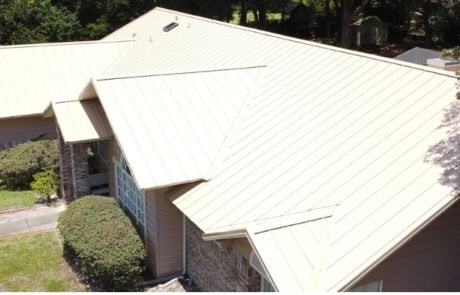
A corrugated or ribbed covering is secured with screws set through the metal, while standing seam is attached with clips tucked inside raised joints. On homes the metal is usually coated steel, with aluminum and copper turning up less often.
Seen from a sidewalk, dotted lines of screws signal an exposed-fastener system, while plain pans and tall ribs with nothing in sight are standing seam. Pole buildings, sheds and porches frequently get ribbed sheet, though a house can suit either.
Shapes Rolled Into Steel: Old Look, New Look
A corrugated sheet curves up and down in regular round waves, and ribbed panels pair tall square ribs with broad flat areas. One length rides over a neighbor at a side lap, and fastener placement follows a published pattern.
Ribs make a stiffer panel that crosses longer spans, and corrugated remains popular for a traditional farm look. Rib height governs how much water a long slope can move, while a low pattern handles short runs like a porch or lean-to.
What Keeps Sheet Down – Why Installation Matters
Each screw draws a panel snug against a rafter or purlin, and a washer under each head keeps rain out. Synthetic rubber ages in the sun, going hard and then cracking, and the panels usually last a great deal longer.
A screw set too tight crushes a washer out sideways, and a shallow or off-square setting never seals fully.
Fresh Fasteners: Part of Upkeep
Every washer across a ribbed or corrugated field weathers at the same rate, so at some stage all seals get changed. Every existing fastener is removed, and a slightly fatter screw goes into each hole so a thread bites fresh wood or steel.
A full re-screw with new washers closes leaks at each head and tightens loose sheets, but corrosion, parted laps and bad flashing are left as found. Screw style depends on what lies beneath, with coarse threads for wood and self-drilling tips for steel, and a factory color on every top suits most finishes.
Thermal Movement: Oval Holes and Loose Seals
Steel swells with heat and draws back as temperatures fall, and a forty-foot run can shift a quarter inch or more, and aluminum changes nearly twice as much. Metal screwed down with no give wears each hole into an oval, and washers then stop sealing.
Popping and clicking on a sunny morning is expansion at work, and nothing is damaged where every detail allows for slack.
Under Upright Joints – Out of Sight
A long pan is locked down at a single band, and floating clips everywhere else let the pan glide. At an unanchored end, trim is bent with clearance, whereas a pan with no play lets go or distorts.
A pan is positioned and clips are screwed to the deck beside a long edge, so nothing that holds the roof down is left exposed.
Joint Styles – Suited to Pitch
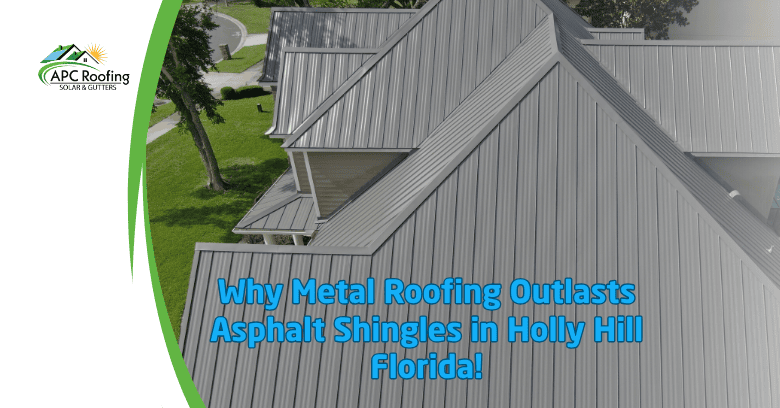
Snap-together panels latch by hand, while machine-rolled designs get folded over by a motorized seamer. A double-lock seam rides out storms and sheds pooled water, and maker approvals cover shallower slopes.
Every product line has distinct spacing and rib size, and a choice depends on the home and a preferred style. Accessories such as clips and closures fit a single system, and a mismatch shows up as gaps and loose joints.
Light or Heavy – Worth Confirming
Coil for roofing is sold by gauge, and a smaller number means a thicker sheet. Outbuildings commonly get twenty-nine, while twenty-six and twenty-four are typical choices for houses.
Aluminum is specified in thousandths of an inch instead, and across the board thicker goods resist dents and ripple less. Standing in a yard, nobody can judge weight by eye, so printed product data gives a firm answer.
Corrosion Defense: What Lasts
Raw steel is galvanized, or given an aluminum-zinc treatment, before shipping, and a primer and a colored enamel are baked over the metal. A mark in a topcoat alone keeps steel protected, but a sheared edge exposes steel that will corrode.
PVDF systems keep color and gloss for decades, while polyester versions chalk and fade sooner. Wet masonry corrodes aluminum-zinc coated sheet, so panels are kept away from a new chimney or stone wall.
Base Material – Trade-Offs
Aluminum is light and free of red rust, though a thicker grade is needed to resist dents. Close to salt water, at the coastal end of our range, metallic coatings break down faster, and manufacturers set limits on how near a shoreline a product may go.
Copper turns up chiefly on bay windows, dormers and entry roofs, and left unpainted, the metal darkens with age.
Metals That React – Matching or Separating
A copper pipe or flashing above steel sends corrosive drainage down over the panels, and staining shows up well ahead of pinholes. Aluminum laid against treated lumber corrodes at every contact point, and an ordinary screw of an unsuited alloy fails as well.
Any added flashing or trim should be the same metal as what is up there, or a plastic barrier divides unmatched metals.
Looks, Not Leaks – Surface, Not Structure
In trade terms, oil canning describes soft ripples across a broad flat between seams, and a midday sun hides what a low evening sun reveals. An irregular-looking finish keeps weather out just as well, and service life is unaffected.
Striations, heavier stock and narrower pans keep rippling in check, and a deck without humps or dips matters too. Photos of finished roofs give a fair idea of how much oil canning shows, and the final pick is yours.
For People Inside: What Reaches Living Space
Panels laid straight over bare purlins ring out in a downpour, as no material absorbs vibration. Residential metal goes over plywood and underlayment, with insulation above each ceiling, and in a living room few can pick out any change from shingles.
Light tones and cool pigments bounce a large share of sunlight away, so the space under the roof runs cooler. A deep hue absorbs heat like any dark surface, and venting and insulation under the deck do as much for comfort as color. Within an hour of sundown, a metal covering is cool, and an attic beneath follows suit.
Guard Rows: Above Entries and Paths
Across the colder end of our territory, snow does not cling to painted steel, and a single release can take out a gutter or strike someone nearby. Guards break a load into small harmless chunks, and a doorway, walkway or meter below decides placement.
For standing seam, bolted clamps grip each upright joint, while ribbed or corrugated sheet takes mounts driven into structure with sealing washers, and in milder markets roofs do without.
Pounding From the Sky: When Paint Cracks
Hail is common across the colder end of our territory, and heavier grades with stiffening ribs shrug off more stones. A strike sharp enough to break a finish lets rust start, and a trim piece pushed out of place can channel rain inside.
Once a storm has passed, a roofer photographs and measures every mark, and each dent and damaged panel is located.
Holding On in a Gale – A Denser Pattern
Corners and borders see heavy suction, an open field much less, and air that gets under a loose edge can peel a sheet back. Trim along every outer line is hemmed and hooked onto a continuous cleat, so nothing sticks out to be grabbed.
Fasteners go in closer together near corners and a roof's rim, set by a maker's tested layout for each exposure. On the hurricane coast at the far end of our territory, fastening counts rise again, and only systems with a high wind rating qualify.
Where Something Pokes Through: Sealant as Backup
A flexible boot is formed around every rib and banded tight to a pipe, and a hole is cut in a flat, not through a seam. A bigger penetration is framed with a curb and a small cricket upslope, and water from higher up is divided and sent past.
Sealant backs up flashing and never stands in for folded metal, because sunlight dries and cracks sealing compounds within a few years.
Channels Between Roof Planes – Joining Long Runs
Each valley gets a separate pan in advance of the panels, and sheets are cut on a diagonal to suit. Every raw end is turned under and caught by a cleat, and nothing pierces a channel that carries rain.
On a run too long for one sheet, an endlap joins pieces with sealant between, and fasteners pass through both thicknesses, with uphill metal on top.
Additions and Wings: Gentle Spots on a House
Most ribbed sheet is specified for about three in twelve or steeper, because on less, runoff lingers long enough to wick past laps. A mechanically locked seam can be installed far lower, and a few products go almost to flat.
Houses frequently include a porch or wing with a gentle roof, and a measurement comes before any panel is named, and anything under a panel's limit is finished in a membrane.
A Base Layer: Rot and Spacing
Residential panels are laid on a solid deck, and a synthetic sheet rated for heat is sandwiched between, as asphalt felt turns brittle up there. Pole buildings commonly have metal spanning between purlins with air below, and distance between supports sets a minimum gauge.
With an old roof gone, damaged sheathing is cut away and rebuilt, since a clip in decayed wood holds nothing.
A Recover Instead of a Strip – Battens and Underlayment
Many building codes allow metal over a single layer of asphalt shingles, so the house is spared a tear-off and debris. Sheet steel is light, at well under two pounds a square foot, so most framing takes extra weight without reinforcement. Battens on top of a synthetic membrane are laid across existing shingles, and screws reach through into solid wood.
Where a roof was already recovered once, or the decking is soft, everything comes off, because a problem covered with steel keeps growing out of sight.
Finishing Pieces: All Around
Strips cut to match a profile close off space under each rib at high and low points, and wind-driven rain, wasps and birds stay out. A ridge piece either breathes or is left solid, and attic ventilation is what decides.
Rake trim, drip edge and an apron into a gutter close off a roof's outline, and runoff is steered clear of a fascia board.
Care on Site: Handling and Footing
Standing seam panels are formed at full slope length, so no crosswise joint sits in the path of runoff. A long panel calls for several people spaced along the metal, and a crimped or creased pan is no longer usable.
A foot goes only in flats directly above supports, as a seam under a boot can bend open. Moisture turns a painted panel into a slide, and nobody without a harness should go up.
Signs Worth a Call: Without Climbing Up
- Brown rings at fastener heads, partway down a pitch.
- A row of lifted screws, mid-panel.
- A rake edge torn free, above a porch.
- A boot pulled away from a pipe, by a bathroom fan.
- Corrosion along a cut, next to a skylight.
- Uneven fading, on a south exposure.
- A drip that follows a row of screws, in an upstairs bedroom.
- A lap that has separated, at the low end of a panel.
How APC Roofing Approaches Metal Roof Repair in Kansas City Metro Area: What Happens on a Visit
Our starting point is pinning down which system is up there and how the panels are secured, and then every screw or clip, edge, opening, valley and lap is checked. We note thickness, coating and hardware along the way, and from inside, the attic shows any old leaks.
Findings come to you in a report with pictures, and a reason sits beside every recommendation. If new fasteners are enough, that is what we suggest, and a finished roof is described without softening.
Metal Roof Repair in Kansas City Metro Area: A Careful Look
Call 913-398-5020 and we will schedule an inspection.
Keeping the Roof – When a Tear-Off Makes Sense
A single ruined panel can come out and a sound panel go in, although new paint never quite matches older metal. Replacing a cracked boot deals with water at a pipe, while new fasteners seal screw holes again.
Rust through sheet after sheet calls for a new covering, and a covering with every joint and collar given out is no different. Redoing one face of the house is a middle path, when damage stays in one place.
Longevity: Watching Details
Properly installed panels regularly reach forty years, but estimates of service are a rough guide only. Standing seam asks for less attention, with no hardware exposed, whereas screw-down sheet has washers changed out at some point.
Dissimilar metals, raw edges and sealant used instead of proper flashing wear out a covering ahead of schedule, and an occasional walk-over catches problems promptly. Wet leaves left sitting on panels stain and dull a colored finish, so getting debris off the panels is worth the effort.
For a roofer's view on Metal Roof Repair in Kansas City Metro Area, get hold of APC Roofing at 913-398-5020. Someone will go over every panel, fastener and piece of trim, and a write-up leaves every decision in your hands.