The roof over your Florida room leaks every time an afternoon storm blows through. Or the porch roof was covered in shingles that were never meant for a slope that low, and now there’s a water stain on the ceiling and a soft spot by the door. If you’re looking at flat roof installation in Clermont, you’re probably tired of patching and want a roof you can stop thinking about.
It’s hard to know who to trust with a flat roof. Most homeowners have never had one installed, the materials have names that sound alike, and a bad install often looks fine for a year before it starts to leak. You deserve a straight explanation of your options before you pay for anything.
APC Roofing is GAF Certified, licensed in Florida (CCC1337030) and insured, and we’ve been roofing in Central Florida since 2017. Your inspection and estimate are free.
When you need a true flat roof system
Shingles and tile shed water because each piece overlaps the one below it on a steep enough slope. Below a certain pitch, water moves too slowly and wind can push it back up under the overlaps. Most shingle makers call for a minimum slope of around 2 in 12, and many low porch roofs around Clermont sit below that.
Those low spots need a continuous membrane instead, a single watertight layer with sealed seams. In and around Clermont that usually means:
- Screened porches, lanais and Florida rooms tied into the main house
- Carports and covered patios
- Additions with a low roofline
- Flat-roofed homes and small commercial buildings
Choosing a membrane for a Clermont flat roof
TPO is a white single-ply membrane with heat-welded seams. The white surface reflects a lot of the Central Florida sun, which keeps the roof cooler and can help the room below. Learn more about TPO roofing in Clermont.
EPDM is a rubber membrane, usually black, with seams that are glued or taped. It’s flexible and simple to repair. See our EPDM roofing in Clermont page.
Built-up and other membrane roofs use several layers of asphalt-based material and are still common on older commercial buildings.
On a house, the choice usually comes down to how much sun the roof gets, how it ties into the rest of your roof and how it looks from a second-story window. You’ll hear a recommendation and the reason for it.
Drainage gets designed in, not fixed later
Flat roofs aren’t really flat. A well-built one has a slight pitch so water runs to an edge, a gutter, a scupper or a drain. The most common flat roof problem in Florida is ponding: water that sits in low spots after a storm, ages the membrane faster and finds any weak seam.
A new installation is the one chance to get drainage right. That can mean tapered insulation boards that build in slope, a small raised section called a cricket that steers water around a wall or chimney, or a bigger scupper and downspout where water collects. Fixing drainage after the fact is much harder.
Where the flat roof meets the house
On a porch or addition, the trickiest part of a flat roof installation is the tie-in. That’s the line where the low roof meets the main shingle or tile roof, or runs up against a stucco wall. The membrane has to turn up the wall and get tucked under flashing, and the main roof’s shingles or tile have to lap over the transition so water flows onto the flat roof instead of behind it.
A lot of porch leaks start right there, at the wall or the tie-in, not out in the middle of the roof.
What a flat roof installation in Clermont involves
Every roof is different, but a typical installation goes something like this:
- The old roof comes off down to the deck.
- The deck gets checked, and soft or rotted wood gets replaced.
- Insulation or a cover board goes down, tapered where the roof needs more slope.
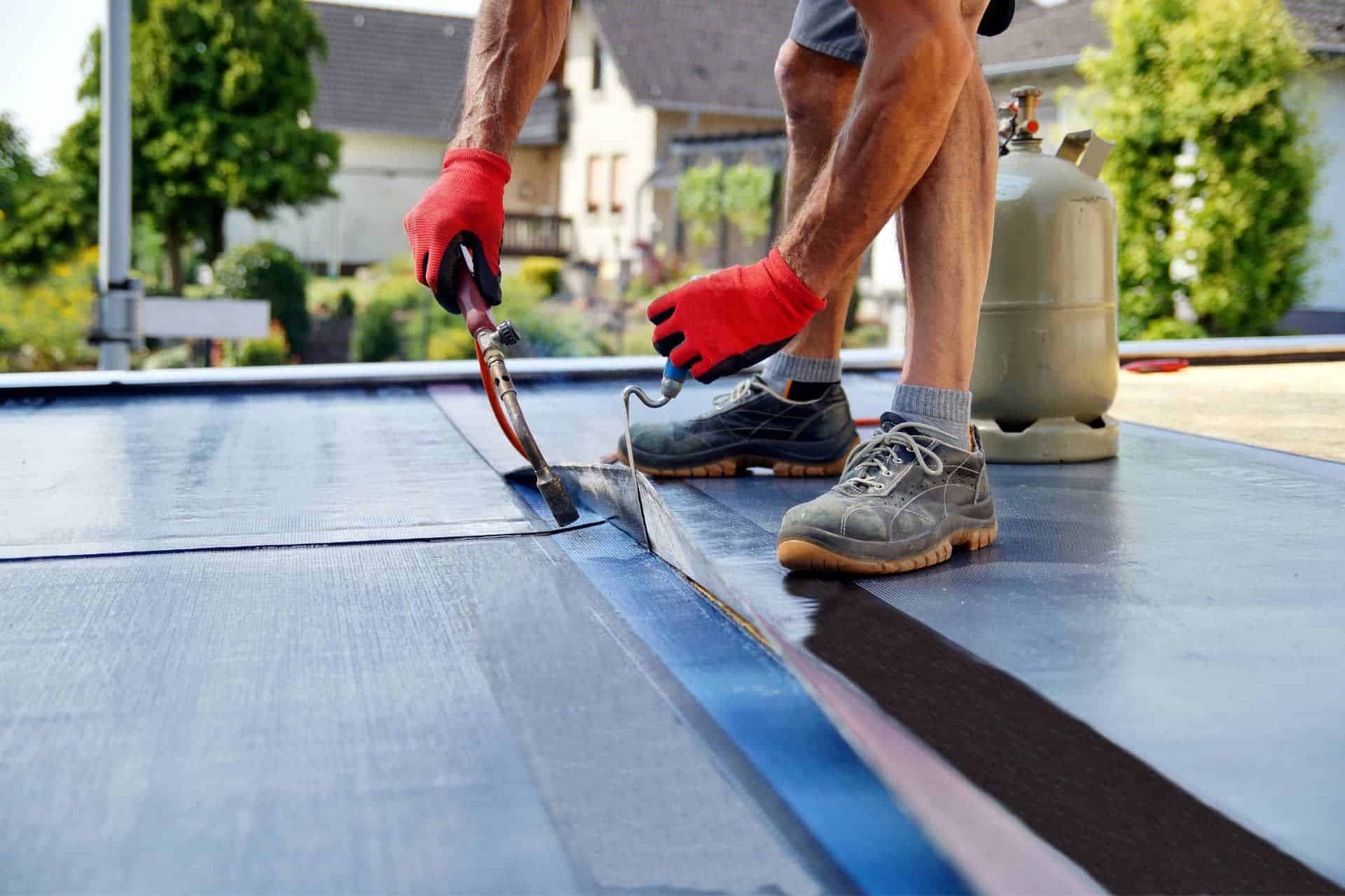
- The membrane is laid and its seams are welded or sealed.
- Walls, pipes, edges and drains get flashed, and new edge metal goes on.
Timing depends on the size of the roof and the weather. Summer afternoon storms in Lake County are a real factor with any flat roof job, so the schedule follows the forecast. You’ll get a realistic timeline with your estimate.
How it works
- Book your free inspection. Call 407-270-1129 or request an estimate online.
- Get a clear, honest assessment and estimate. We look at the slope, the deck, the tie-ins and the drainage, and you’ll get photos and a written estimate. Sometimes a flat roof repair is all you need, and you’ll hear that if it’s true.
- The roof gets done and the site gets cleaned up. If it helps, financing is available through Aqua Finance, Fortifi, Hearth and Home Run Finance.
A small flat roof leak doesn’t stay small for long in Florida. Water that gets under the membrane soaks the deck and ceiling below, and a porch ceiling can sag or grow mold before you see a drip.
Flat roof installation questions from Clermont homeowners
Can you put shingles on my low porch roof?
Not if the slope is too low for them. Shingles on a very low pitch are one of the most common reasons porch roofs leak. A membrane is the right material there.
Is TPO or EPDM better for a Florida porch?
Both work. TPO’s white surface stays cooler in the sun, which many Florida homeowners like. EPDM is flexible and easy to repair. The best choice depends on your roof and how it ties into the house.
Can a new flat roof go over my old one?
Sometimes, if the old roof is dry and there’s only one layer. If water has gotten into the old roof or the deck, it needs to come off.
Will the new flat roof match my main roof?
A membrane won’t look like shingles or tile, but most flat roofs can’t be seen from the ground. If yours can, ask about color options before you choose.
Book your free flat roof inspection in Clermont
Call 407-270-1129 or request your free estimate online. See our flat roofing in Clermont page for repairs and other low-slope work.
The goal is a porch you can sit on during a summer storm, a dry ceiling and a roof you don’t have to check every time it rains.