If there’s a black rubber roof over your porch, garage or back addition, it’s probably EPDM. It may have done its job quietly for years. Now a seam is curling at the corner, the edge looks loose, or there’s a damp spot on the ceiling after a storm, and you’re wondering whether that rubber can be saved or has to come off.
APC Roofing handles EPDM roofing in Clermont, from small seam repairs to full replacement, and you’ll get an honest answer on which one your roof needs. APC is GAF Certified, licensed in Florida (CCC1337030) and insured. The inspection is free, and you’ll get photos of what your roofer finds.
What EPDM is and where you’ll find it
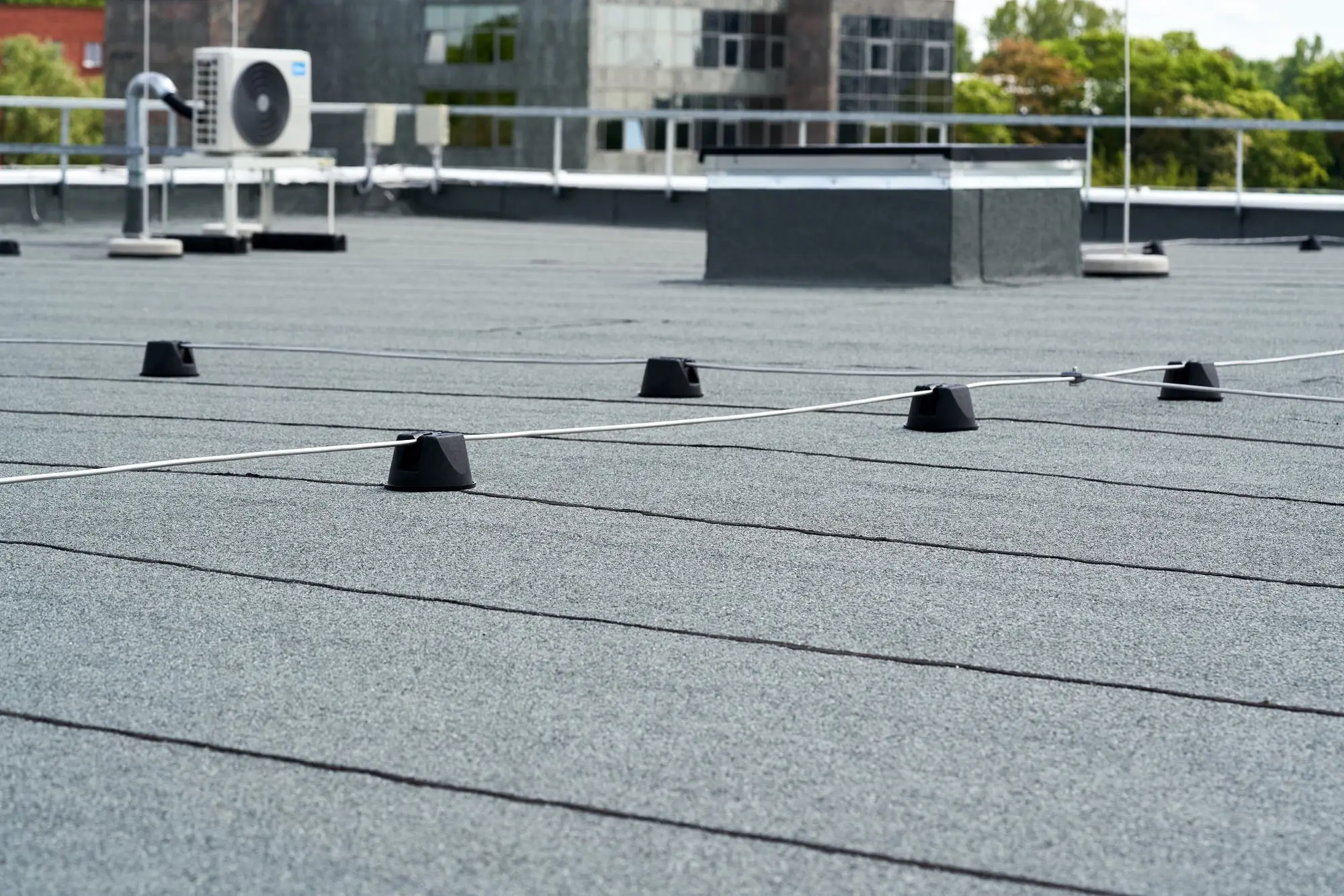
EPDM is a synthetic rubber membrane, usually black, that comes in wide rolls. It’s laid over a low-slope deck as one continuous sheet, so rain can sit on the surface without finding a gap. On Clermont homes, it most often covers sections that are too flat for shingles or tile: porches, carports, Florida rooms, garages and rear additions.
A rubber roof is flexible, holds up well to the temperature swings between a hot afternoon and a cooler night, and is simple to patch when something punctures it. The trade-off in Central Florida is heat. A black surface absorbs a lot of sun, so the deck under it gets hot and stays warm into the evening. If the room under your flat roof is hard to keep cool, that’s worth weighing when it’s time to replace. A white TPO roof reflects much of that heat instead.
How EPDM roofs wear out in Florida
Most EPDM problems start at the seams. Where two sheets overlap, the joint is sealed with primer and seam tape. If the surface was dusty or damp when the seam was made, the bond was weak from the start. Even a good seam ages, and on older rubber roofs the laps tend to curl back at the ends.
The edges are next. Wind pulls hardest at the corners and perimeter of a low roof, and summer storms bring plenty of wind. If the edge metal loosens or the fasteners back out, the wind can get under the membrane and start peeling it back.
Then there’s everything that passes through the roof: plumbing vents, AC lines and brackets. Each one is sealed with a boot or a small pocket of sealant, and that sealant shrinks and cracks over time.
Standing water speeds all of this up. Rain still sitting on a membrane two days after a storm usually means a clogged drain or a sagging deck, and the wet patch collects dirt and algae while the rubber under it ages faster.
Repair or replace your rubber roof
A single opened seam, a puncture or a loose edge is usually a repair. On EPDM, the area is cleaned, primed and covered with a patch that has rounded corners so it won’t lift. A pipe boot can be swapped on its own.
Replacement makes more sense when:
- Seams are failing in several places, not just one
- The rubber has shrunk and is pulling away from the edges and walls
- Moisture readings show wet insulation across a large area
- The same leak keeps coming back after repairs
Wet insulation is the part you can’t see. The membrane can look fine from the ladder while the layer underneath holds water. That’s why, when a rubber roof is leaking, the inspection includes moisture readings, so you’re not paying to patch a roof that’s already soaked below. If a repair is enough, you’ll hear that from us. Our flat roof repair page goes deeper on how leaks get traced.
The edge, the fascia and the gutter
A lot of flat roof trouble starts at the edge. On a flat roof, the membrane wraps over the edge and is held by metal trim, which also guides water into the gutter. If that trim has been loose or water has been running behind the gutter for a while, the fascia board behind it often goes soft. APC Roofing also repairs fascia and soffits, so if we find rotted wood at the edge during an EPDM job, you’ll see it in the photos and it gets priced as its own line item.
Why weather matters for EPDM work
Seam primer and tape need a clean, dry surface to bond. In a Clermont summer, that usually means working in the morning and keeping an eye on the afternoon forecast. A quick repair fits a short dry window. A full replacement needs a few settled days. Any section that’s opened up gets sealed watertight before the crew leaves for the day.
How it works
- Book your free inspection. Call 407-270-1129 or request a free estimate online.
- Get a clear, honest assessment and estimate. You’ll see photos of the seams, edges and drains, along with moisture readings, and get a written estimate for a repair or a new roof. Financing is available through Aqua Finance, Fortifi, Hearth and Home Run Finance.
- Your roof gets done and the site gets cleaned up. The crew handles the work and cleans up before leaving.
A curled seam on a rubber roof is a small repair today. Left through a rainy season, it can let water into the insulation and turn a patch into a tear-off.
Questions about EPDM roofing in Clermont
Can an old EPDM roof be patched?
Usually, if the rubber is still flexible and the insulation underneath is dry. If the membrane has gone brittle or shrunk badly, a patch won’t hold well.
Can a new roof go over my old EPDM?
Building codes generally allow one new membrane over one existing roof, but only if the insulation underneath is dry. If it’s wet, or there are already two layers, everything comes off down to the deck.
Should I replace my EPDM with EPDM or switch to TPO?
Both are good flat roof membranes. If the room underneath runs hot, many Clermont homeowners choose white TPO. You’ll get our recommendation and the reason for it.
Does a rubber roof need maintenance?
A little. Keep drains and gutters clear, and have the seams, edges and pipe boots checked now and then, especially after a strong storm.
Get your rubber roof looked at
Call 407-270-1129 to schedule a free EPDM roof inspection, or request your estimate online. For an overview of every low-slope option, see our Clermont flat roofing page.
You’ll come away knowing exactly what’s going on over your porch or addition and what it’ll take to keep it dry.