Most Clermont homes with a flat roof only have a little of it. It’s the low section over the back porch, the Florida room someone added years ago, the carport or the garage. Nobody thinks about it until a ceiling corner turns brown after a summer storm, and then it’s hard to know who to call, because the roofer who did your shingles may not work on membranes at all.
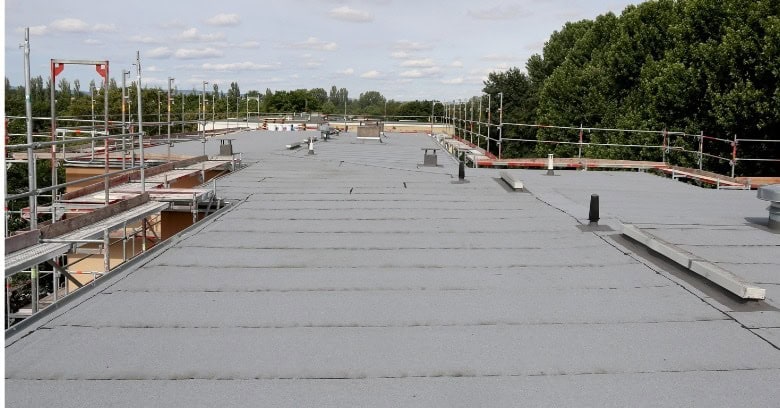
If that’s where you are, you need someone who understands flat roofing in Clermont, FL and will tell you straight whether that section needs a patch or a new membrane. APC Roofing works on both steep and low-slope roofs, so the spot where your flat section meets the main roof gets handled as one job. APC Roofing is GAF Certified, licensed in Florida (CCC1337030) and insured, and your inspection is free.
Why flat roofs leak more often than the rest of the house
A shingle roof sheds water in seconds. A low-slope roof holds it longer, and in Central Florida that matters. A summer afternoon storm can drop a lot of rain in a short window, and while the main roof is already dry, the porch membrane is still wet an hour later. Every seam and fastener up there spends more time underwater.
A flat roof isn’t truly flat. Building codes generally call for at least a quarter inch of fall per foot so water heads toward a drain, scupper or gutter. When framing sags or a drain clogs with oak leaves, water sits. Standing water that’s still there two days after a storm is a defect by trade standards. It ages the membrane faster, grows algae and adds weight to the framing below.
Then there’s the sun. Year-round UV and heat break down roofing materials over time, and a low roof takes that heat all day with no shade from a pitch.
The flat roof systems we install in Clermont
Shingles and tile need a steeper slope to work. Asphalt shingles generally need at least 2 inches of rise per foot, and tile needs more. Below that, wind-driven rain gets pushed up under the laps. That’s why so many Clermont homes pair a shingle or tile main roof with a membrane over the low sections.
Here’s how the main options compare:
- TPO roofing. A white single-ply membrane with heat-welded seams. It reflects much of the sun’s heat, which helps the room underneath stay cooler in a Florida summer.
- EPDM roofing. A black synthetic rubber membrane with seams sealed by primer and tape. It’s flexible and simple to patch, though dark rubber absorbs more heat.
- Modified bitumen. Polymer-modified asphalt laid in narrower rolls. You’ll find it on many older porch and carport roofs.
- Built-up roofing. Layers of felt and asphalt, usually topped with gravel. It’s more common on commercial buildings than homes.
The right choice depends on the deck, how the roof drains, whether anything sits on it (like an AC unit) and how much heat reaches the room below. You’ll get our recommendation and the reasons for it, and you make the call.
Repair, recover or replace
When a flat roof leaks, the cause is usually one spot: a seam that’s opened, a puncture, a cracked boot around a pipe or a failed edge. A properly sealed patch can fix that for years. The flat roof repair page explains how those leaks get found and fixed.
Replacement makes more sense when seams are failing all over, the membrane has gone brittle or large areas of insulation are soaked. Wet insulation is the tricky part. The surface can look fine while the layer underneath holds water, so your inspection includes moisture readings, and sometimes a small core sample, before anyone recommends a fix.
There’s also a middle option. Building codes generally allow one new membrane over one existing roof, as long as the insulation underneath is dry. If there are already two layers, or the old roof is wet, everything comes off down to the deck. That’s when soft decking gets replaced and drainage gets corrected.
The detail most flat roof leaks start at
Watch the line where your porch or addition meets the main roof. The membrane should run up under the shingles or tile so water from above lands on top of it. When it’s done backwards, with the membrane lapped over the bottom row, rain runs in behind it. A wet stripe on the porch ceiling right next to the house is a classic sign. Because we handle both the main roof and the flat section, that tie-in gets rebuilt correctly instead of caulked.
How it works
- Book your free inspection. Call 407-270-1129 or request a free estimate online. Your roofer checks drainage, seams, edges, pipe boots and the tie-in to the main roof.
- Get a clear, honest assessment and estimate. You’ll see photos, hear whether it’s a repair or a replacement and get a written estimate. Financing is available through Aqua Finance, Fortifi, Hearth and Home Run Finance.
- Your roof gets done and the site gets cleaned up. Membrane work is scheduled around the forecast, since seams need dry conditions, and any open section is sealed watertight before the crew leaves for the day.
A small flat roof leak doesn’t stay small for long. Water that gets into the insulation spreads sideways and can soften the deck over a rainy season. Having it checked early usually keeps the fix simple.
Flat roofing questions from Clermont homeowners
Can you put shingles on my low porch roof?
Not if the pitch is under what the shingle maker allows, which is generally 2 inches of rise per foot. Shingles on a roof that low tend to leak. A membrane is the right material there.
Is TPO or EPDM better in Florida?
Both work. TPO’s white surface reflects more heat, which many Clermont homeowners like for the room below. EPDM is flexible and easy to repair. We’ll explain which fits your roof and why.
Why is water pooling on my flat roof?
Usually a clogged drain or scupper, or framing that has sagged. A new membrane alone won’t fix a low spot. Tapered insulation, a cricket or an added drain may be needed.
Do you work on commercial flat roofs too?
Yes. APC Roofing also handles commercial roofing in Clermont, including TPO, EPDM, built-up and other membrane systems.
Book a free inspection for flat roofing in Clermont, FL
Call 407-270-1129 to book a free flat roof inspection, or start your estimate online. You can also see everything else we do on our Clermont roofing page.
The goal is a low roof that drains, a dry porch ceiling and a written plan you understand before any work starts. Trust matters, and you should never have to guess what’s happening over your head.