Flat Roofing

Searching for Flat Roof Repair in Clermont Florida?

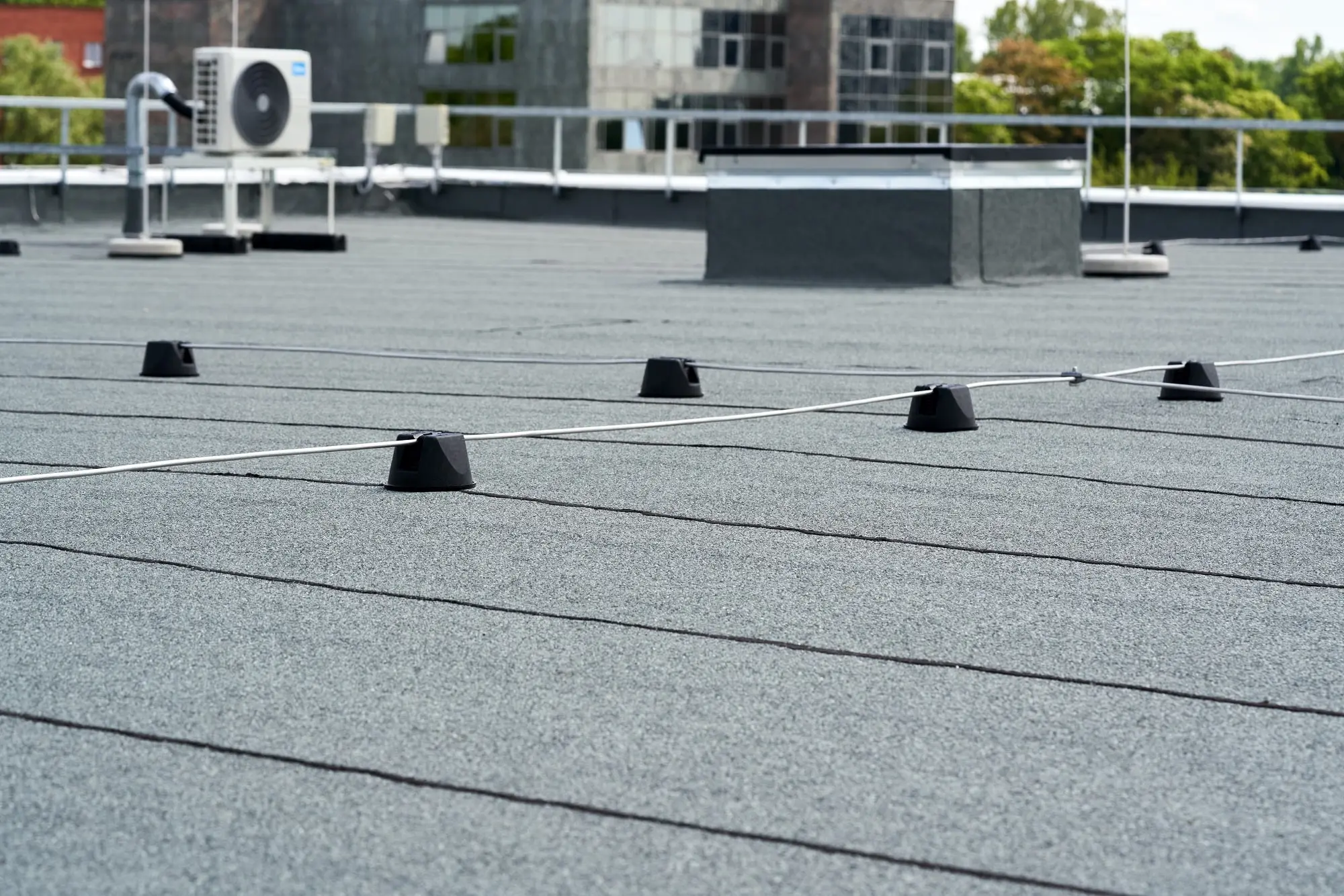
APC Roofing replaces and patches the coverings on shallow slopes, and the jobs are often over garages, porches and sunrooms.

Call us at 407-270-1129 and a roofer will walk the surface and tell you what needs doing.


Runoff by Design: Why Shape Counts

A flat roof is made to tip a little toward a drain or a scupper, and the building code floor for membranes is about a quarter inch per foot. Carpenters can set the change in height into the rafters, or foam panels cut on a taper can add the difference over the deck.

On a steep roof a storm drains away in moments, yet the porch membrane may still be shining an hour later, so each seam sits in moisture long afterward. A peaked saddle called a cricket parts the flow behind anything rising through the deck, and no dam of water forms against the upslope face.

When Overlaps Fail: Porch and Garage Work

Asphalt tabs need at least two inches of rise per foot under building codes, and clay and concrete tile need steeper planes yet. Under the limit, rain blown by wind creeps beneath the overlaps, and the plywood soaks up moisture and softens.

A shingled home often has a garage or addition covered in membrane, because the incline under each section sets the material. Sheet roofing forms one unbroken barrier once the joins are closed, so water can linger without reaching the deck.

Materials for a Near-Flat Deck: a Plain Guide

The single-ply group, TPO and EPDM, is installed from broad rolls, and modified bitumen is asphalt improved with polymers and sold in narrower strips, and built-up roofing stacks felt and hot tar beneath gravel. Light membranes spare the framing over porches and garages, and every join can be probed with a tool.

TPO usually comes as a white plastic sheet, and EPDM is a rubber sheet in black. Which product fits depends on the deck, the drains and any rooftop gear, and we say what we recommend and why, and the homeowner chooses.

How the Joins Are Made: Heat on TPO, Tape on EPDM

Leaks seldom start in the open area of a sheet, and the overlap between neighboring widths is where problems sit. On TPO, a hot-air welder melts the seams into one piece, and a blunt probe drawn along the joint finds any gap.

Each EPDM lap is sealed with primer and tape, so a dusty or damp surface at installation undermines the grip. On an old rubber roof, joins tend to curl at the ends, and a cover strip across the opening keeps water out once more.

Picking a Shade: Felt Indoors

A reflective TPO sheet sends a large share of solar heat back up, and the area below stays cooler. Black rubber roofing absorbs radiant energy, so the framing below climbs in temperature. Reflectance is valuable in the hotter markets we serve, and the gain narrows at the colder end of our territory.

Sheet Thickness – Why Choices Differ

Membranes are measured in mils, each a thousandth of an inch, and 45 or 60 covers ordinary residential work, and heavier rolls exist for hard service. A fuller build resists punctures from a falling tool, and the deeper body endures ultraviolet aging for longer. A slim and a heavy grade look identical from the ground, so the proposal spells out the mil figure.

Under the Top Layer – Piece by Piece

Directly under the membrane, many roofs have a cover board, and rigid insulation comes next, and plywood, steel or concrete forms the deck at the bottom. Foam slows the heat that would otherwise pass through the ceiling, and added thickness raises the R-value. Saturated insulation stops doing the job and grows heavy, and trapped dampness under a sealed membrane has no way out. A meter, an infrared scan or a small core cut maps the affected zone, since the finished surface often gives no sign.

The Transition: the Right Sequence

Where a porch butts a steeper roof, the membrane climbs beneath the courses, so runoff from higher up spills onto the membrane. No part of the sheet's top edge faces the sky, and the joint does not rely on caulk at all.

Membrane laid over the tabs rather than under leaves a lip that funnels water in, and heavy rain finds the framing beneath. Damp drywall in the ceiling corner beside the house frequently points to a reversed junction, and the detail is rebuilt with the shingles lapping over the membrane.

Securing the Border – the Finished Rim

On a low roof, suction builds at the corners and the perimeter, and a lifted piece can let the membrane be ripped away. Edge metal screwed through the sheet holds the rim firm, and the lower lip steers runoff past the fascia into the gutter.

A termination bar anchors the membrane along a wall, and a bead of sealant along the upper side keeps water from running behind, while counterflashing higher up sheds rain over the whole detail. Lifted edge trim or popped fasteners need attention, since a quick refix spares the membrane a blow-off.

Low Walls Around the Deck – Masonry or Framing

The membrane is taken up the inner face to form base flashing, and metal counterflashing laps over the upturned edge. A coping covers the upper surface of the parapet, with a lean toward the roof that keeps water off the exterior.

Gaps between crest sections let water travel down inside the wall, and the moisture then shows up far below. Brick with crumbling mortar needs repointing as well, and framed construction under stucco needs sealed corners and a tight top.

Getting Rain Away: Keeping the Flow Moving

Runoff departs a low roof through an inside outlet, a wall scupper or an edge gutter, and debris lodged at any opening holds water back. A domed strainer covers an interior drain set in a shallow sump, and a vertical pipe through the house brings the flow to ground level.

A backup scupper sits above the main outlet, and parapet-enclosed roofs need a second way out by code. On a maintenance visit, strainers and gutter throats get cleared of debris, and a loose dome gets fixed back over the drain.

Ponding: Slow Harm

Roofers treat rain still sitting on a membrane two days after a storm as a defect, and a sagging deck or a plugged outlet sits behind the problem. Days underwater wear out the sheet faster, and silt and algae collect on the wet patch. The mass of a broad, shallow puddle presses the framing down a little, so the sag grows each time rain gathers.

A fresh sheet over the same framing keeps the same contours, so the correction comes from tapered insulation, a cricket or another drain. The right remedy depends on the framing and where a new pipe could run, and measurements taken with a level settle the plan.

Unplanned Openings – Tracking Down Pinholes

A single-ply sheet can be breached by a sharp object at any age, and a loose fastener underfoot or a dropped blade is enough. At the colder end of our territory, an old membrane can crack under large hailstones, and broken limbs can slash a surface wherever trees overhang.

A small slit found quickly is handled with a patch, but a gap left open through a wet season soaks the insulation below. Pinholes show up only on a slow, close walk of the field, because tiny punctures escape a glance from the ladder.

Protected Paths: Guarding a Busy Strip

A membrane is made to keep out rain, not to carry people, and every visit to the air conditioner on the roof wears the surface slightly. Walkway pads are heat-welded or adhered in a line toward the units, so the strips bear the abrasion rather than the membrane. Traffic protection goes into the scope on any roof with mechanical gear, and service crews are pointed to the marked lane.

Rooftop Flooring: Weight and Access

Pedestals under the pavers hold tables and chairs above the membrane, and the gap below lets rain reach the outlets. Filled planters require a check on what the structure can bear, since soaked earth gets much heavier after rain.

Each paver can be lifted off by hand, so a leak under a patio can be found without breaking anything.

Things That Pass Through – Detail Work

A plumbing vent gets a molded boot of matching membrane, and a clamp draws the collar snug around the stack. Skylights and units are mounted on curbs framed up from the deck, and the membrane turns up all four faces beneath metal. Irregular pieces such as brackets or cable bundles get a pitch pocket, which is a shallow collar of pourable sealant.

The fill pulls back and cracks as seasons pass, and a top-up is part of normal care.

Local Repair or Full Replacement: How the Call Is Made

Membrane leaks tend to trace to one small spot, and a matching piece sealed around the damage restores the surface. On TPO, the overlay is welded and then probed, and on EPDM a primed and taped cover goes on with rounded corners.

Starting over makes sense when seams fail across the field, or the membrane cracks when flexed, or big areas of insulation are wet through. We say plainly which way to go, and pictures and meter results sit behind the verdict.

Overlay or Strip – When Each Makes Sense

A new membrane can go over an old roof with a separator board between, and codes limit the method to houses with a single covering. An overlay only works over dry insulation, because moisture closed in continues to rot the wood below.

A tear-off removes everything down to the bare deck, and soft spots can be mended and given proper fall, and code makes the method compulsory where two coverings sit on the house. Readings from a meter and a tally of layers point to the route, and the findings reach the owner on paper ahead of any choice.

Aging Up Top – Stretching the Useful Span

Daily cycles of heat and cold, ultraviolet light and pooled rain steadily degrade a membrane, and technicians walking to units scuff paths across the field. Clearing strainers and resealing pitch pockets each year adds seasons, and small cuts patched early keep the insulation dry.

Signs Worth a Call: What to Notice

  • A brown ring on a ceiling beneath the low roof, meaning moisture has worked past the insulation.
  • A steady flow from the secondary scupper in a storm, a hint that the main outlet is blocked.
  • Edge metal bent or lifted after high wind, a spot where the membrane may start coming away.
  • Moss or algae streaking the rim, a hint that rain stays put too long.
  • A dip in the roofline from the yard, an indication that pooled water is bending the deck.
  • Puffy blisters glimpsed from a window overlooking the membrane, which suggest trapped moisture or loose adhesion.
  • Vertical staining on siding under a parapet, often from open joints in the coping.
  • A wet stripe on the porch ceiling next to the house, often due to a leaking tie-in.

How APC Roofing Approaches Flat Roof Repair in Clermont Florida – What Happens, in Order

The first thing we check is the drainage, outlets and low spots included, and every lap is probed from one end to the other next. Curbs, pitch pockets, parapets and edge metal are examined afterward, and during an active leak, meter readings and a core cut test the insulation.

A written report with photographs records the findings, and each detail is set out in plain terms. Where mending makes sense, mending is what we suggest, and a failing membrane is described frankly.

Flat Roof Repair Across Clermont Florida: Roofers Who Know Membranes

Dial 407-270-1129 and we will organize an inspection.


Roof Coatings – Useful in the Right Place

An existing membrane can take a rolled or sprayed fluid, and the liquid sets into a continuous skin. A coat over a sound membrane adds reflectance and some years, but over wet insulation or open laps the layer only covers up trouble.

Silicone copes with ponded rain, but acrylic softens where puddles linger. Prep work beforehand is the larger share of the effort, because anything applied over dirt or chalky residue peels. We say clearly when a coating fits the roof, and when the membrane needs repair or replacement instead.

Planning for the Weather: Setting the Dates

Primer and splice tape on EPDM need a dry surface, and low temperatures slow the adhesive's grab. A TPO welder adjusts to brisk mornings without trouble, but rain halts every kind of membrane installation.

A small patch fits a brief dry spell, whereas a full replacement needs several settled days. Every opened section is closed up watertight at the end of each shift, so the house stays protected overnight.

For work on Flat Roof Repair in Clermont Florida, contact APC Roofing at 407-270-1129. A roofer examines the membrane, the drainage and the edges, and you get the findings in writing and make the decision.

Jacqueline

Verified

★★★★★
Mike Ferrai was absolutely amazing from beginning thru the end..! Our roof looks awesome..!!! Couldn't be happier.! Would definitely recommend for all your roofing needs.. A++++++++

Frank Smith

Verified

★★★★★
Our experience with APC roofing began with an introduction and quote by Lucio. He came to our home, explained the process and immediately went on the roof to access the damage. As we began to inquire further about what to expect Lu got us in contact with Adrian. Now Adrian became an invaluable partner in very honestly and sincerely letting us know what APC could and couldn’t do to repair or replace our damaged roof. Hurricane Milton left us scrambling to come up with thousands to meet our deductible. Patiently and empathetically Adrian dispelled our apprehension about working with a contractor or being left incomplete and in need of legal help to resolve any disputes. He gave us his assurance that he would oversee the entire project. I have to admit that he kept his word. Even when we thought there would be a last minute hiccup with financing he put me in-touch with Lucy and she did not give up until we got the information and terms I wanted. This was a truly great team from start to…

JOHN WEBER

Verified

★★★★★
Our rep. Holly and this company did a wonderful job while staying within our budget! I highly recommend you work with this company and Holly in particular.

Tramale Suggs

Verified

★★★★★
Honest trustworthy company with great employees… hardworking and dedicated to providing great service….thank you Adrian

Mike Price

Verified

★★★★★
Everything went smooth on schedule nice clean job would recommend to anyone Mike Price was a great guy to work with