Looking for Metal Roof Installation Across Altamonte Springs Florida?
APC Roofing installs panel coverings and mends worn sheet, across homes as well as sheds and barns.
Call us at 407-270-1129 and you will hear in plain words what condition the roof is in.
Telling Systems Apart: Visible Clues
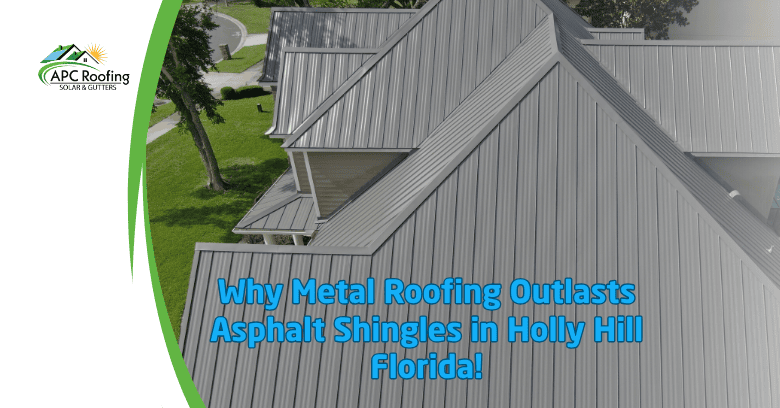
A corrugated or ribbed covering is secured with screws set through the metal, whereas standing seam hangs on clips hidden under tall ribs. Coated steel is what the great majority of metal-roofed homes carry, and aluminum or copper appears now and then.
From a driveway, lines of screw heads across the panels mark a through-fastened roof, while flat pans divided by upright folds with no hardware showing are standing seam. Farm buildings and garages commonly have ribbed or wavy sheet, and homes turn up with both.
Rolled Shapes: Old Look, New Look
Corrugated goods swell and dip in gentle, repeating arcs, while ribbed panels carry squared ribs with wide flats between. Side by side, adjoining lengths overlap by one crest, and screw locations follow a published diagram.
A squared profile resists bending and reaches further between purlins, while corrugated keeps a place on vintage buildings and farmhouse designs. A tall rib keeps heavy rain inside a channel on a broad roof plane, whereas a short porch covering gets by with a low pattern.
Exposed Hardware – Why Installation Matters
A single screw pins the metal firmly to framing below, and a washer under each head keeps rain out. Synthetic rubber ages in the sun, going hard and then cracking, well ahead of the painted steel nearby.
An overdriven screw squashes a washer flat, and a shallow or off-square setting never seals fully.
Fastener Replacement: Worth Doing, With Limits
Washers dotted across a ribbed field grow old together, and a whole-roof re-screw is routine over the years. Every existing fastener is removed, and an oversized screw returns to every hole to catch undamaged fibers or metal.
A re-screw stops drips around screw heads and draws lifting sheets back down, but red rust, gaping laps and cracked flashing need other remedies. Replacements are chosen for whatever framing lies underneath, lumber or steel, and tops painted in a panel color keep new work from standing out.
Growth and Shrinkage – Stress at Screw Holes
A steel panel stretches in sunshine and draws in after dark, and a long run can gain a quarter inch between noon and midnight, and aluminum reaches about double. A tightly fixed panel enlarges fastener holes a little with every cycle, and washers then stop sealing.
Popping and clicking on a sunny morning is expansion at work, and a careful installation suffers no damage.
Holding Down a Seamed Covering – Laid in Sequence
A long pan gets one fixed point, often near a ridge or an eave, while floating clips elsewhere allow the pan to slide. Trim at an unanchored end leaves a gap for travel, while a pan fastened hard along every foot pulls loose or ripples.
Each pan is set in place, and clips are driven through into the deck along one side, so no fastener head is left out in the weather.
Joint Styles: A Choice With Consequences
Snap-together panels latch by hand, while machine-rolled designs get folded over by a motorized seamer. A double-lock seam rides out storms and sheds pooled water, and maker approvals cover shallower slopes.
Manufacturers offer a range of pan widths and rib heights, and a choice depends on the home and a preferred style. Accessories such as clips and closures fit a single system, so any repair hinges on knowing exactly which panel is installed.
Light or Heavy – Beyond Appearances
Coil for roofing is sold by gauge, and a low figure signals thick metal. A shop or barn frequently has twenty-nine, while a dwelling generally takes twenty-six or twenty-four.
Aluminum is specified in thousandths of an inch instead, and across the board thicker goods resist dents and ripple less. A view from below reveals nothing about grade, so a product data sheet is a reliable guide.
Rust Resistance: Choosing a Finish
Steel for roofing is hot-dipped in zinc or an aluminum-zinc blend, and a primer and a colored enamel are baked over the metal. Damage no deeper than paint is cosmetic, but an unprotected cut or a gouge to bare steel is where red rust starts.
PVDF finishes hold color for decades, while polyester grades dull faster in strong sun. Uncured concrete and mortar harm an aluminum-zinc coating, so panels are kept away from a new chimney or stone wall.
Choosing the Metal – Coast and Country
Aluminum has less mass than steel and cannot turn red with rust, but a dropped tool or a falling branch dents a soft sheet sooner. Along the coastal end of our service area, salt in the air shortens the life of zinc-based coatings, and makers restrict certain products near surf.
Copper appears mainly as small roofs on bays and cupolas, and with nothing applied, color shifts over the years.
Mixing Metals: Treated Lumber and Wrong Screws
A copper pipe or flashing above steel sends corrosive drainage down over the panels, and a dark streak shows long before any hole. Treated wood touching aluminum pits the metal at each contact, and an ordinary screw of an unsuited alloy fails as well.
Any added flashing or trim should be the same metal as what is up there, or a plastic barrier divides unmatched metals.
What Buyers Notice: What Can Be Done
Oil canning means a slight bow in a wide stretch between seams, and faint hollows show at sunrise and fade by noon. A panel that looks uneven sheds rain as well as a perfect sheet, and the roof ages no faster.
Thicker metal, a slimmer width and striations rolled into every pan tame rippling, and an even deck beneath helps as well. Photos of finished roofs give a fair idea of how much oil canning shows, and the choice of panel is yours.
Indoor Comfort: What Reaches Living Space
Panels laid straight over bare purlins ring out in a downpour, because a single thin skin vibrates freely. On a house, a solid deck, underlayment and ceiling insulation sit below the panels, and loudness indoors is close to what asphalt gives.
A light-colored panel sheds much of the sun's warmth, and the attic beneath stays cooler on a summer afternoon. A charcoal or black panel gets hot, and airflow and insulation lower down count just as much. After sunset, metal sheds stored warmth quickly, so evenings indoors feel better sooner.
Holding a Load Up There – Clamped or Fastened
At the colder end of our territory, snow slides readily off smooth coated steel, and a heavy sheet coming off in one piece can hurt a person or tear away a gutter. Rows of cleats hold a load back until melting clears the roof, and a doorway, walkway or meter below decides placement.
Standing seam takes clamp-on brackets that grip each rib without piercing the metal, while ribbed or corrugated sheet takes mounts driven into structure with sealing washers, and where snowfall is rare, nothing is added.
Pounding From the Sky: When Paint Cracks
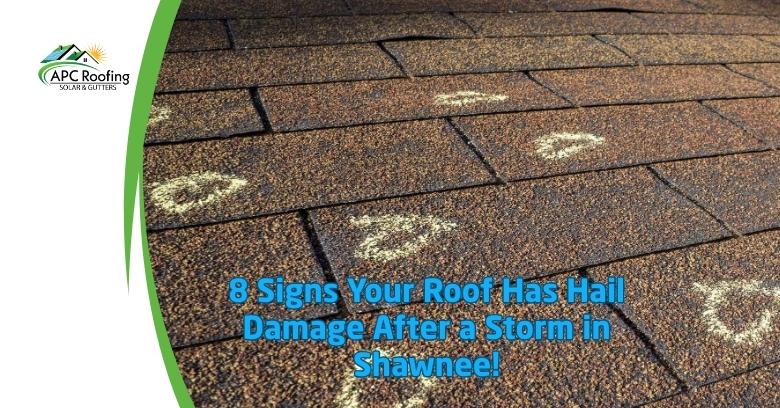
Hail is common across the colder end of our territory, and heavier grades with stiffening ribs shrug off more stones. A crease that cracks paint exposes bare metal to rust, and a trim piece pushed out of place can channel rain inside.
After a storm, we photograph and measure what we find, and the depth of each dent is gauged.
Storm-Ready Attachment: Trim Held Tight
Gusts tug harder at corners and along a perimeter, and an unfastened edge lets pressure build beneath. Each finishing piece is folded back and locked over a full-length cleat, so nothing sticks out to be grabbed.
Clips and screws are packed closer in high-load zones near corners, following a maker's layout for a site's exposure. Along the coastal end of our service area, hurricane risk raises fastener counts again, and products are chosen with a wind rating to match.
Openings in a Covering: Sealant as Backup
A plumbing pipe gets a flexible boot with a base that bends to a panel profile, and placement is down in a pan rather than on a crest. A chimney or skylight is built up on a curb with a cricket above, and runoff is parted to either flank.
A bead of sealant supports a properly formed detail rather than working alone, since weather hardens and splits any compound long before the panels are done.
Where Slopes Meet: Built to Drain
Each valley gets a separate pan in advance of the panels, and panels are trimmed on a diagonal to match. Every raw end is turned under and caught by a cleat, so no fastener sits where water collects.
Where a long run needs more than one length, a lap is sealed between layers, and screws go through both thicknesses at close spacing.
Near-Flat Areas – When a Membrane Wins
Most ribbed sheet is specified for about three in twelve or steeper, because on less, runoff lingers long enough to wick past laps. A mechanically locked seam can be installed far lower, and product literature states an exact minimum.
Houses frequently include a porch or wing with a gentle roof, and pitch is measured rather than judged by eye, and a part too low for any panel gets a membrane instead.
Support for the Roof: Checked on a Tear-Off
A house takes panels on a solid, continuous deck, and a synthetic barrier made for high heat sits on top, because old felt bakes and sticks under hot steel. Farm buildings frequently carry metal over bare purlins, and distance between supports sets a minimum gauge.
On a tear-off, soft or rotted boards are cut out and replaced, since punky fibers offer a screw no bite.
Going Over the Existing Roof – Grounds for Refusal
Panels can often go on top of one shingle layer where code permits, and noise and a dumpster are avoided. New steel adds well under two pounds per square foot, and typical framing carries a little extra easily. Battens over a fresh membrane go across existing shingles, and clips or screws go down into solid structure.
If the decking flexes, or earlier leaks show from the attic, the old roof comes off, since dampness sealed beneath panels goes on rotting structural lumber.
Finishing Off – Fillers and Trim
Shaped closures fill spaces under every rib at an upper line and a lower line, so blown rain and critters are shut out. A ridge cap may be vented or sealed, according to how an attic sheds heat and moisture.
Trim at every rake plus a drip edge over a gutter finish a roof's border, and fascia boards stay dry.
Care With the Metal: Where to Step
Standing seam panels are usually roll-formed to the full length of each slope, and one pan spans eave to ridge with no joint across. A long panel calls for several people spaced along the metal, and a crimped or creased pan is no longer usable.
A foot goes only in flats directly above supports, because ribs and seams crush under a boot. Wet or dewy panels offer almost no grip, so climbing up for a look is unwise.
What Homeowners Can Spot: Without Climbing Up
- Red staining around each screw, near the top of a run.
- Screws no longer tight against metal, at an eave.
- A peeled drip edge, over a front door.
- A flue collar sitting crooked, over a kitchen.
- A sheared end streaked orange, in a valley.
- Blotchy color, across one face of the house.
- Spots on a ceiling in a row, down a hallway.
- A joint gaping open, beside a hip.
How APC Roofing Approaches Metal Roof Installation in Altamonte Springs Florida: Order of Work
We start by identifying which panel type is installed and how the panels are held, and then every screw or clip, edge, opening, valley and lap is checked. We note thickness, coating and hardware along the way, and the attic is searched for water marks.
Every finding goes into a report with images, and every piece of advice comes with an explanation. A sound covering is called sound, while replacement comes up only when a roof is truly spent.
Metal Roof Installation Around Altamonte Springs Florida – Details Read Closely
Reach us at 407-270-1129 and we will schedule an inspection.
Repair or Replacement: Guided by Evidence
An individual rusted sheet can be unscrewed and exchanged, though new metal looks brighter than weathered neighbors. A properly resealed lap closes a drip, while new fasteners seal screw holes again.
Widespread perforation puts replacement on the table, and a covering the wind has twisted out of shape is in the same position. Somewhere in between, a single worn plane of the roof can be redone, when harm is local.
Longevity – Upkeep Matters
A well-built steel covering commonly serves forty years or more, though any figure is an estimate, not a promise. Concealed-clip panels require less upkeep because no rubber seal sits in the sun, while ribbed sheet gets new fasteners once washers tire.
Copper runoff, bare edges and caulked joints where flashing belongs shorten the life of a roof, and a periodic look finds problems while minor. Piles of leaves behind a chimney keep a patch of metal damp for days, so removal pays off in longer-lasting paint.
Before deciding on Metal Roof Installation in Altamonte Springs Florida, call APC Roofing at 407-270-1129. Someone will climb up and read how the panels are attached, along with every edge and opening, and a written report puts options in front of you.
Verified

Verified
Verified
Verified
Verified