
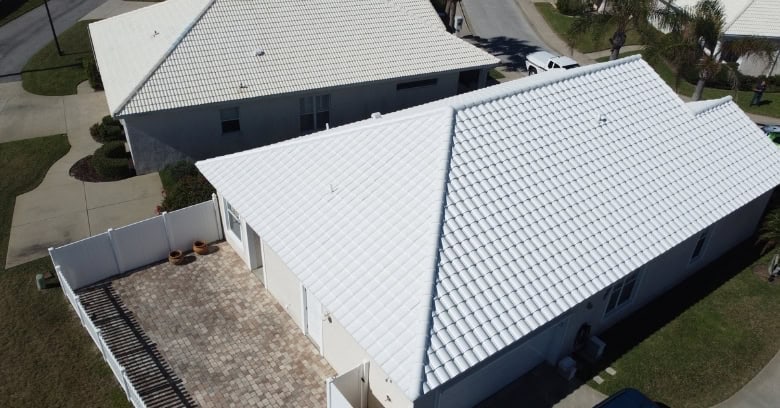
Searching for Roofing Services in Kissimmee Florida?
APC Roofing handles everything from a simple checkup to a full replacement, across asphalt, metal and tile alike.
Call 407-270-1129, and a roofer arranges a visit to the house.
The Roof's Inner Build-Up: What's Tucked Away
What shows from the curb is just the outer layer, and a water barrier, plywood and framing sit below the surface. Metal flashing seals the seam at a wall, a pipe or a valley, and a drip there rarely points to worn shingles on the slope.
The air under the rafters counts as part of the roof, the same as any material, since trapped summer heat bakes the deck from underneath. Water showing indoors may come from any level of the structure, so patching only what the yard shows can fail to reach the real cause.
What a Roof Does for a House: an Owner's Overview
Laps and pitch steer rainfall toward the gutters, and seal strips keep gusts from getting under the courses. The framing bears the load above, snow included at the colder end of our territory, and openings low and high let moisture escape the attic.
Water is the covering's job, and wind is the fastening's task, and holding the whole thing up falls to what is underneath. Trouble in one element tends to show up far from the original problem, so the trail gets followed back before anything gets mended.
The Minor Pieces of a Roof: What Falls Behind First
The main covering is built for a long run, but the flexible seal around a stack splits well before the shingles do. Rain finds a way down past the weak point, and a stain appears on the ceiling below.
A line of caulk at a chimney shrinks with every hot season, and galvanized flashing corrodes at folds and nail holes. The capping pieces craze down the center, because the highest point stands open to glare and gusts.
A Walk Around the Property Beforehand: Standing Back and Then Closer
From across the street, the profile of the roof exposes dips, sags and wavy planes, and the fascia and gutter runs are visible at the same time. A zoom lens singles out torn collars, lifted tabs and bare patches, but soft decking can only be felt from up close.
Once on the roof, a roofer checks every connector closely and follows the flashing at each wall, and the covering is checked for brittleness, granule shedding and curling. Nobody walks a covering that is wet or too steep, and the view comes instead from a ladder at the gutter line.
Behind the Ceiling: Clues From Below
A dark ring on the sheathing shows water has come through, and a wet surface under the hand means water is still getting in. A pinpoint of sky through the boards marks a gap, and the distance from the ridge and gable gets measured so the spot can be found outside.
Nails freckled with rust show condensation at work, not rain damage, and a compressed, faded patch nearby points to the same cause. Insulation crammed against the eave, or an exhaust fan dumping into the attic, comes to light only from inside, so ventilation trouble of that kind escapes a yard-only check.
A Homeowner's Take-Away: the Basics
The visit produces photographs linked to particular spots on the roof, and a note explains what each picture shows. Good sections get the same plain treatment as sections that do not, and faults are ranked by how soon repair is needed.
Keeping an older report gives the next check something to compare against, and movement across seasons reads more directly than one day's condition. A covering looked at on a regular schedule rarely catches the owner off guard, and large jobs show warning signs well ahead of the work becoming pressing.
Routine Care for a Shingle Roof: Practical Habits
Worn pipe gaskets get swapped out before failure, and the joints at each flue get resealed. Needles and leaves get cleared from valleys and from behind chimneys, and downspouts get flushed so water moves through.
A raised corner glued down in time stays a simple repair, but a season of neglect can end in a ceiling mark. Lichen keeps the surface damp and works in under the shingles, and a gentle wash clears the growth, since a pressure washer strips granules.
A Regular Routine: Consistency Pays Off
An experienced roofer should read the covering once every year, timed for the point when local weather turns roughest. The goal is seeing deterioration ahead of any drip, and the family hears plainly where the roof stands.
Following a storm, a walk around the house with eyes on the roof is a good habit, and bedroom ceilings upstairs can be watched for fresh spots. Looking around the attic with a flashlight now and then makes sense: discolored boards, light through the deck and damp insulation turn up long before anything reaches the space below.
The Age of a Roof Seen From the Ground: What Changes Over Time
Brand-new shingles look dark and consistent across every slope, and past the midpoint the south-facing side lightens ahead of the others. Near the end, corners curl and granules gather in the gutters, and a repair rarely holds for long at that stage.
An impression formed from outside has real value, but a roofer nearby will always see more. A covering that has reached the end of a normal service life raises a replacement question, and a trustworthy contractor gives a plain answer, rather than selling more mending.
A Channel That Has Given Up: What to Watch For
The covering's job on water stops at the drip edge, and from there a gutter does the remaining work. A hanger that has given way tips the run toward the wall, and the framing at that spot decays.
A weak patch there usually traces to a stopped-up drain, not the shingles, and new shingles will not cure a fault of that kind. The direction of fall along each gutter gets checked, together with the outlets, and the flashing along the eave gets looked over for bent or missing pieces.
Keeping Things Working Underneath: An Overview
A balanced system draws air in low and releases air up high, and the draft clears warmth and humidity from under the sheathing. Where the opening gets sealed off, the attic runs hot in summer and stays sticky through humid stretches, and the deck and shingles suffer early.
Exhaust hardware installed with no matching intake draws conditioned air up from the rooms below, and stacking two setups the wrong way can leave one choking the other. Fresh shingles laid over stale, trapped heat age nearly as fast as the old ones did, so the arrangement gets corrected while the deck is already open.
One Company, Many Conditions: Set by What's Nearby
At the colder end of our territory, ice at the eaves and the weight of snow shape the build, and a sticky underlayment protects the lowest courses. On the coastal side of our area, storm winds set the nail pattern, and hurricane-rated edges and sealed flashing get specified.
In towns at the colder end of our territory, where hailstones run large, a harder product makes sense, while intense sun dries out asphalt everywhere we work. Every material choice answers to the weather at that house, not habit or a standard default.
Homes and Businesses: Different Demands
A sloped covering sheds rain by lap, finished in asphalt, clay or steel. A store or warehouse shelters under a nearly flat, sealed membrane, and rooftop units and drains get set directly into the surface.
Many houses have a gently rising porch or addition, and shingles there tend to leak because water lingers before running off. A spot built that way needs a sealed membrane tucked under the pitched roof above, and re-laying shingles there repeats the same fault.
Temporary Covers After Damage: a Short-Lived Patch
A barrier over a torn area keeps water out in the meantime, but a quick layer does not mend anything below. A cover done right crosses the ridge and gets screwed down through battens, and the material gets drawn tight enough to hold quiet in a gale.
A cover needs a wide border around the hole, because rain travels sideways toward a gap that stops short. A cover left up through a whole season holds heat against the surface, and the covering underneath ages faster than expected.
Vertical Joints on a Roof: the Proper Method
Short metal steps get laced between the courses up the side of a dormer, and a cap of counterflashing laps down from above. On a brick chimney, an apron handles the lower edge and metal runs up each edge, and a wide stack gets a cricket that divides the flow around back.
A smear of mastic over a bad patch opens up within a few seasons, so a rebuilt detail is the only answer that lasts. Porous or cracked mortar lets moisture into the masonry higher up, and part of that repair belongs to a mason, not a roofer.
What a Proposal Should Say: What to Look For
A detailed listing names each material going on the roof, and the document states whether the old covering comes off. The account spells out in advance how damaged plywood gets counted, and every vent, every flashing piece and the haul-away get called out individually.
Offers from different contractors can be weighed point for point, and what one write-up covers and another skips becomes obvious. A business that keeps every particular verbal gives an owner nothing to hold onto, since a handshake settles nothing once a dispute starts.
Replacing a Roof, Step by Step: What Happens
Beds, bushes and walkways get protected before demolition begins, and the worn material gets pulled loose and hauled away. Opened up, the decking gets checked for soft spots and breaks, and weak spots come out, and solid planking follows.
Ice barrier, underlayment and new flashing go down across the deck, and the main covering, the ridge line and the vents finish the work. The property gets swept with a magnet once the crew wraps up, and no debris gets left in the gutters.
Non-Shingle Roofing Care: Particular Needs
Where panels get fastened through the face, a gasket under the head keeps rain out, and a cracked washer gets replaced along with a fresh screw. Clay and concrete tile go down by more than one method, from mortar to foam to clips, and the underlayment does the actual waterproofing.
Weight placed wrong breaks a piece, and a damaged unit gets lifted out and replaced with one of the same profile. On a low-slope section, standing water and open seams are the things to watch, and leaves get removed from the outlets regularly.
What Owners Tend to Notice: Easy to Act On
- Granules collecting in the gutters, long after the covering was installed.
- Corners turned up across a slope, spread across more than one row.
- A pipe boot with an open gap, easy to miss without a zoom lens.
- A ceiling ring in a top-floor room, new since the previous season.
- Pinholes of light in the sheathing, spotted during a flashlight check.
- Clumps of moss under overhanging trees, growing thicker every spring.
- A sag along the ridge line, new since the previous year.
- Dried beads separating at a skylight, easy to spot from the yard.
Roofing Services Around Kissimmee Florida: What APC Roofing Does
Before a scope gets drawn up, a roofer examines the whole covering and the attic, and what turns up gets delivered as pictures along with a written explanation. Sound parts get named as plainly as parts that need work, and the decision belongs to the homeowner, not the crew.
Roofing Services Near Kissimmee Florida: a Full Look, Not a Guess
Get in touch at 407-270-1129 and set a time for a visit.
Documentation for the Roof: Best Done Early
Keeping the install date and the product names is a good start, and every yearly report can go into the same file. Logging each repair by spot and by task builds a fuller picture, and looking back after enough time shows what keeps recurring.
Once a home hits the market, the roof's age and condition come up in conversation, and dated receipts make the answers easy to give. A second copy of the file, kept somewhere else, is worth having, since paper can be damaged or destroyed over the years.
Standards Worth Holding a Crew To: Details to Check
The lines run true from eave to ridge, with rake cuts trimmed sharp, and every fastener stays hidden under the shingle above. At each wall and chimney, fresh metal gets set in as the flashing climbs higher, and nothing gets troweled on to cover a shortcut.
The attic keeps intake and exhaust moving after the job, and the gutter runs finish straight and fastened. A final sweep with a magnet tidies the yard and drive, and a light scatter of sawdust near any cut line rinses off a walkway in seconds.
Anyone weighing choices for Roofing Services in Kissimmee Florida is closer to an answer than a listings page ever gives. Contacting APC Roofing at 407-270-1129 puts a roofer on the calendar. Every stop covers the full roof, top to bottom, with nothing left unclear.
Verified

Verified
Verified
Verified
Verified
















