There’s a stain on the ceiling, and your tile roof looks fine from the yard. Every tile is in place. Somebody already told you tile roofs “last forever,” so now you’re confused, and a little worried someone will tell you to replace the whole thing. Good tile roof repair starts with finding where the water actually gets in, and that’s rarely where it shows up inside.
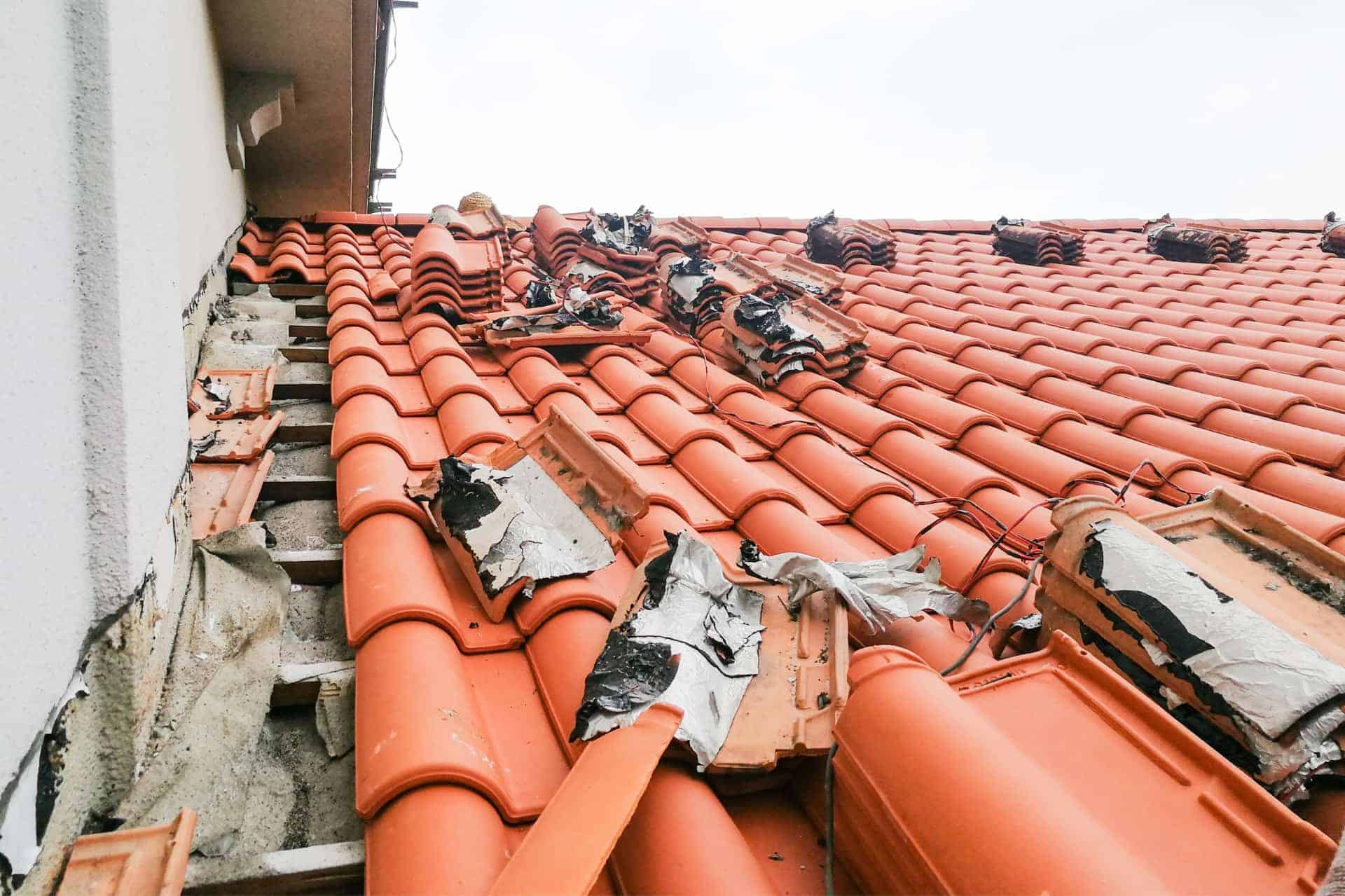
The good news is that a leaking tile roof usually isn’t a worn-out tile roof. In most cases the tiles are fine and something under them or beside them has given way. You deserve a roofer who’ll find it before recommending anything.
APC Roofing has been in business since 2017, and tile repair is part of the roofing work we do. We’re GAF Certified, licensed and insured, and your inspection is free. Call 866-995-0704 to have your roof looked at.
Why tile roofs leak
Tile sheds most of the rain, but it isn’t the waterproof layer. The underlayment beneath it is. Here’s what usually goes wrong:
- Cracked or broken tiles, from hail, falling branches or someone walking in the wrong spot
- Slipped tiles, where a fastener rusted or the mortar let go, often at hips and ridges where wind is strongest
- Clogged valleys, where leaves and debris dam up water and hold it against the underlayment
- Worn or poorly formed flashing where the roof meets a wall or chimney
- Aged underlayment, dried out or torn after years of heat, which changes the whole conversation
In Florida, hurricane-season wind and heavy afternoon rain find any gap along roof edges and around openings. Hail plays a part too. Flat concrete tiles crack more easily than curved S tiles.
Foot traffic does a lot of damage
A surprising number of tile repairs start with someone else’s boots. Tile only carries weight in certain spots, and stepping in the wrong place can crack a tile without a sound. Satellite installers, solar crews, gutter cleaners and pressure-washing services all walk tile roofs, and not all of them know where to step.
The stain shows up months later, and the roof gets blamed. A simple rule helps: nobody goes on your tile roof unless they know how to walk it and bring walk boards to spread their weight.
Finding the leak takes patience
Water can get in at one spot, run along a batten or rafter, and drip into a room several feet away. That’s why good tile roof repair usually means lifting tiles to follow the water’s path. A roofer who squeezes sealant into the nearest gap without looking is guessing, and the leak tends to come back.
Spot repair or lift and re-lay?
This is the big decision with tile, and you should get a straight answer on it.
If a few tiles are broken and the underlayment around them is still flexible and sound, a spot repair is the right fix. It’s a modest job, and it can hold for years.
If the underlayment has aged out, patching one leak at a time turns into a cycle. You fix one spot, another one opens. At that point the better answer is usually a lift and re-lay. The tiles come off and get stacked, the deck is repaired, new underlayment goes down, and your original tiles go back on, with replacements only where they’re broken. It’s a real project, but you keep your tile and get a new waterproof layer under it.
Three things tell you which one you’re looking at. How old is the underlayment, not the tile? How many separate leaks have you had lately, and are they in one area or all over? And when tiles are lifted at the leak, is the underlayment still pliable, or brittle and cracking? We’ll show you photos so you can see it for yourself.
Matching your tiles
Manufacturers retire tile lines, and years of sun change how a tile looks. Finding a match can take some work. Options include current tiles that come close, salvaged tiles, and any spares left on the property from the original install. If you have extras in the garage, keep them.
When a match isn’t perfect, new tiles can go on a slope you can’t see from the street, and original tiles move to the front of the house. That trade-off is something you should hear about before the work starts, not after.
How it works with APC Roofing
- Book your free inspection. Call 866-995-0704 or request a free online estimate.
- Get a clear, honest assessment and estimate. You’ll see photos of the tile, flashing and underlayment and get a plain answer on spot repair, re-lay or replacement.
- The repair gets done and the site cleaned up. Broken pieces and debris leave with the crew.
Financing is available through Aqua Finance, Fortifi, Hearth and Home Run Finance for larger jobs.
Learn more about your tile on our concrete tile roofing and tile roofing pages, or see tile roof repair in Orlando and in Holly Hill.
Tile roof repair questions
Do I need a new roof if my tile roof is leaking?
Usually not. Most leaks come from the underlayment, flashing or a few broken tiles. A full replacement is only the answer when the tiles themselves are failing across the roof.
What should I look for in a tile roofing contractor?
Experience with tile specifically, not just shingles. Ask how they find leaks, whether they lift tiles to trace them, how they walk the roof, and how they’ll match your tiles.
Can I seal a tile roof leak myself?
It’s better not to. Sealant on the wrong spot hides the problem for a season and can trap water. Walking the roof can also crack more tiles.
What’s the difference between tile roof repair and tile roof replacement?
A repair fixes broken tiles or one problem area. A lift and re-lay replaces the underlayment and reuses your tiles. A replacement means new tile, which usually only makes sense when the tile itself is worn out or you want a different look.
Get the right fix the first time
A small tile leak can soak decking and insulation for a long time before you see it inside. Getting it diagnosed now usually keeps the repair small.
You want a dry house, a tile roof that still looks like yours and a fix that lasts. Call 866-995-0704 to book your free inspection, or start your estimate online.