Maybe your house already has a concrete tile roof and a ceiling stain is making you wonder if it’s done. Or you’re replacing a shingle roof and the tile homes down the street keep catching your eye. Either way, concrete tile roofing is a big decision, and most of what you hear about it comes from someone trying to sell you something.
You deserve the plain facts: how it holds up, what it costs your house in weight, and what tends to wear out first. That way you can choose, or keep the roof you have, with confidence.
APC Roofing has been in business since 2017, and clay and concrete tile repair and replacement are part of what we do. Concrete tile is a common sight across Central Florida and the Daytona Beach area. We’re GAF Certified, licensed and insured, and your inspection is free. Call 866-995-0704 to book one.
What concrete tile is
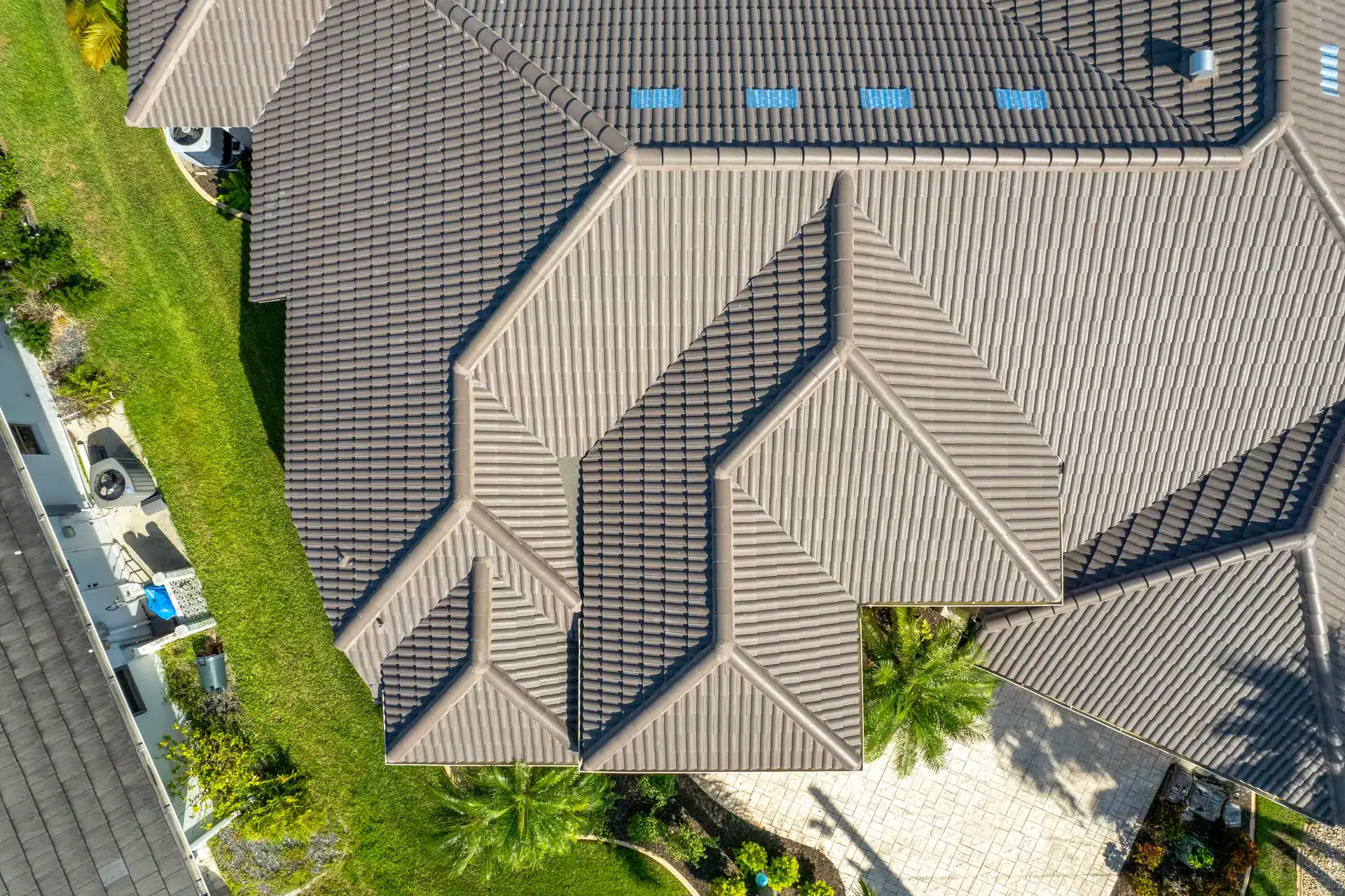
Concrete roof tile is made from sand, cement and water, pressed into a mold and cured. Because it’s molded rather than fired in a kiln like clay, it comes in a lot of shapes:
- High-profile or S tile, the rounded Spanish-style look you see all over Florida
- Low-profile tile, with a gentler wave
- Flat tile, which can pass for slate or wood shake from the street
On most concrete tile, the color is a finish applied over the gray body of the tile instead of running all the way through it. That’s one of the main differences from clay. Over many years the color softens, and a chipped corner shows gray underneath. Concrete is usually the less expensive way into a tile roof, and it’s the heavier option. Our clay tile roofing page compares the two.
Weight comes first
Concrete tile is heavy, and it gets heavier when it soaks up rain. On a house built for tile, that’s not an issue. On a house that has shingles now, it’s the first question to answer, not the last. The rafters and walls have to be able to carry the finished roof before anyone talks about colors. An engineer may need to sign off.
How concrete tile handles Florida weather
Concrete tile does well with Central Florida’s sun and heat. The tile shades the deck, and the air space under many profiles helps keep heat from soaking straight into the attic.
Wind is where the details count. Tiles need to be fastened or adhered the way Florida’s building code and the manufacturer require, and hips and ridges, where wind loads are highest, need the most care. A tile roof that’s attached correctly holds up well in hurricane season. One that isn’t can lose tiles at the edges.
The tile isn’t the waterproof layer. The underlayment beneath it is. Tile sheds most of the rain and protects that underlayment from the sun, but the membrane underneath is what keeps water out of your house. That’s worth remembering when you hear “tile roofs last forever.”
Hail, cold and concrete tile
Concrete tile is tough, but it has limits. Flat tiles crack more easily in hail than high-profile S tiles, because the curve of an S tile spreads the impact into the tile below.
In Kansas City and Springfield, concrete tile is uncommon. If you’re considering it there, ask how the tile is rated for freeze-thaw. Concrete absorbs a little water, and water that freezes inside a tile not made for cold climates can make the surface flake and crack.
Living with a concrete tile roof
Two early surprises catch new owners off guard, and neither is a defect. A white chalky haze on new tiles, called efflorescence, fades on its own with weather. And a little color variation between batches is normal.
Over time, shady slopes can grow moss or algae. Clean it gently, at low pressure. A pressure washer strips the finish off concrete tile, and anyone walking the roof to do it can crack tiles underfoot.
What actually fails on a concrete tile roof
It’s rarely the tile. Leaks usually come from the underlayment wearing out, flashing at a wall or valley, or the mortar and fasteners at hips and ridges. That means a leak doesn’t automatically mean you need a new roof. Often the tiles can be lifted and stacked, new underlayment installed over a repaired deck, and the same tiles put back. Our tile roof repair page explains how that works.
How it works with APC Roofing
- Book your free inspection. Call 866-995-0704 or request a free online estimate.
- Get a clear, honest assessment and estimate. We’ll check the tile, the flashing and the underlayment where we can see it, and tell you plainly whether you need a repair, a re-lay or a new roof.
- The work gets done and the site cleaned up. Tile jobs take longer than shingles, and the crew leaves your yard clean when they’re finished.
Financing is available through Aqua Finance, Fortifi, Hearth and Home Run Finance.
See all your options on our tile roofing page, or see concrete tile roofing in Orlando.
Concrete tile roofing questions
Is concrete tile a good roof for Florida?
For many homes, yes. It handles sun and heat well and can hold up in high wind when it’s attached to code. The house has to be built to carry the weight.
Can I switch from shingles to concrete tile?
Sometimes. The roof framing has to be checked first, and it may need reinforcing. That’s the first step before anything else.
Can a leaking concrete tile roof be fixed without replacing the tiles?
Often, yes. Most leaks come from the underlayment or flashing, not the tile. Sound tiles can usually be lifted, the underlayment replaced, and the tiles reinstalled.
Can you walk on a concrete tile roof?
Carefully, and only if you know where the tile is supported. It’s best left to a roofer who brings walk boards to spread the weight.
A tile roof you don’t have to wonder about
A small leak under tile can travel a long way before you see it inside, and the longer it runs, the more decking it soaks. Having it looked at now keeps your options open.
You’re after a roof that looks the way you want, keeps your house dry and doesn’t hand you a surprise bill. Call 866-995-0704 to book your free inspection, or start your estimate online.