The brown ring on the bedroom ceiling showed up after a spring storm. You hoped it was a one-time thing, but after the next hard rain it’s bigger and there’s a drip. Now you need roof leak repair in Springfield, MO, and you’d like it fixed once, not patched three times.
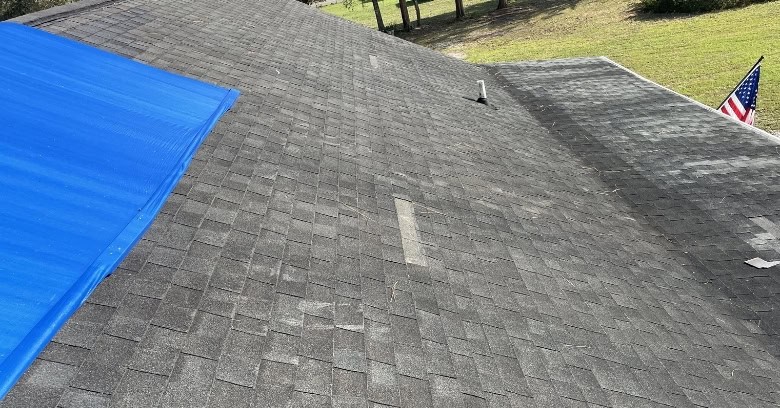
The tricky part is that a roof leak rarely sits right above the stain. Water gets in at one spot, runs along the underside of the roof or down a rafter and drips somewhere else entirely. That’s why so many leaks get “fixed” and come back. You deserve a repair that goes after the source.
APC Roofing has been in business since 2017. We’re GAF Certified, licensed and insured, and we have an office here in Springfield. Your inspection is free.
Where Springfield roof leaks usually start
The middle of a healthy shingle roof doesn’t leak very often. Most leaks start at the places where the roof is interrupted or where two surfaces meet.
Pipe boots. The rubber collar around plumbing vent pipes dries out and cracks in the sun. It’s one of the most common leak sources there is, and one of the simplest to fix.
Flashing at walls and chimneys. Where a roof meets a wall, a dormer or a chimney, metal flashing keeps water out. When the flashing loosens, rusts or was installed without proper overlaps, water slips behind it. Chimneys are a frequent culprit, especially along the uphill side where water and debris collect.
Valleys. Where two roof slopes meet, a valley carries more water than any other part of the roof. Worn shingles or underlayment there show up as leaks fast.
Wind-lifted and missing shingles. Springfield’s spring thunderstorms can break the seal on shingles and fold them back. Even if they lie back down, the seal is gone and wind-driven rain can get underneath.
Nail pops. As the roof deck moves with the seasons, nails can back out and push up through the shingle above them. Each one leaves a small hole.
Roof mounts. Satellite dishes, antennas and other things screwed through the shingles open holes that need to stay sealed.
Why Ozarks weather finds every weak spot
Springfield roofs get worked hard. Spring hail cracks shingles and knocks off the granules that protect them. Summer heat bakes the rubber on pipe boots and dries out sealants. Winter freeze-thaw cycles open small gaps a little further every time water gets in and freezes.
That combination means a small weakness that might hold for years in a milder climate can become a leak after a single rough season here.
How a leak gets traced
Finding the source starts inside. In the attic, water leaves a trail: dark stains on the decking, water marks down a rafter or damp insulation. Following that trail uphill usually points to the area on the roof where the water is getting in.
Then the roof gets checked around that area: flashing, boots, shingles, nails and anything mounted to the roof. Sometimes the cause is obvious, like a cracked pipe boot. Sometimes it takes a closer look, like a flashing that seems fine but was lapped the wrong way.
You get photos of what was found, so you can see the problem yourself instead of taking someone’s word for it.
Fixing the leak the right way
A good leak repair fixes the cause, not just the symptom. Caulk smeared over a bad flashing may stop the drip for a season, but the flashing still needs to be replaced or reset. A cracked pipe boot needs a new boot. A worn valley may need new underlayment and shingles in that section.
If water has been getting in for a while, the decking underneath may be soft or rotted. That wood needs to be replaced before the roof is patched over it, or the repair won’t hold.
Matching shingles is part of a good repair too. Shingle colors and styles change over the years, so an exact match isn’t always possible on an older roof, but the closest match available should be used and you should see it before it goes on.
Repair or replace?
A single leak on a roof that’s otherwise in good shape is almost always a repair. Replacement starts to make sense when leaks keep showing up in different places, the shingles are worn across the whole roof, or the decking is damaged in several areas.
Either way, you’ll get an honest answer, backed by photos, and you make the call. If you’re weighing the bigger picture, our roof repair in Springfield page and roof replacement in Springfield page cover each option.
How it works
- Book your free inspection. Call 913-398-5020 or request a free online estimate.
- Get a clear, honest assessment and estimate. You’ll see photos of where the water is getting in, hear what it takes to fix it and get a written estimate.
- Get your roof leak repaired and the site cleaned up. The source gets fixed properly, and the crew cleans up before leaving.
A slow leak is easy to put off. But while you wait, water can soak the insulation and rot the decking long before the ceiling stain gets big.
Roof leak repair questions
Why does my roof only leak in heavy rain?
Leaks that show up only in hard, wind-driven rain often come from flashing, lifted shingles or a worn valley. Water gets pushed sideways or uphill into gaps a gentle rain wouldn’t reach.
Can I fix a roof leak with caulk or sealant?
It might slow it down for a while, but sealant alone rarely fixes the cause. The flashing, boot or shingles that failed usually need to be replaced.
My roof is leaking after a hailstorm. What should I do?
Take photos of any damage you can see from the ground and inside, then have the roof inspected. If you file an insurance claim, you pay your deductible, and we document the damage and work with your adjuster. Our storm damage page has more.
What if water is pouring in right now?
See our emergency roof repair page for what to do first, then call us.
Call about roof leak repair in Springfield, MO
Call 913-398-5020 or start your free estimate online.
The goal is simple: a dry ceiling, a fix that lasts through the next storm and no surprise bill. Your satisfaction is our reputation.