
The wind finally dies down, and you step outside to find shingles across the lawn and a branch resting on the roof. Inside, water is dripping through the ceiling in the hallway. You need emergency roofing in Palm Coast, and you need to know what to do in the next hour, not just who to call.
Roof damage after a storm is scary. You’re worried about the house, the cost and whether the next rain band will make it worse. And right after a big storm, the phone calls and door knocks start from crews you’ve never heard of. It helps to have a calm plan.
APC Roofing is a GAF Certified roofing contractor, licensed in Florida (CCC1337030) and insured, and we’ve been working on Florida roofs since 2017. Call 386-259-8425 to set up an inspection.
First, make sure everyone is safe
Before you think about the roof, think about people.
Stay off the roof. Wet shingles and tile are slick, damaged areas can give way, and storms often leave power lines down nearby. If a line is touching the house or a tree, keep clear and call the power company.
If water is coming through near light fixtures, outlets or a sagging spot in the ceiling, turn off power to that area at the breaker and keep everyone out of the room. A ceiling holding water can come down without much warning.
If a tree has come through the roof and into the living space, or you smell gas, leave the house and call 911.
Protect the inside of your home
Once everyone is safe, you can limit the water damage:
- Put buckets or bins under drips and move furniture, electronics and rugs out of the way.
- Lay towels down to soak up standing water.
- If the attic is easy and safe to reach, you can set a container under an active leak there too.
- Open closet and cabinet doors in wet rooms so they can dry.
Document the damage for your insurance
Before anything gets cleaned up or moved, take photos and video. Get the outside of the house from several angles, debris in the yard, the ceiling stains and anything damaged inside. Write down the date and time the storm hit.
Then report the damage to your insurance company. You’re the one who files the claim, and you pay your deductible. When we inspect your roof, we document the damage with photos, give you a written estimate and work with your adjuster so the roof damage is clearly accounted for. If a contractor offers to waive or cover your deductible, that’s a red flag. Our insurance roof claims in Palm Coast page explains how the process works.
Temporary protection until the repair
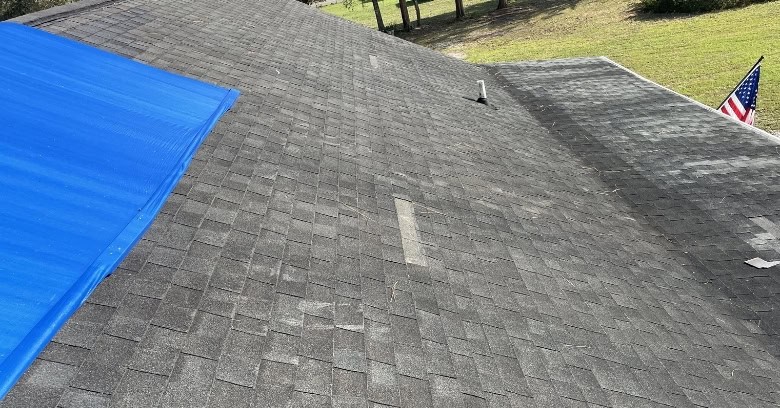
When a roof is open to the sky, the first job is usually keeping more water out until a permanent repair can be made. That often means covering the damaged area. A temporary cover that’s done right wraps over the ridge, is fastened down so wind can’t get under it and is big enough to cover well past the edges of the damage. A small sheet weighed down with bricks rarely lasts through the next storm.
Temporary covers aren’t meant to stay on for long. Under the Florida sun, a cover left for months can trap heat and moisture against the roof, so the permanent repair should follow as soon as it can be scheduled. Ask about temporary protection when you call.
Watch out for storm chasers
After a hurricane, out-of-town crews come through Flagler County looking for quick jobs. Some do fine work, and some are hard to reach once the job is paid for. A few simple checks protect you:
- Ask for the contractor’s Florida license number and look it up on the state’s licensing website.
- Ask for proof of insurance.
- Get a written estimate before any work starts.
- Don’t sign anything that hands control of your insurance claim to the contractor.
A local roofer with an office in the area will still be here when you have a question next year.
What the inspection covers
Storm damage isn’t always obvious from the ground. Wind can lift and crease shingles without tearing them off, break the seals that hold them down and loosen flashing. On tile roofs, it can crack or shift tiles along the ridge and edges. On metal, it can bend trim and loosen fasteners.
A full inspection looks at the whole roof and the attic, not just the spot that’s leaking, and you get photos of what was found. From there you’ll know whether a repair will do the job or a larger replacement makes more sense. Our storm damage roofing in Palm Coast and wind damage roof repair pages go into more detail.
How it works with APC Roofing
- Book your inspection. Call 386-259-8425 or request a free online estimate.
- Get a clear, honest assessment and estimate. We document the damage with photos, explain what we found and give you a written estimate you can share with your insurance company.
- Your roof gets repaired and the site gets cleaned up. The crew makes the repair or replacement and cleans up storm debris from the work before leaving.
A storm-damaged roof that’s left open can let in water every time it rains, soaking insulation and decking. Getting it looked at soon keeps the repair as small as possible.
Questions about emergency roofing in Palm Coast
What should I do first if my roof is leaking after a storm?
Make sure everyone is safe, turn off power near any water, catch the drips and take photos. Then report the damage to your insurer and call a licensed roofer for an inspection.
Should I get on the roof to check the damage?
No. Wet or damaged roofs are dangerous. Look from the ground and from inside, and leave the roof itself to a roofer.
Will my insurance pay for emergency roof repairs?
Many policies cover sudden storm damage, and some cover reasonable steps to prevent further damage. Check with your insurer. You file the claim and pay your deductible.
How do I know a roofer is legitimate after a hurricane?
Check their Florida license on the state website, ask for proof of insurance, get a written estimate and be cautious of anyone pushing you to sign on the spot.
Get your storm-damaged roof inspected
Call 386-259-8425 or start your free estimate online.
The goal is getting your home dry and secure, your claim documented and your roof back to solid, with someone you can trust guiding you through it.


















