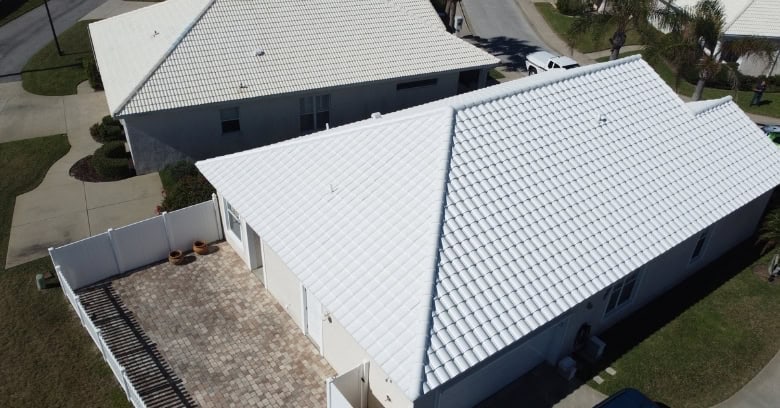
In Search of Roofing Services in Palm Coast Florida?
APC Roofing takes on anything from a checkup to a full replacement, across asphalt, metal and tile alike.
Reach us at 386-356-2111, and a roofer arranges a visit to the house.
What a Roof Is Made Of: the Basics
The visible covering on top is only the outer layer, and a moisture barrier, sheathing and framing sit underneath. Sheet-metal flashing takes over at each wall, stack and valley, and a drip there rarely points to worn shingles on the slope.
The attic air beneath the deck counts as part of the roof assembly, because moisture trapped up there softens plywood and rusts nails overhead. A leak noticed inside can begin at any level of the roof, so a repair aimed only at the surface can miss the real cause.
A Roof at Work: an Owner's Overview
A pitched covering sends rain down toward the gutters, and the nailing keeps gusts from lifting the courses. The trusses and sheathing support the load above, snow included at the colder end of our territory, while vents let damp air leave the attic.
The covering handles water, and the fastening handles wind, while gravity's pull goes to what is underneath. Trouble in one element tends to show up far from the original problem, and the real remedy sits back where the fault started.
Minor Roof Components: What Falls Behind First
Most of the slope is designed to hold up for decades, but a neoprene sleeve at a pipe fails well ahead of that span. Water works past that spot and follows the framing down, and a brown patch forms on the ceiling underneath.
Sealant around a skylight loses hold after enough summers, and metal flashing rusts at bends and cut ends. Ridge caps split across the crease, as nothing shelters the peak from gusts and glare.
What Appears Early: a Two-Step Read
Seen from the sidewalk, the shape of the roof shows dips, sags and wavy planes, and the gutters and trim can be checked in the same glance. Through binoculars, torn collars, lifted tabs and bare patches come into focus, but a weak spot underfoot tells what optics cannot.
Once on the roof, a roofer checks every connector closely and follows the flashing at each wall, and the covering is checked for brittleness, granule shedding and curling. A rain-slicked or very steep covering stays off limits underfoot, and the eave, reached by ladder, provides the vantage point instead.
The Attic: Signs Worth Finding
A stained patch on the plywood shows water that got in before, and dampness under the fingers shows the entry is still active. A pinpoint of sky through the boards marks a gap, and the position gets noted by measurement before anyone climbs.
Rust on the nail shanks comes from moisture in the house, not rain, and a matted, faded patch nearby confirms the same condition. Insulation crammed against the eave, or an exhaust fan dumping into the attic, comes to light only from inside, so a street-level glance never catches faults of that kind.
The Paper That Follows: the Basics
The visit produces photographs linked to particular spots on the roof, and a written line explains what each image shows. What is holding up gets named as clearly as what is not, and problem areas are ranked by urgency.
Keeping an older report gives the next check something to compare against, and how the covering is aging shows up better than a single day's reading. A covering looked at on a regular schedule rarely catches the owner off guard, and a large job gets seen coming well ahead of time.
Routine Care for a Shingle Roof: What Gets Done
Stiffened collars at the plumbing vents get changed early, and shrunken caulk along the flashing gets a fresh bead. Pine straw and twigs get picked out of the valleys, and sagging gutter hangers get tightened.
A loose piece fastened back promptly stays a minor task, but delay through the wet months lets water get in from below. Lichen keeps the surface damp and works in under the shingles, and a gentle wash clears the growth, since a pressure washer strips granules.
A Regular Routine: The Payoff
An experienced roofer should read the covering once every year, timed for the point when local weather turns roughest. The goal is seeing deterioration ahead of any drip, and repair work gets planned rather than rushed.
Following a storm, a walk around the house with eyes on the roof is a good habit, and bedroom ceilings upstairs can be watched for fresh spots. Checking the attic with a lamp each season makes sense: discolored boards, light through the deck and damp insulation turn up long before anything reaches the space below.
Judging a Roof's Age From Outside: What the Years Bring
A shingle surface in the first seasons looks crisp and even, and past the midpoint the south-facing side lightens ahead of the others. Late in a roof's run, tabs cup and granules wash into the downspouts, and mending one area seems to open another.
Judging from the street supplies a reasonable idea, but a walk on the roof is what confirms the condition. A worn-out field is past the point where patching helps, and an honest contractor states that plainly, rather than pitching another repair.
A Blocked Channel: A Quick Look
The covering's job on water stops at the drip edge, and a gutter takes the water the rest of the way. A clogged or sagging channel pushes water back behind the fascia, and the wood underneath begins to rot.
A give in that spot points more often to a backup than a shingle problem, and reroofing alone will not solve a fault at that spot. How each gutter runs and where the water discharges get checked, and the drip-edge metal gets looked over for reach past the fascia.
Why the Area Above Needs to Work Right: An Overview
Outside air should enter under the eaves and leave near the peak, and the draft clears warmth and humidity from under the sheathing. When that gets blocked, the attic overheats in summer and stays muggy through humid months, and the covering wears out early.
A fan starved of intake draws air from the rooms below, not from outdoors, and stacking two setups the wrong way can leave one choking the other. Reroofing with poor airflow left alone carries the fault forward, so the arrangement gets corrected while the deck is already open.
Roofing That Fits Where You Live: Different Choices for Different Homes
At the colder end of our territory, ice at the eaves and the weight of snow shape the build, and a sticky underlayment protects the lowest courses. Near the coast, wind pressure sets how every panel gets nailed, and impact-and-wind-rated shingles and sealed seams get chosen.
Across the hail belt at the colder end of our territory, impact ratings matter, while strong sun bakes asphalt across every market we serve. Specifications follow the weather at the house, not habit or a standard default.
Houses and Commercial Buildings: Different Demands
A sloped covering sheds rain by lap, finished in asphalt, clay or steel. A business roof relies on one continuous sealed sheet, and mechanical equipment and drains break through that surface.
A good number of homes have a shallow section over a porch or a sunroom, and shingles in that spot often leak because runoff moves too slowly. A low spot like that calls for a sealed sheet, tucked beneath the steeper roof above, and putting shingles back on that spot solves nothing.
Tarps and Emergency Covers: a Short-Lived Patch
A sheet shields a gap for a little while, but a quick layer does not mend anything below. A sound cover sits over the ridge and gets held down by wood battens screwed through the material, and the material gets pulled taut so wind cannot get behind the edge.
A cover needs a wide border around the hole, because rain slips in around a snug fit. A cover left up through a whole season holds heat against the surface, and the material underneath weakens over time.
The Detail Where a Roof Meets Something Upright: Getting the Work Right
Short metal steps get laced between the courses up the side of a dormer, and an overlapping strip above keeps runoff off that metal. A brick chimney gets an apron downhill and metal set in up each edge, and a broad stack gets a diverter built into the roof behind.
Sealant slathered on a weak spot lets go as the metal expands and contracts, so a rebuilt detail is the only answer that lasts. Soft mortar lets water into the brick above the flashing, and a mason may need to handle the stonework while a roofer handles the metal.
A Contract Worth Reading: Items to Expect
A clear plan identifies every material, from the shingle to the metal, by name, and a plain line covers tearing off versus covering over. The account spells out in advance how damaged plywood gets counted, and the flashing, the exhaust work and the final cleanup all get covered.
Offers from different contractors can be weighed point for point, and the true difference between the two shows plainly. A roofer who will not put the plan down leaves the owner guessing, since a handshake settles nothing once a dispute starts.
What a Re-Roof Involves: Start to Finish
Anything near the eaves that could get damaged gets protected ahead of time, and the worn material gets pulled loose and hauled away. Once exposed, the sheathing gets a careful look for rot and breaks, and anything that flexes underfoot gets sawn out and patched.
A water-resistant membrane, fresh flashing and ice protection get installed next, and the main covering, the ridge line and the vents finish the work. A magnetic sweep covers the yard and the drive at the end of the workday, and the gutters get checked and cleared of scraps.
Maintenance Beyond Asphalt: Notes by Covering Type
A metal system with exposed fasteners relies on the gasket beneath every fastener, and a cracked washer gets replaced along with a fresh screw. Concrete and clay tile get installed by mortar, by foam or by mechanical attachment, and the layer underneath carries the job of shedding water.
A heavy step on an unsupported piece causes a crack, and a damaged unit gets pulled and replaced to match the surrounding pattern. A modified-bitumen or single-ply section needs the seams and any puddling checked, and the drain openings get kept free of debris.
Warning Signs Around a House: From the Yard or the Attic
- Sand-like mineral grains in the gutter runs, long after the covering was installed.
- Tabs curling at the corners, most visible on the sunniest slope.
- A vent seal that has pulled loose, with a stain trail on the covering below.
- A ceiling ring in a top-floor room, darker around the rim.
- Light leaking in near a valley or a pipe, beside a vent stack.
- Clumps of moss under overhanging trees, growing thicker every spring.
- A dip between rafters, often pointing to trouble in the deck beneath.
- Dried beads separating at a skylight, often after a hot summer.
Roofing Services in Palm Coast Florida: How APC Roofing Works
Before any recommendation gets made, a roofer walks the whole covering and checks the attic, and what turns up gets delivered as pictures along with a written explanation. Sound parts get named as plainly as parts that need work, and the homeowner sets the order of any work.
Roofing Services Around Palm Coast Florida: a Full Look, Not a Guess
Call 386-356-2111 and get a date on the calendar.
Documentation for the Roof: Easy to Maintain
Saving the install date and the product names on the invoice pays off later, and adding every inspection report to that folder grows the file. Logging each repair by spot and by task builds a fuller picture, and given enough time the pattern becomes clear.
At sale time, questions about the roof's age and history always come up, and dated records answer all that better than memory ever could. A copy kept at a second location protects the earlier notes, so nothing depends on one paper version alone.
Signs of a Job Done Right: Small Things, Handled Properly
The field reads as straight bands, with crisp cuts where each slope ends, and the nailing stays out of sight across the roof. Metal against any wall or chimney rests flush and secure, and any sealant appears sparing and neat.
Air can move from the eaves to the peak without obstruction, and the gutter runs finish straight and fastened. The property gets checked with a magnet for stray fasteners, and wood shavings from a trimmed edge are the most common leftover from the work.
Anyone who came here searching for Roofing Services in Palm Coast Florida has one straightforward next step. A call to APC Roofing at 386-356-2111 gets a date on the calendar. Every visit looks at the roof as a whole, not one spot alone, with nothing left unclear.
Verified

Verified
Verified
Verified