The room under your flat roof is the hottest one in the house by mid-afternoon, and the old dark surface up there has been patched more times than you’d like. Someone mentioned TPO roofing, and now you’re trying to figure out whether it’s a real fix or the latest thing a salesperson wants to sell you. If you’re weighing TPO roofing in Palm Coast, it helps to know what it is, where it works and where it doesn’t.
That kind of decision is hard to make when every contractor tells you something different. You should be able to see the options side by side and pick with confidence.
APC Roofing installs and repairs flat roofs for homes and light commercial buildings. We’re GAF Certified, licensed in Florida (CCC1337030) and insured, and in business since 2017. The inspection and estimate are free.
What TPO roofing is
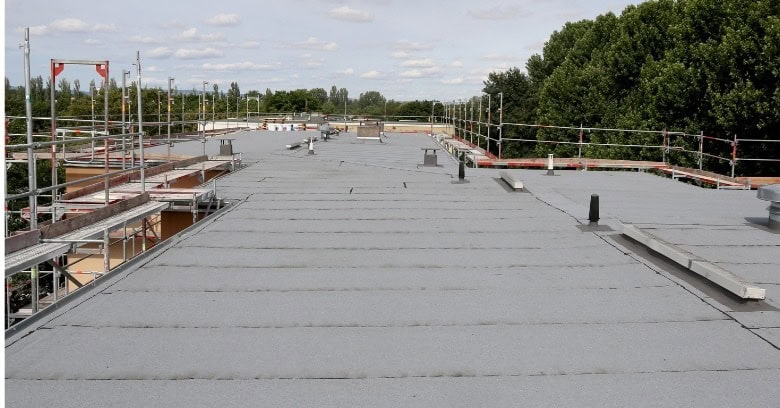
TPO stands for thermoplastic polyolefin. It’s a single-ply roofing membrane that comes in wide rolls, usually in white. The sheets are laid across the roof and their overlapping edges are welded together with hot air, which melts the two layers into one continuous piece. A well-made weld is the reason TPO seams hold up so well against water.
It’s made for flat and low-slope roofs, the ones with too little pitch for shingles, tile or most metal panels to shed water reliably.
Why TPO roofing in Palm Coast makes sense
The biggest reason is the sun. A white TPO surface reflects much of the sunlight that would otherwise heat the roof. On a Florida summer afternoon, that can mean a noticeably cooler roof surface and a bit less strain on the air conditioning in the room below. How much cooler depends on your insulation and ventilation, so we won’t promise a number.
The welded seams are the second reason. Coastal Flagler County gets heavy summer downpours, hurricane season from June 1 through November 30 and wind-driven rain from fall nor’easters. A seam that’s been fused into one piece gives that water very little to work into.
TPO is also light, so it’s a good fit for porch roofs, carports and additions that weren’t framed to carry a heavy system.
Where TPO goes on a Palm Coast property
On homes, TPO usually covers the low sections: a screened porch or covered patio, a Florida room, a garage or a flat-roofed addition. On light commercial buildings, it often covers the whole roof. If your main roof is pitched, it stays shingle, tile or metal, and the TPO section ties into it with flashing.
You can see how TPO fits with the other low-slope options on our Palm Coast flat roofing page.
How a TPO roof is installed
Installation starts below the membrane. The deck gets checked for soft or rotted sections, and those are replaced. Insulation or a cover board goes down next, sometimes tapered to give the roof enough fall to drain.
The membrane is then attached in one of two common ways. It can be fastened mechanically through the insulation into the deck, with the seams covering the fasteners, or fully glued down. The right method depends on the deck, the building and how much wind the roof sees. Near the coast, how well the edges and corners are held down matters a lot, because that’s where wind pulls hardest.
Every seam is welded and then checked along its length with a probe. Edge metal goes around the perimeter, and flashing is welded or adhered at walls, pipes and AC curbs. If someone will walk to rooftop equipment, walkway pads give their boots a path that doesn’t wear the membrane.
Thickness
TPO is sold by thickness in mils (thousandths of an inch). 45 and 60 mil are common on homes. Thicker sheet stands up better to punctures and years of strong sun, and it costs more. From the ground, two thicknesses look the same, so your estimate should state which one you’re getting.
TPO or EPDM?
EPDM is a black synthetic rubber membrane with taped seams. It’s flexible, proven and still a good choice on many roofs. In Palm Coast, the main differences come down to color and seams: white TPO reflects heat that black EPDM absorbs, and TPO’s welded seams replace EPDM’s tape. We’ll walk you through both for your roof. Our EPDM roofing page covers the rubber option in more detail.
Caring for a TPO roof
Keep scuppers, drains and gutters clear so water doesn’t sit. Ask anyone servicing the AC to stay on the walkway pads. After a big storm, look from the ground for lifted edge metal or debris on the roof.
If a TPO roof gets punctured, it can usually be repaired by welding a patch of matching membrane over the spot. Small damage caught early stays a small repair. Our flat roof repair page has more on that.
How it works
- Book your free inspection. Call 386-259-8425 or request a free online estimate.
- Get a clear, honest assessment and estimate. We check the deck, drainage and the roof’s tie-in to the house, and give you photos plus a written estimate that names the membrane and thickness. Financing is available through Aqua Finance, Fortifi, Hearth and Home Run Finance.
- Your roof gets done and the site gets cleaned up. TPO needs dry weather to install, so the work is scheduled around the forecast.
A worn-out flat roof that keeps getting patched usually costs more over time than replacing it once. Water that slips through a tired membrane soaks the insulation, and wet insulation means a bigger job later.
TPO roofing questions from Palm Coast homeowners
Is TPO a good roof for Florida?
For flat and low-slope roofs, yes. Its white, reflective surface handles heat well and its welded seams resist heavy rain. Like any roof, it depends on good drainage and careful installation.
Can TPO go over my existing flat roof?
Sometimes. If there’s only one existing roof and the insulation underneath is dry, a new TPO layer can go over it with a separator board. If moisture is trapped below, a tear-off is the better choice.
Does a white TPO roof stay white?
It dulls over time as dirt and algae collect, especially in humid weather. Gentle cleaning helps it keep reflecting heat. Don’t pressure-wash it hard, since that can damage the surface.
Can TPO be used on a commercial building?
Yes. It’s one of the most common membranes on low-slope commercial roofs. See our Palm Coast commercial roofing page for more.
Talk to a Palm Coast roofer about TPO
Call 386-259-8425 to book your free inspection, or start your estimate online. You’ll know what’s on your roof now, whether TPO is the right fit and what it takes to get a cooler, drier room under it.