Your flat roof over the Florida room has been patched so many times it looks like a quilt, or the low-slope roof on your building is ponding water and leaking at the seams. Someone mentioned EPDM, and now you’re trying to figure out if a rubber roof is a good idea in this heat. EPDM roofing in Palm Coast can be a smart choice for the right roof, and you should know how it compares before you commit.
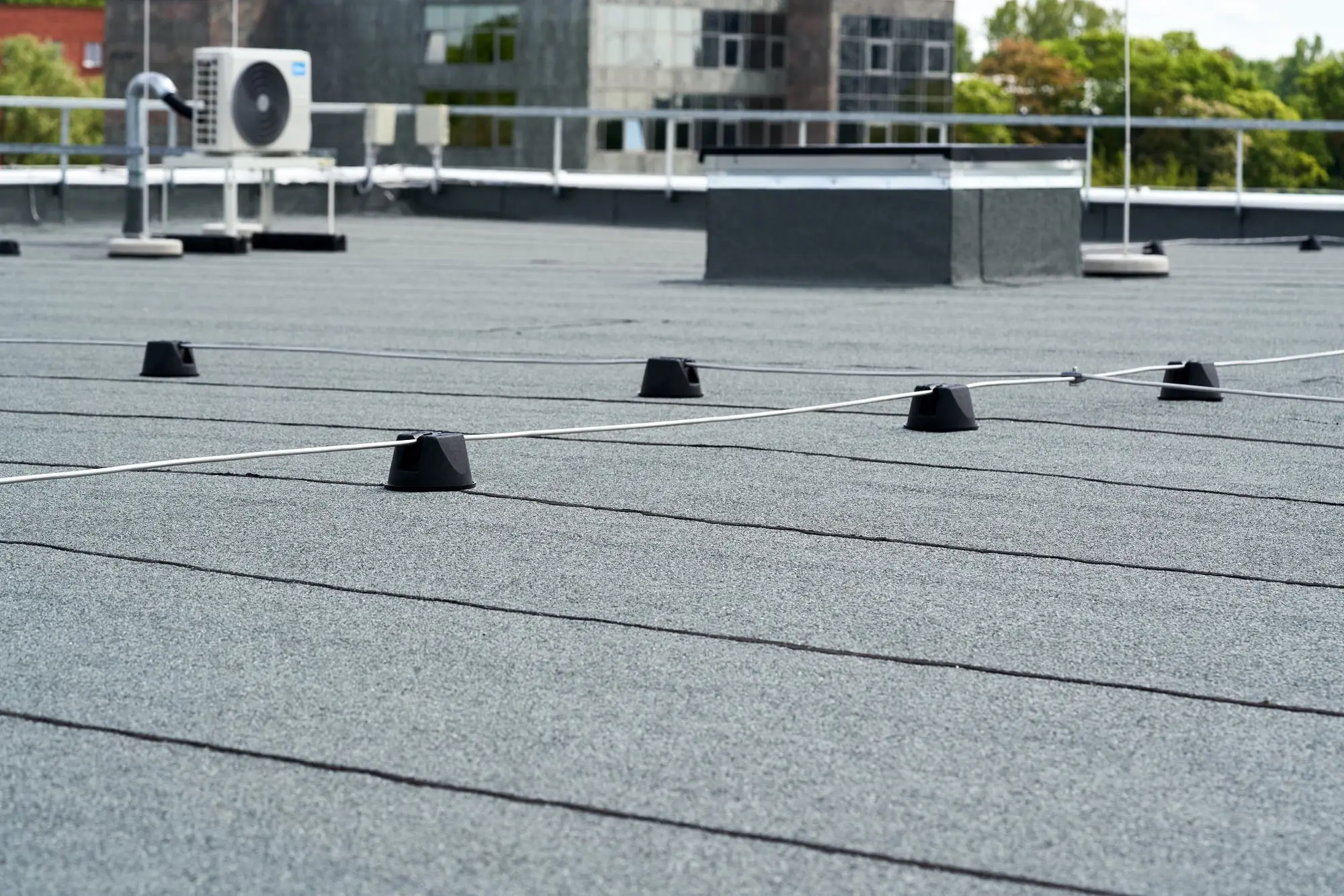
Flat roofs are where a lot of Florida leaks start. Water drains off them slowly, the sun beats on them all day, and the wrong material or a sloppy seam turns into a ceiling stain fast. You deserve a plain explanation of your options.
APC Roofing is GAF Certified, licensed in Florida (CCC1337030) and insured, and we’ve been working on Florida roofs since 2017. Your inspection and estimate are free.
What EPDM is
EPDM is a synthetic rubber roofing membrane. It comes in large sheets, so a roof can be covered with very few seams. It stays flexible through heat and cold, it resists the cracking that older asphalt flat roofs develop, and it handles standing water better than many other materials.
It’s used on both homes and commercial buildings. On homes in Palm Coast, it’s common over porches, carports, Florida rooms, additions and garages. On commercial buildings, it covers low-slope roofs on offices, shops and warehouses.
EPDM roofing in Palm Coast: how it handles the coastal climate
Sun and heat. Standard EPDM is black, which absorbs heat. That can mean a hotter roof surface and warmer rooms below. White EPDM is available and reflects more sunlight. On a flat roof over living space, that difference matters in Florida.
Heavy rain. Summer storms dump a lot of water on flat roofs. EPDM tolerates water that sits for a while, but every flat roof should still drain. Low spots and clogged drains need to be corrected, no matter what membrane goes on.
Wind. Tropical storms and hurricanes pull hardest at the edges and corners of flat roofs. A properly attached EPDM roof, with secure edge metal and well-sealed perimeters, holds up to that much better than a loosely laid one.
Salt air. The membrane itself isn’t bothered by salt, but the metal edges, fasteners and flashings around it corrode faster near the coast. Those parts need the right materials and regular checks.
EPDM vs. TPO: an honest comparison
TPO is the other common single-ply membrane, and in Florida it’s often the more popular choice, mainly because it’s white and reflects the sun. TPO seams are heat-welded, which creates a very strong bond.
EPDM’s strengths are its flexibility, its long track record and how well it handles ponding water. Its seams are taped or glued rather than welded, so seam work has to be done carefully.
For a small roof over an addition or porch, EPDM can be a very good fit. For a large, sunny commercial roof, TPO is often the better match. We’ll walk you through the trade-offs for your roof. You can also read about TPO roofing in Palm Coast.
What a good EPDM installation includes
A sound deck and insulation
The old roof comes off down to the deck, and any wet or rotted wood or insulation is replaced. Putting a new membrane over wet material traps the moisture and shortens the life of the roof.
The right attachment
EPDM can be fully adhered with adhesive, mechanically fastened or held down with ballast, depending on the building. On Florida roofs that see strong wind, the attachment method and edge details matter a lot.
Careful seams and flashing
Seams are cleaned, primed and joined with seam tape made for EPDM. Flashing is installed at walls, curbs, pipes and drains. Most EPDM leaks start at a seam or flashing that wasn’t done right.
Edge metal and drainage
Edge metal secures the membrane at the perimeter. Drains, scuppers and gutters are checked to make sure water leaves the roof.
Repairing an existing EPDM roof
EPDM is easy to repair when the problem is local. Punctures, open seams and failed flashing can be patched with compatible EPDM materials. If the membrane has shrunk, cracked or come loose across large areas, or the insulation underneath is soaked, replacement is usually the better choice. See our flat roof repair in Palm Coast page for more.
How it works with APC Roofing
- Book your free inspection. Call 386-259-8425 or request a time online.
- Get a clear, honest assessment and estimate. We’ll look at your flat roof and how it drains, and tell you whether EPDM, TPO or a repair makes the most sense. You’ll get photos and a written estimate. Financing is available through Aqua Finance, Fortifi, Hearth and Home Run Finance.
- Your roof gets done and the site gets cleaned up.
A leaking flat roof tends to get worse with every storm season. Water that gets under the membrane spreads through the insulation and into the deck, and the job grows with it.
EPDM roofing questions
Is EPDM a good choice in Florida?
It can be, especially for smaller flat roofs and areas where water sometimes sits. In full sun over living space, white EPDM or TPO may keep things cooler.
Can EPDM go over my existing flat roof?
Sometimes, but tearing off the old roof is usually better. It lets the deck and insulation be checked for moisture before the new membrane goes on.
Can an EPDM roof be repaired?
Yes. Local damage like punctures and open seams can be patched with compatible EPDM materials.
Do you install EPDM on commercial buildings?
Yes. See our commercial roofing in Palm Coast page for more on commercial work.
Book your flat roof inspection
Call 386-259-8425 or request your free estimate online.
You’ll end up with a flat roof that drains, seals and holds up to Palm Coast’s sun and storms, and a home or building that stays dry underneath it.