Maybe the flat roof over your back porch has been patched so many times you’ve lost count. Or you’re adding a Florida room or converting the garage, and the plans call for a low-slope roof you don’t know much about. Either way, flat roof installation in Palm Coast comes down to one job: getting heavy rain off a roof that barely slopes, year after year, in salt air and hard sun.
It’s a fair thing to worry about. Flat roofs have a reputation for leaking, and once you’ve watched a stain spread across a porch ceiling, the last thing you want is to pay for a new roof that does the same thing. You deserve a plain explanation of what’s going on your house and why.
APC Roofing has been in business since 2017. We’re GAF Certified, licensed in Florida (CCC1337030) and insured, and your inspection and estimate are free.
Where flat roofs show up on Palm Coast homes
Most homes here have a pitched shingle, tile or metal main roof. The flat sections tend to be the add-ons: a covered back patio, a screened porch, a carport, a garage conversion or a Florida room built after the house went up. Some newer homes have low-slope sections designed in from the start, and many light commercial buildings have a flat roof over the whole footprint.
Those sections get less attention than the main roof, but they often take the worst of the weather. Water moves across them slowly. The joint where a porch roof meets the house wall is one of the most common leak points on any home, because it’s where two different roofs have to shed water in the right order.
What goes into a flat roof installation in Palm Coast
A flat roof isn’t truly flat. It’s built with a slight fall, often around a quarter inch per foot, so rain runs toward a gutter, scupper or drain instead of sitting in place. If the framing underneath doesn’t have that fall, tapered insulation boards can create it. You’ll never see this part once the roof is done, and it decides more about how long the roof lasts than anything else.
From the bottom up, a typical system looks like this:
- The deck. Usually plywood on a home. It gets checked for soft spots, and any rotted sections are replaced before anything goes on top.
- Insulation or a cover board. This gives the membrane a smooth, solid base and slows heat moving into the room below.
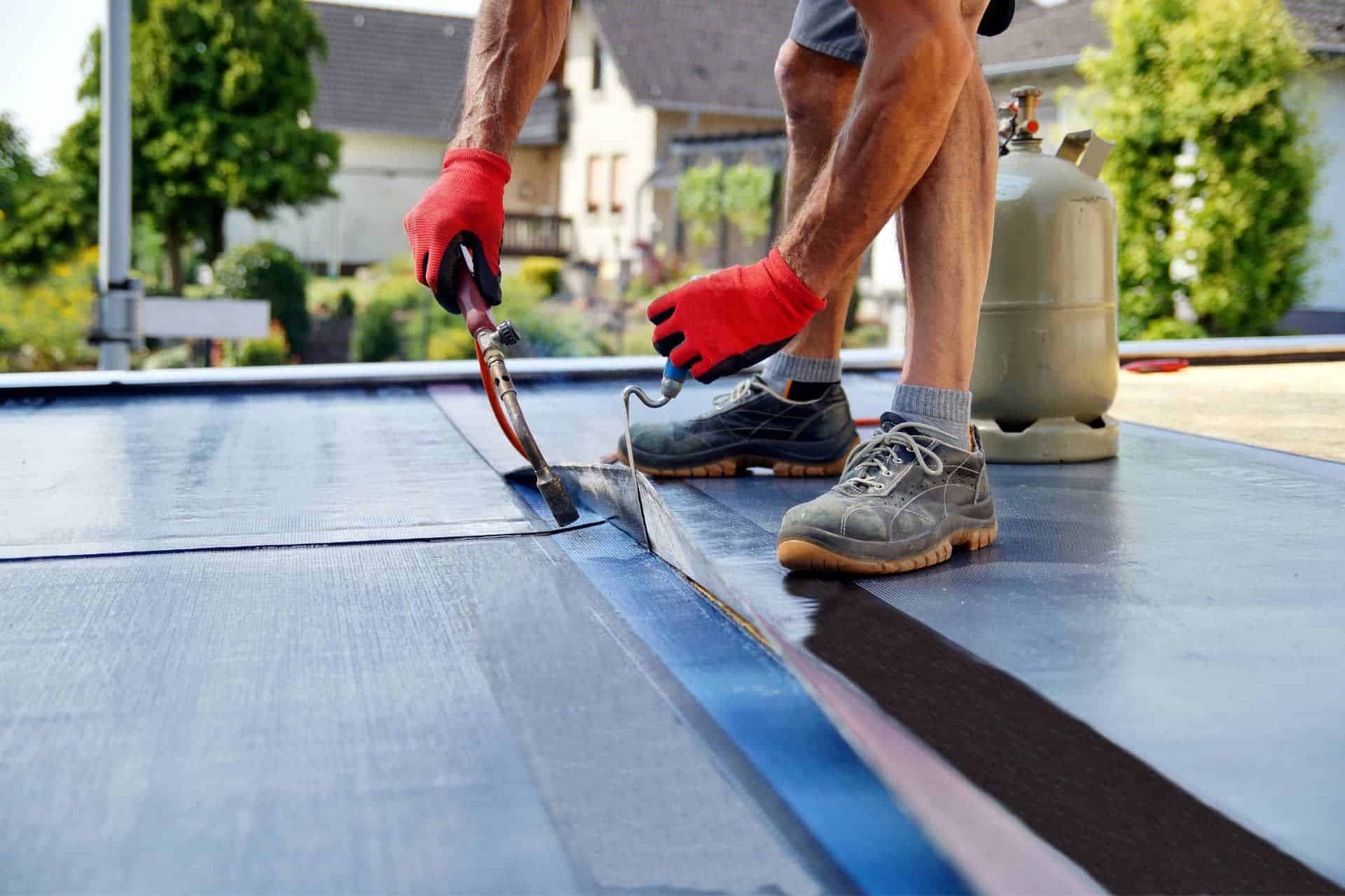
- The membrane. The waterproof skin that does the real work.
- Edge metal and flashing. Trim around the perimeter, plus flashing where the roof meets a wall, the main roof, a pipe or an AC curb.
Choosing a membrane
TPO is a white single-ply sheet whose seams are welded together with hot air. Its light surface reflects much of the sun, which helps when a summer roof bakes by noon. EPDM is a black rubber membrane with taped seams that’s been in use for decades. Modified bitumen comes in rolls and goes down in layers. Each can work well. The right pick depends on the deck, how the roof drains, whether anyone walks on it and what sits on top of it, like an air handler.
You’ll get our recommendation and the reasons behind it. The decision stays with you.
Palm Coast weather and a new flat roof
Coastal Flagler County is hard on low-slope roofs in a few specific ways.
Summer afternoon storms can drop a lot of rain in a short window. On a flat roof, any low spot holds that water, and standing water wears a membrane faster than the rest of the surface. A common rule in the trade: if water is still sitting there 48 hours after the rain stops, the drainage needs attention.
Hurricane season runs June 1 through November 30, and fall nor’easters bring their own stretch of wind and rain to the coast. Wind pulls upward hardest at a roof’s edges and corners. That’s why the perimeter metal, and how firmly the membrane is held along it, matters so much on a Palm Coast home.
Salt air near the ocean slowly works on exposed metal. Edge trim, fasteners and flashing should suit a coastal setting so they don’t rust out years before the membrane wears out.
The sun rarely takes a break, either. UV and heat dry out roofing materials over time, which is one reason reflective membranes are popular across Florida.
Tear off the old roof or go over it?
Sometimes a new membrane can go over an existing one with a separator board in between. That only makes sense when there’s a single existing roof and the insulation underneath is dry. Wet insulation sealed under a new membrane keeps rotting the deck and pushes up blisters.
When there’s trapped moisture, more than one old layer or soft decking, a full tear-off is the honest answer. A moisture meter and a small core sample show what’s going on below the surface, and you’ll see those findings in writing before you choose.
If your flat roof only has a problem spot or two, you may not need a new one at all. Our page on flat roof repair in Palm Coast covers that side, and you can compare membrane types on our TPO roofing and EPDM roofing pages.
How it works
- Book your free inspection. Call 386-259-8425 or request a free online estimate.
- Get a clear, honest assessment and estimate. We check the drainage, the deck and how the low roof ties into the rest of the house, then give you photos and a written estimate. If you’d like to spread out the cost, financing is available through Aqua Finance, Fortifi, Hearth and Home Run Finance.
- Your new roof goes on and the site gets cleaned up. Membranes need dry conditions to bond, so the work is planned around the forecast, and the crew cleans up before leaving.
Putting off a flat roof that’s already failing usually makes the job bigger. Water that gets under a membrane soaks the insulation and works into the decking, and by the time a stain shows on the ceiling, the repair has grown.
Flat roof installation questions from Palm Coast homeowners
What’s the best flat roof material for a Florida home?
No single material wins on every roof. TPO is a common choice in Florida because its white surface reflects heat. EPDM and modified bitumen also perform well when they’re installed correctly. Drainage and installation quality matter as much as the material.
Can you put a flat roof on my new porch or addition?
Yes. We install low-slope roofs on porches, patios, garages and additions, and tie them into the existing roof so water runs over the joint instead of into it.
How long does a flat roof installation take?
Size, the amount of tear-off and the weather set the timeline. Rain stops membrane work, so you’ll get a realistic schedule with your estimate rather than a guess.
Will insurance pay for a new flat roof?
If a storm damaged it, your policy may cover some or all of the repair. You file the claim and pay your deductible. We document the damage with photos, provide a written estimate and work with your adjuster.
Get your Palm Coast flat roof done right
Call 386-259-8425 to book your free inspection, or start your estimate online. You’ll come out of it with a low roof that sheds the next summer storm, a dry ceiling underneath and a clear picture of what you paid for. Your satisfaction is our reputation.