In Need of Standing Seam Metal Roofing Here in Overland Park Kansas?
APC Roofing puts up and mends screw-down sheet and clip-held panels, on houses, garages, porches and outbuildings.
Call us at 913-398-5020 and someone who knows the trade will come out to take a look.
Identifying a System – A Glance Up
A corrugated or ribbed covering is secured with screws set through the metal, whereas standing seam relies on clips that sit under locked joints. Most metal on houses is coated steel, and aluminum or copper appears now and then.
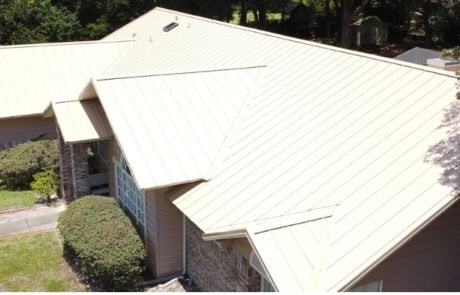
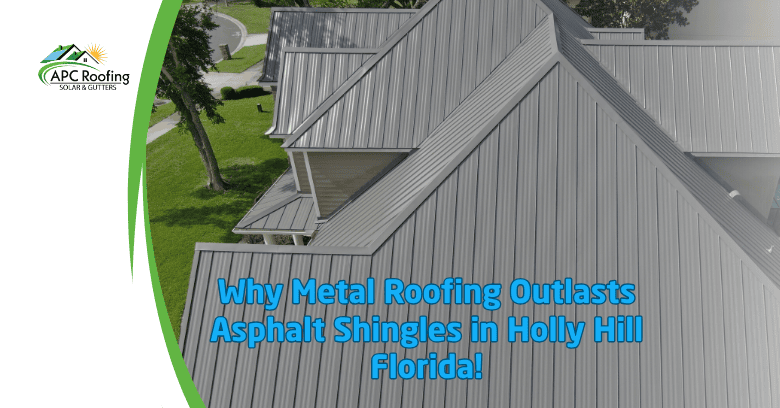
Screw heads marching in rows, easy to spot from below, point to exposed fasteners, and uninterrupted pans separated by raised folds mean standing seam. Corrugated sheet is a regular choice on barns, shops and porches, and homes turn up with both.
Shapes Rolled Into Steel: Matching a Building
Corrugated sheet rises and falls in rounded, evenly spaced waves, and ribbed panels pair tall square ribs with broad flat areas. Adjacent lengths share a narrow side lap, and fastener placement follows a published pattern.
Ribs make a stiffer panel that crosses longer spans, while corrugated fits a period barn or a farmhouse style. High ribs carry a heavy downpour across an extended slope, and a lean-to or porch manages fine with a gentle pattern.
What Keeps Sheet Down: Aging in Sunlight
A single screw pins the metal firmly to framing below, and a washer under each head keeps rain out. Rubber in steady sunlight hardens and cracks with age, and the panels can go on for decades more.
Overdriving tears a washer and dishes the metal, and a fastener stopped short or angled leaves a gap for rain.
Fresh Fasteners: Scope and Limits
On corrugated or ribbed sheet, every washer ages at one pace, so at some stage all seals get changed. Old fasteners are backed out one at a time, and a bigger diameter is driven in to grip where an old thread stripped.
A re-screw ends drips and steadies sheets that rattle in wind, but rust damage, open laps and failed flashing are untouched. Screw length and thread are chosen for what sits below, wood or a steel purlin, and a factory color on every top suits most finishes.
A Covering in Motion: Why Slack Matters
Sunshine stretches steel slightly and a chilly night pulls the metal back, and a long run adds up to a measurable distance, and aluminum changes nearly twice as much. A panel pinned at both ends slowly slots every screw opening, and a washer stops sealing.
Snapping sounds at sunrise come from panels shifting against clips, and a well-built roof takes no harm from some noise.
Beneath Raised Seams – Out of Sight
A long pan gets one fixed point, often near a ridge or an eave, while clips on every other section permit movement. Trim at an end that travels is bent with clearance underneath, whereas a pan with no play lets go or distorts.
Clips are screwed to the deck along one edge of every pan as work proceeds, so nothing that holds the roof down is left exposed.
Seam Styles: A Choice With Consequences
A basic profile engages with a firm push along a full length, and mechanical versions are finished by a rolling tool. A double-lock seam holds far better against strong gusts and standing water, and a gentler pitch is allowed.
Profiles come in different widths and heights, so the house and a preferred look guide a decision. Hardware and trim are sold for one system only, so parts are not mixed between makers.
Stock Weight – Beyond Appearances
Coil for roofing is sold by gauge, and a lower figure means more metal per sheet. Outbuildings commonly get twenty-nine, while a dwelling generally takes twenty-six or twenty-four.
Aluminum is called out in decimal inches, and in both cases a heftier panel stays straighter and tougher. A view from below reveals nothing about grade, so a label on a bundle shows what was delivered.
Corrosion Defense: Choosing a Finish
Coil stock is dipped in molten zinc or an aluminum-zinc alloy, and a color coat is baked on afterward. A scratch that stays within paint does no harm, but a cut that reaches base steel is where corrosion takes hold.
PVDF systems keep color and gloss for decades, but silicone-modified polyester goes dull and powdery earlier. Wet mortar and fresh concrete attack an aluminum-zinc coating, so a gap or barrier separates panels from new block or stone.
Choosing the Metal – Trade-Offs
Aluminum is light and free of red rust, but a dropped tool or a falling branch dents a soft sheet sooner. Along the coastal end of our service area, salt in the air shortens the life of zinc-based coatings, and some makers limit steel products by distance from a shoreline.
Copper is usually kept to small accent roofs over a bay or a porch, and with nothing applied, color shifts over the years.
Incompatible Neighbors: Treated Lumber and Wrong Screws
A copper pipe or flashing above steel sends corrosive drainage down over the panels, and staining shows up well ahead of pinholes. Chemicals in treated lumber pit any aluminum resting on top, and a bare steel screw in soft sheet breaks down too.
A new piece of flashing belongs in a metal that matches existing work, or a separator tape sits wherever unlike metals meet.
A Matter of Taste – Surface, Not Structure
In trade terms, oil canning describes soft ripples across a broad flat between seams, and a sun low in the sky exaggerates every contour. An irregular-looking finish keeps weather out just as well, and nothing shortens the life of the roof.
Narrow pans, heavier stock and striated flats hold waves back, and a deck without humps or dips matters too. Pictures of houses with and without oil canning make comparison easy, and you make the call on profile.
Everyday Comfort: Noise and Heat
Panels laid straight over bare purlins ring out in a downpour, since one thin layer is all that stands between sky and interior. On a house, a solid deck, underlayment and ceiling insulation sit below the panels, and loudness indoors is close to what asphalt gives.
Cool-pigment coatings return the bulk of the sunshine, and the attic beneath stays cooler on a summer afternoon. A deep hue absorbs heat like any dark surface, and venting and insulation under the deck do as much for comfort as color. Metal loses daytime warmth shortly after the sun sets, so evenings indoors feel better sooner.
Guard Rows – Only Where Needed
At the colder end of our range, snow lets go of a metal surface easily, and a whole mass may come down at once on anything under an eave. Rows of cleats hold a load back until melting clears the roof, and a doorway, walkway or meter below decides placement.
On standing seam, brackets clamp onto a rib without a hole, whereas on corrugated sheet, mounts go into solid wood with gasketed fasteners, and in milder markets roofs do without.
Storm Marks: What a Hit Can Open
Hail is common across the colder end of our territory, and heavier grades with stiffening ribs shrug off more stones. A strike sharp enough to break a finish lets rust start, and a bent seam or a dislodged trim piece can let water in.
Once a storm has passed, a roofer photographs and measures every mark, with every dent pinned to a location on the roof.
Storm-Ready Attachment: Built to a Pattern
Suction gathers along rakes and eaves, and a loose flange gives moving air a handle. Trim along every outer line is hemmed and hooked onto a continuous cleat, and nothing is left free to flap.
Fasteners go in closer together near corners and a roof's rim, following a maker's layout for a site's exposure. Along the coastal end of our service area, hurricane risk raises fastener counts again, and only systems with a high wind rating qualify.
Penetrations: Detail Work
Each pipe takes a boot made for panel roofs, with a base pressed to follow corrugations, and a hole is cut in a flat, never across a crown. A chimney or skylight is built up on a curb with a cricket above, and water cannot pool at an upper edge.
Sealant backs up flashing and never stands in for folded metal, because sunlight dries and cracks sealing compounds within a few years.
Changes of Direction: Hooked and Clear
Each valley gets a separate pan in advance of the panels, and panels are sheared to a matching slant. Exposed ends are bent back and gripped by cleats, so no hole sits where runoff gathers.
An endlap on a long run holds sealant between overlapping sheets, and screws pass through both thicknesses, upper over lower.
Additions and Wings: Where Membrane Takes Over
Through-fastened sheet generally wants about three inches of rise per foot, and on flatter roofs, water works under side laps. Standing seam with double-locked joints goes much lower, and a few products go almost to flat.
A barely tilted roof over a porch or addition is common on houses, and each incline is measured on site, and anything under a panel's limit is finished in a membrane.
Substrate: Wood or Open Framing
On a house, the panels go over solid sheathing, and a high-temperature synthetic underlayment goes between, since ordinary felt dries out under sun-heated steel. Farm buildings frequently carry metal over bare purlins, and support distance dictates grade.
Once an old covering comes off, spongy sheathing is found and swapped, since a clip in decayed wood holds nothing.
Leaving the Old Roof in Place: Light Enough to Add
Panels can often go on top of one shingle layer where code permits, so the house is spared a tear-off and debris. A steel covering adds only slight dead load, and typical framing carries a little extra easily. Battens on top of a synthetic membrane are laid across existing shingles, and screws reach through into solid wood.
Where a roof was already recovered once, or the decking is soft, everything comes off, since dampness sealed beneath panels goes on rotting structural lumber.
Small Parts at Edges: All Around
Closures matching a panel shape stop up hollows under each rib at both extremes, so wind-blown rain and nesting animals stay out. A ridge cap can be vented to let warm air escape or left solid, as existing ventilation requires.
A drip edge along an eave and trim on each rake complete a border, so rain does not run down behind fascia.
On the Job – Carrying and Stepping
Standing seam panels are usually roll-formed to the full length of each slope, and nothing overlaps partway up. An extended panel needs enough hands under the metal to stay straight, and a pan that gets bent should not go on the roof.
Weight should go only into pans over framing, as a seam under a boot can bend open. Moisture turns a painted panel into a slide, so the safest place for the household is indoors.
Signs Worth a Call – A Look From Below
- Brown rings at fastener heads, low on a slope.
- Loose screws riding high, at an eave.
- Edge metal curled back, above a porch.
- A boot pulled away from a pipe, over a kitchen.
- A sheared end streaked orange, in a valley.
- Peeling paint, on one panel more than on panels nearby.
- A drip that follows a row of screws, in an upstairs bedroom.
- A gap along a rib, where slopes meet.
How APC Roofing Approaches Standing Seam Metal Roofing in Overland Park Kansas: Our Routine
The first thing we do is identify which panel system is on the house and what holds the panels down, and after that every fastener, trim piece, penetration, valley and lap gets a close look. Notes cover gauge, finish and every kind of hardware, and the attic is searched for stains and soft decking.
You receive a report, pictures included, and each recommendation carries reasons. When a small fix works, nobody pushes a bigger job, and a roof past saving is described plainly.
Standing Seam Metal Roofing for Overland Park Kansas Homes – Straight Answers
Reach us at 913-398-5020 and we will schedule an inspection.
Repair or Replacement: Guided by Evidence
One badly damaged sheet can be swapped alone, and a difference in shade stays visible. A new pipe boot or a resealed lap ends a local drip, while re-fastening cures aged washers.
Rust through sheet after sheet calls for a new covering, and a covering failing at nearly every joint is in the same position. A partial job on just one side is sometimes a sensible middle course, when damage stays in one place.
Looking Down the Road: What Cuts Life Short
A carefully installed panel system can pass forty years, and every estimate is approximate. Standing seam, with no holes through a pan, gets by on less maintenance, whereas exposed-fastener sheet needs a re-screw partway through.
Metals of different kinds touching, unhemmed cuts and sealant used in place of flashing shorten a roof's service, and a periodic look finds problems while minor. Pine needles packed into a valley trap water against coated steel, and brushing debris off protects paint.
For a roofer's view on Standing Seam Metal Roofing in Overland Park Kansas, reach APC Roofing at 913-398-5020. We will inspect all hardware, every edge and each penetration, and a written summary lays out what we saw so you can choose.
Verified

Verified